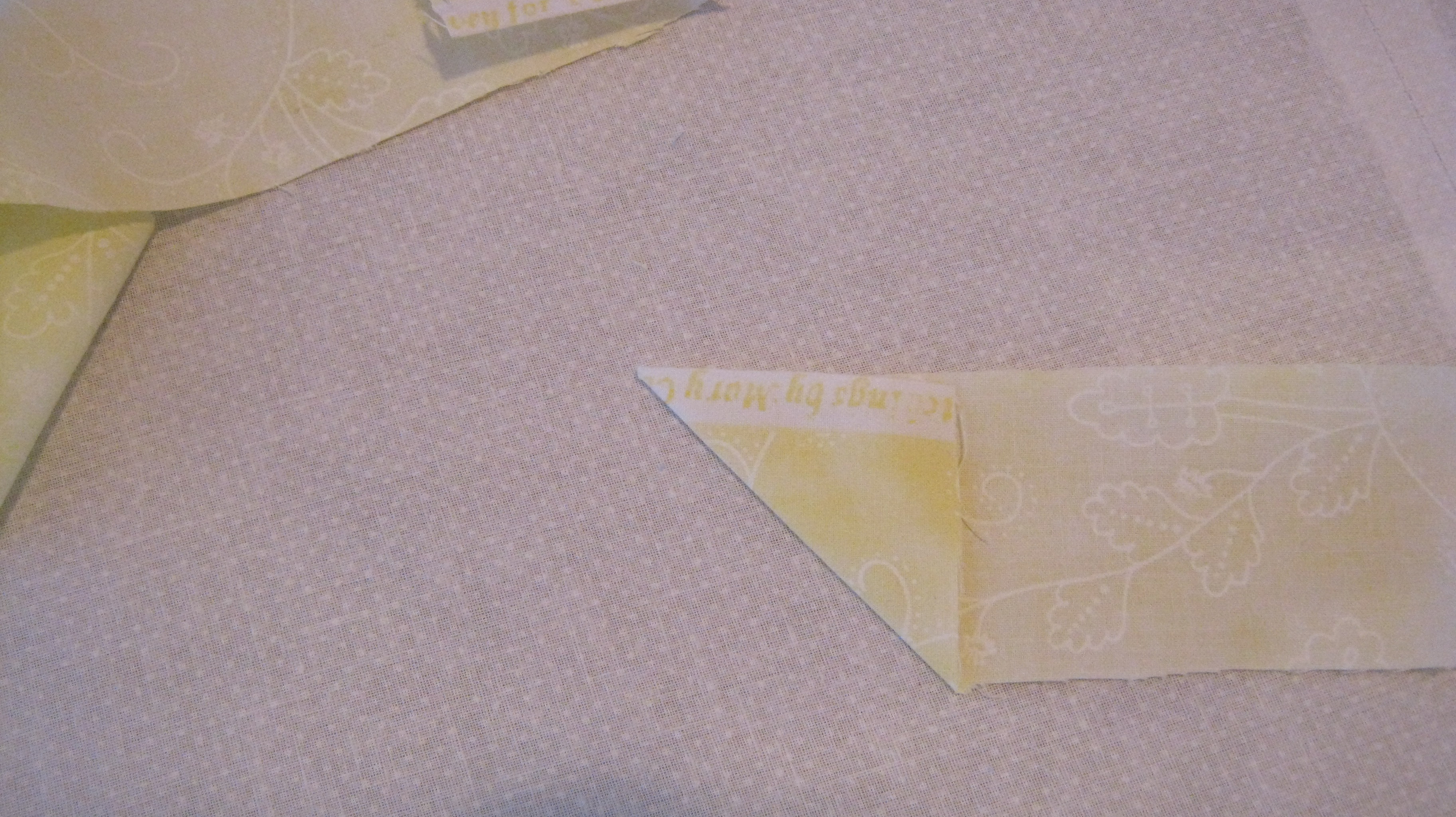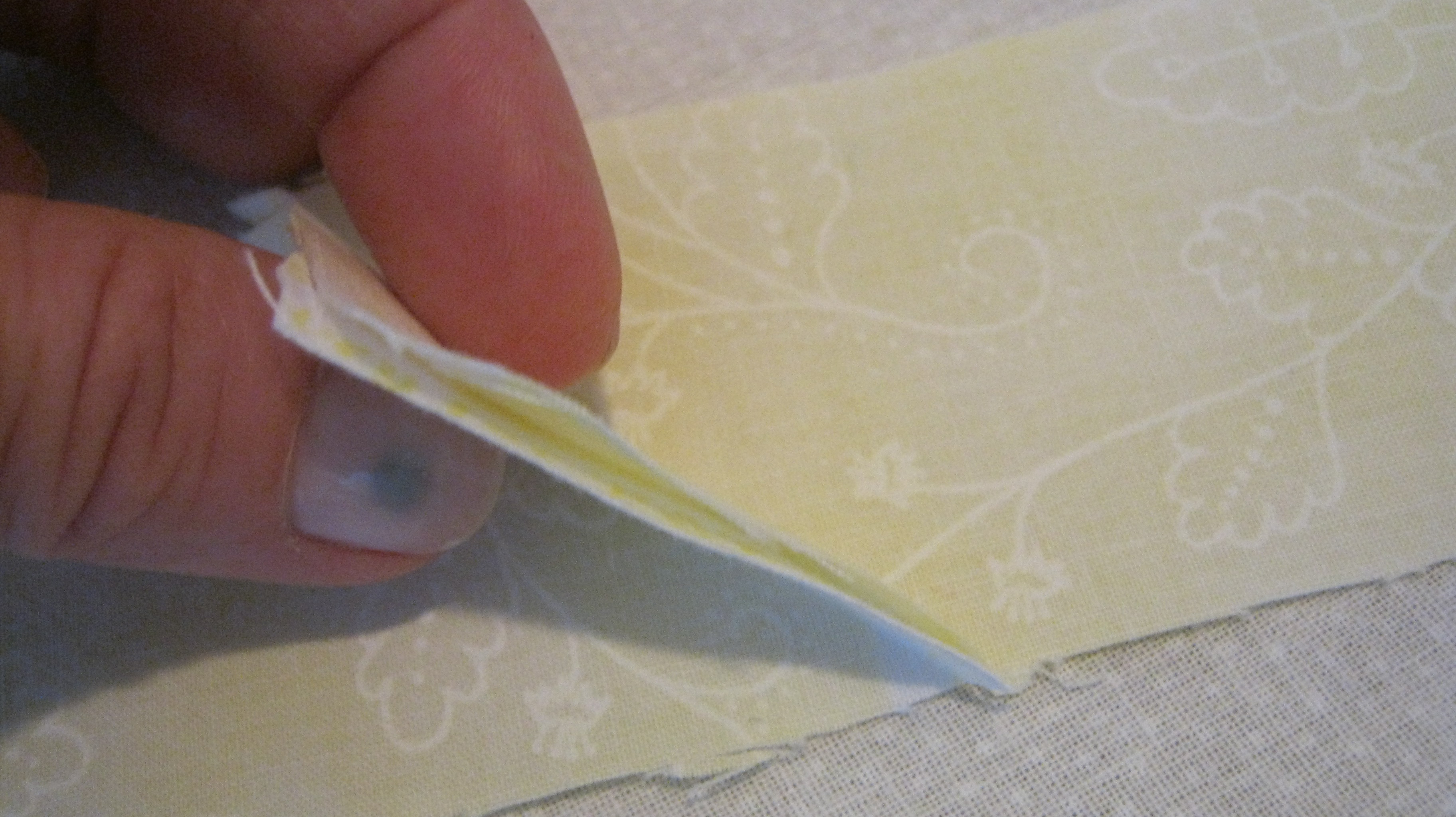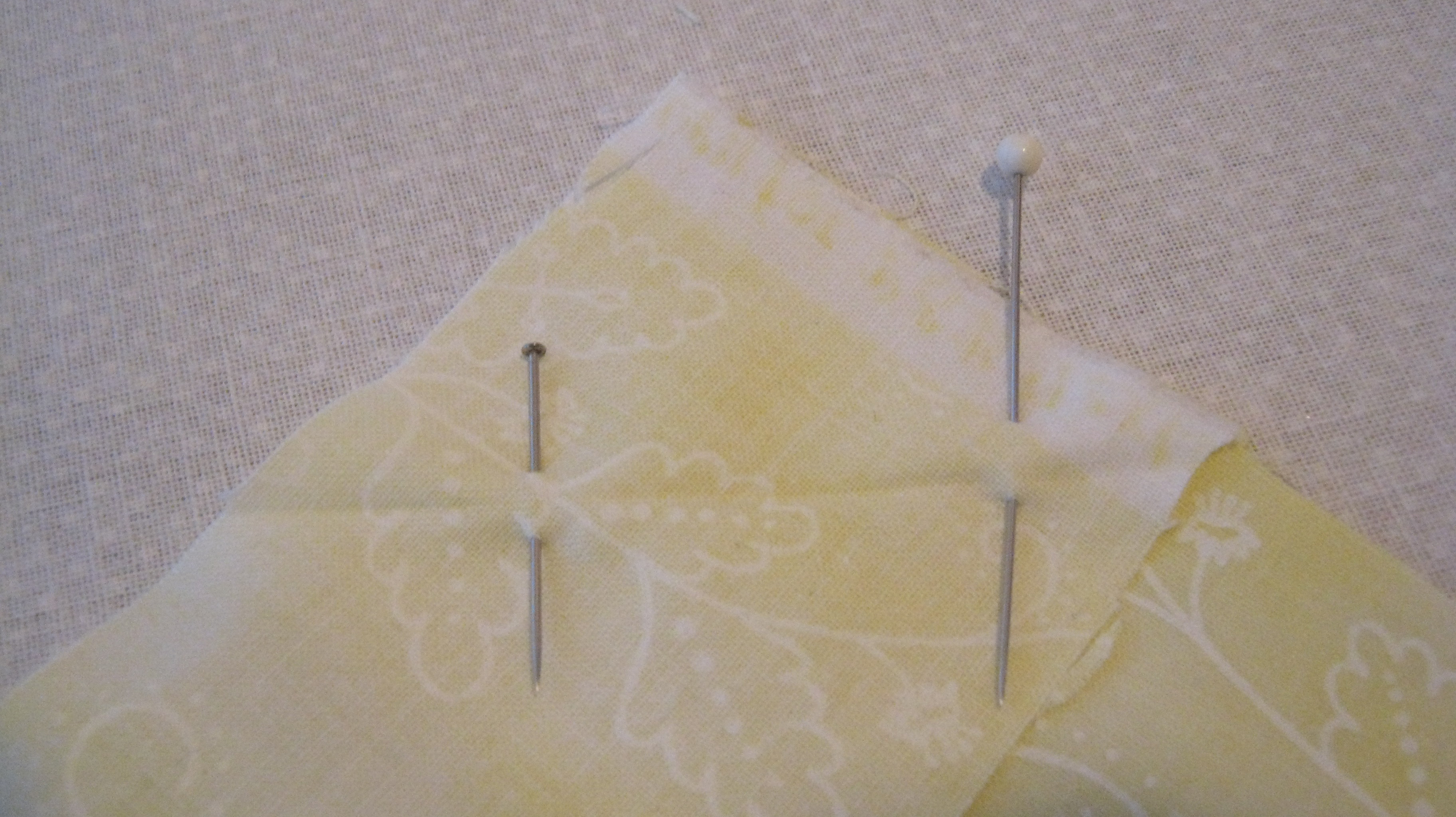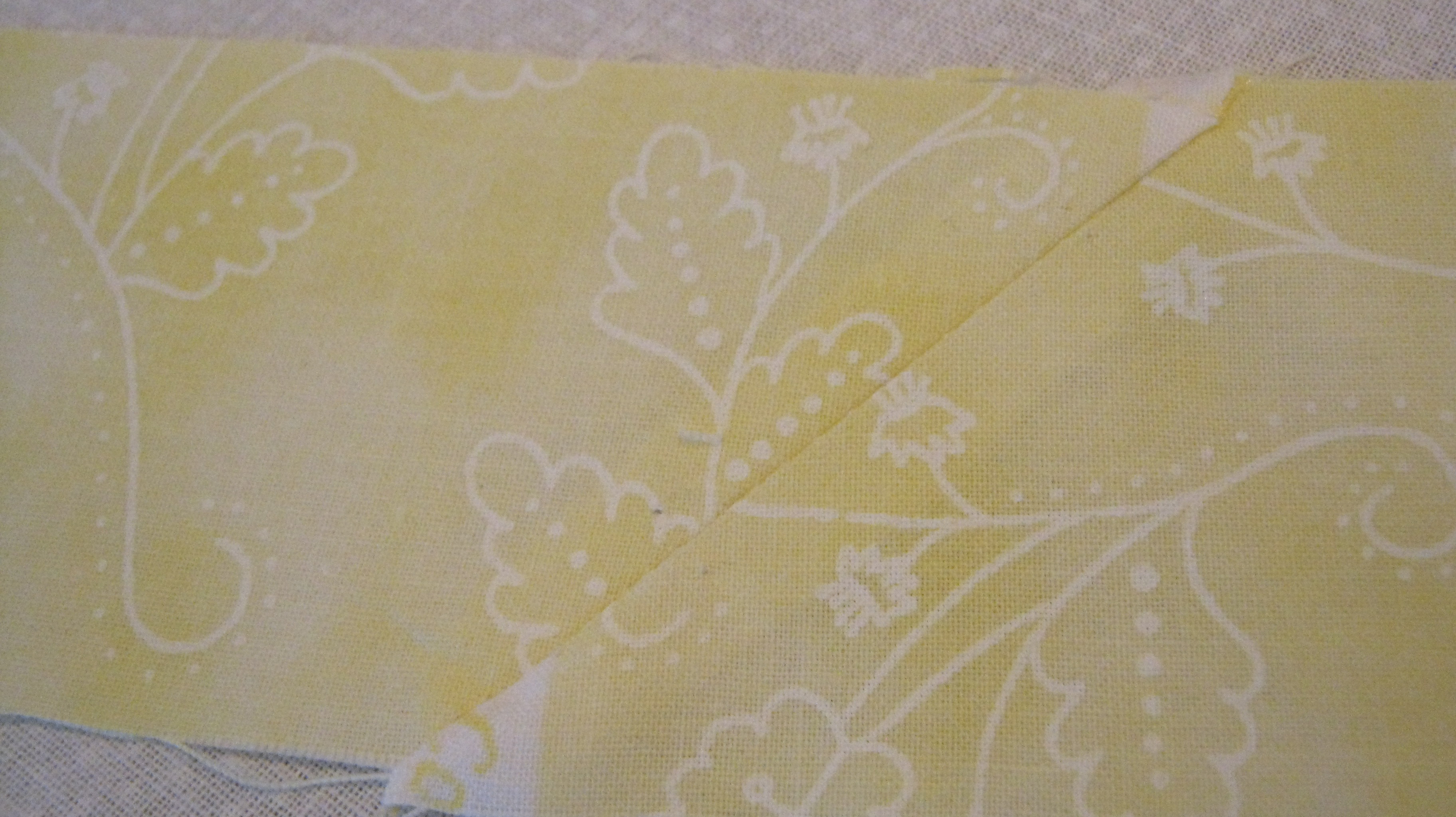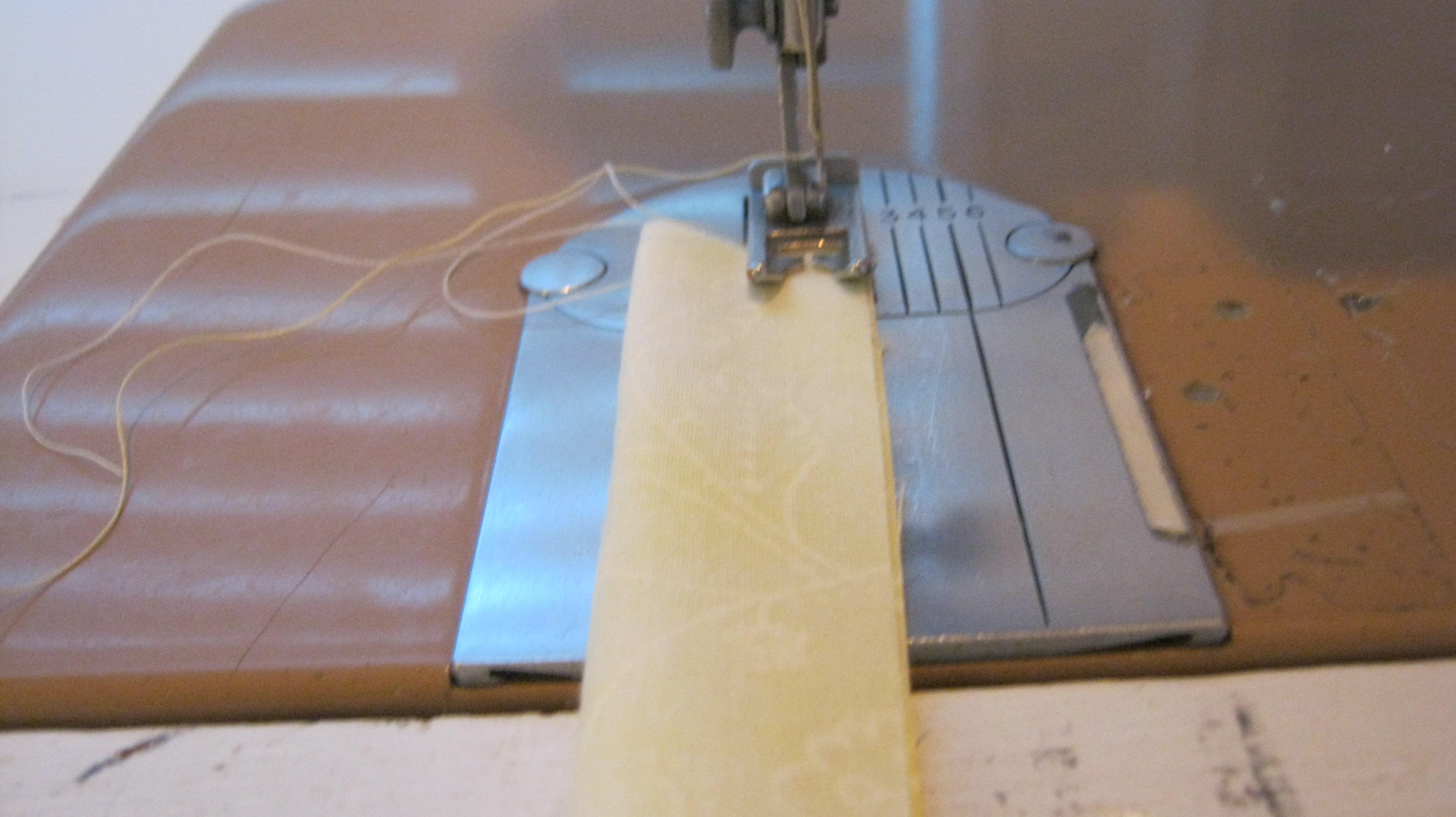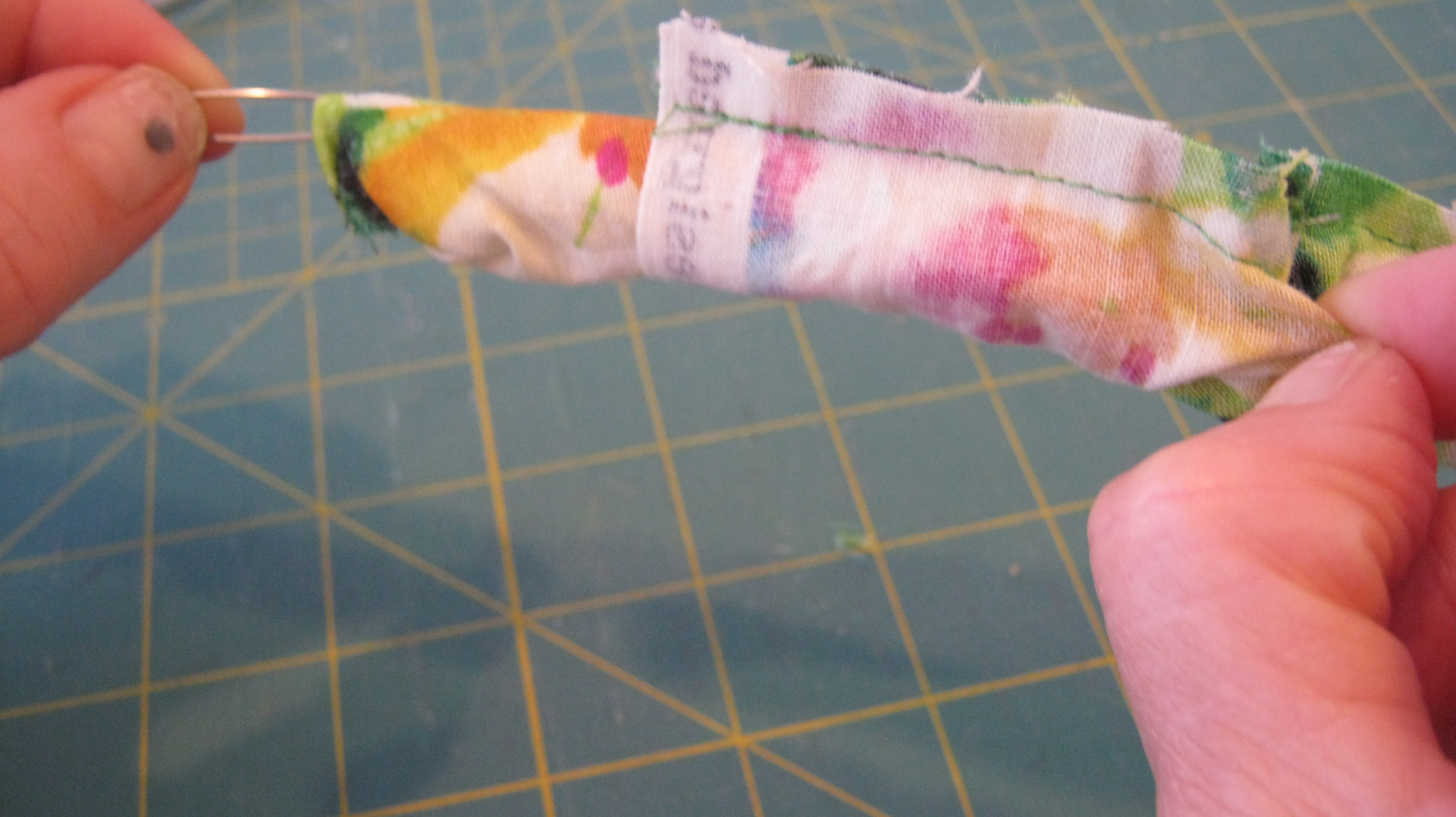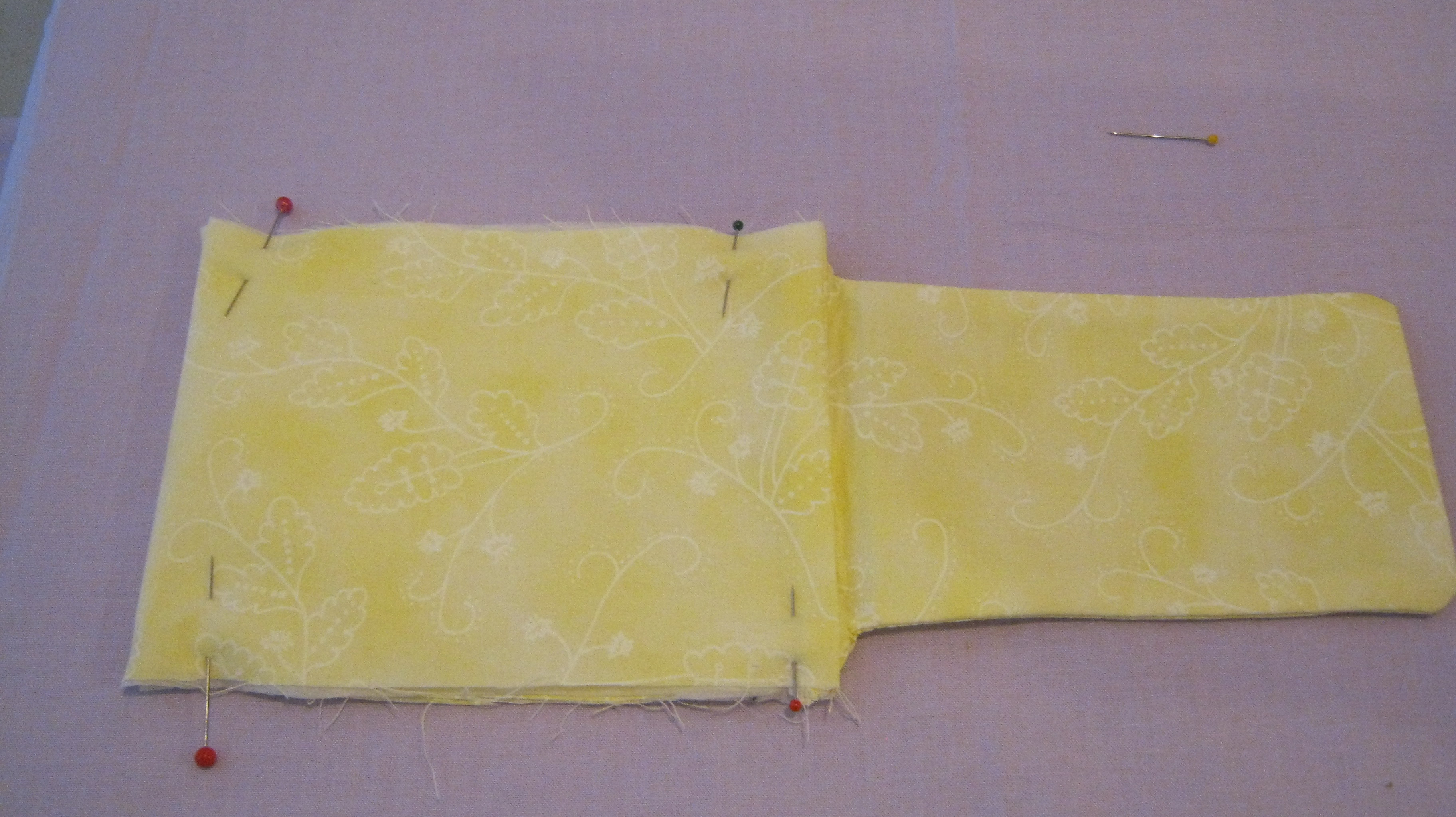
murphy’s new bed


image

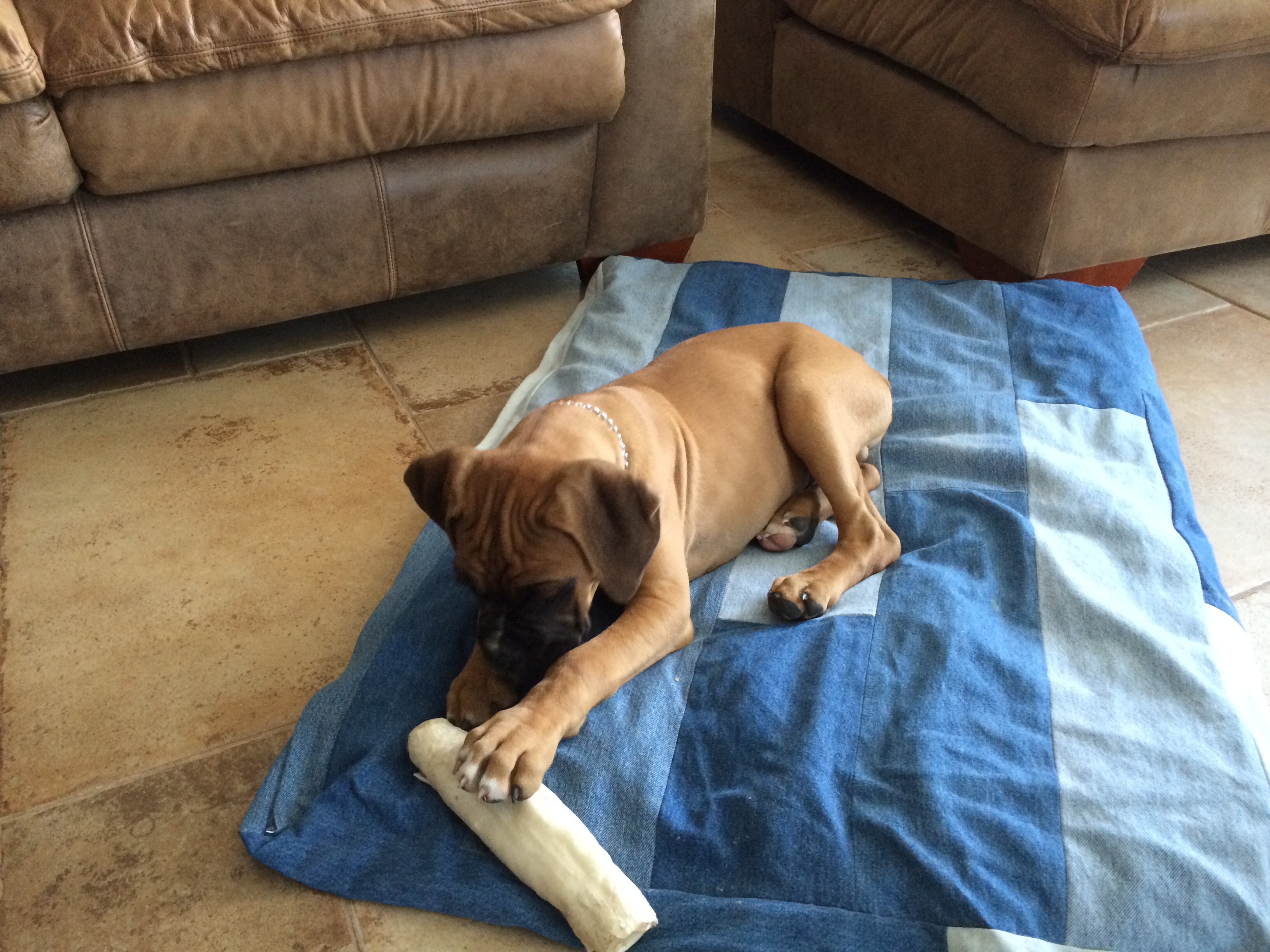
We got a puppy!  His name is  Murphy…. and he needed bed..   so I decided

to save a few bucks and make him one.
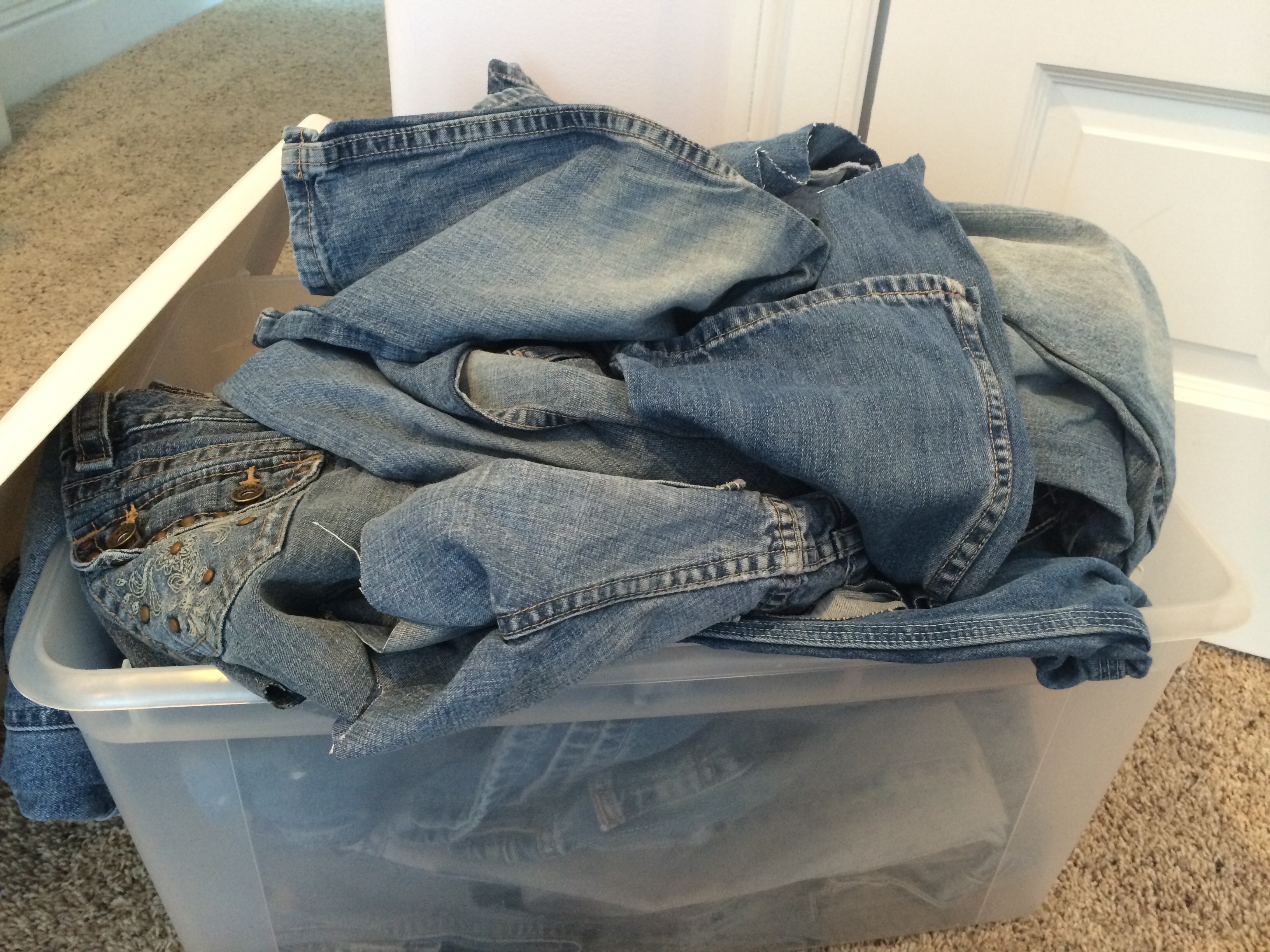
image  image

I used old jeans that I had squirreled away, just waiting to be upcycled

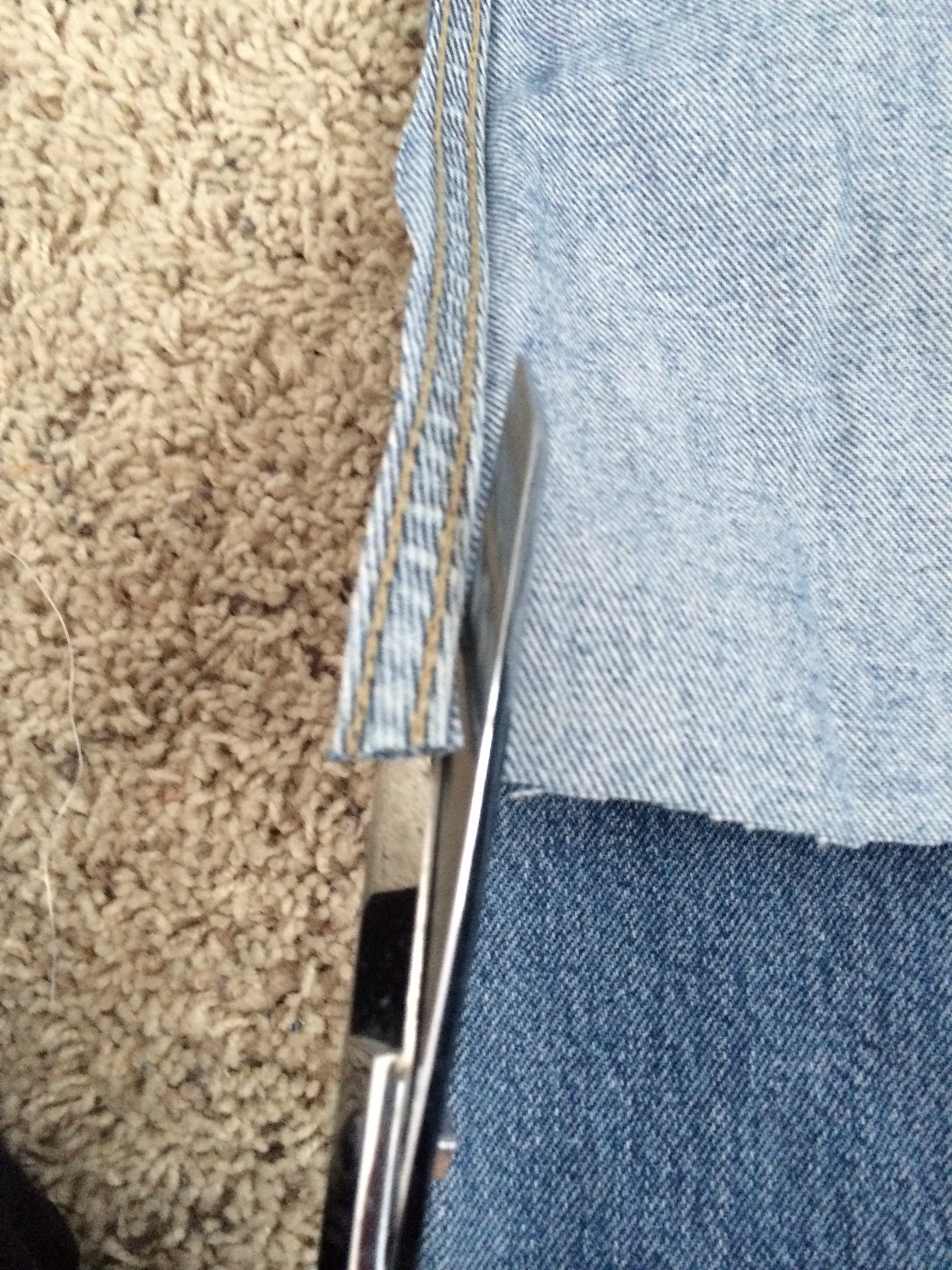
into something useful. I started by removing the pant legs, opening them

up and cutting off the seams. The finished bed was to be about 25 by 36,

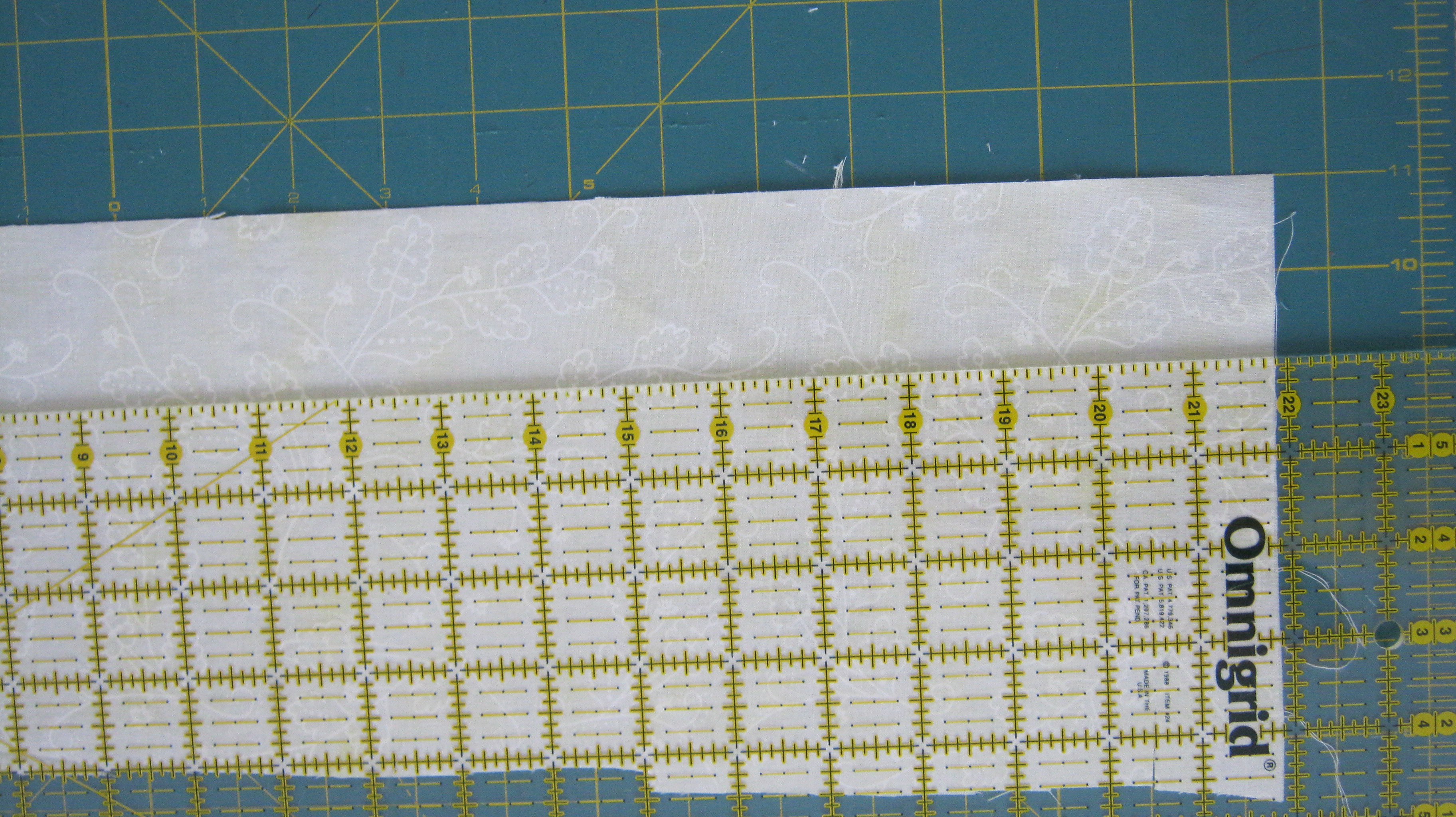
accounting for a 1/2 inch seam, I cut the pant legs into 6 inch wide strips,

and left them as long as I could.

image image

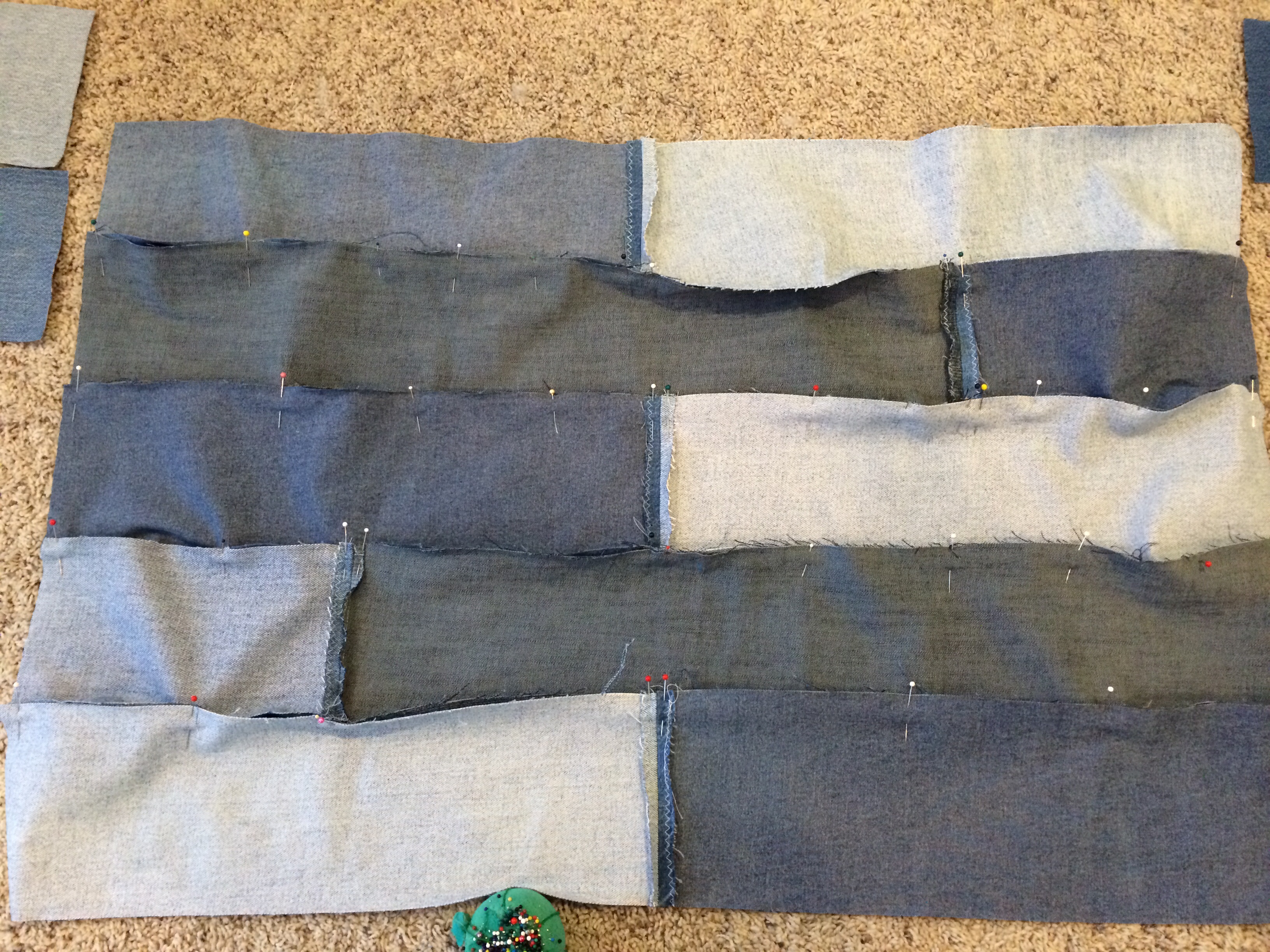
The 6 inch wide strips were laid out against a tape measure to 37 inch length

(keeping in mind the finished length  is going to be 36 inches with a 1/2 inch seam).

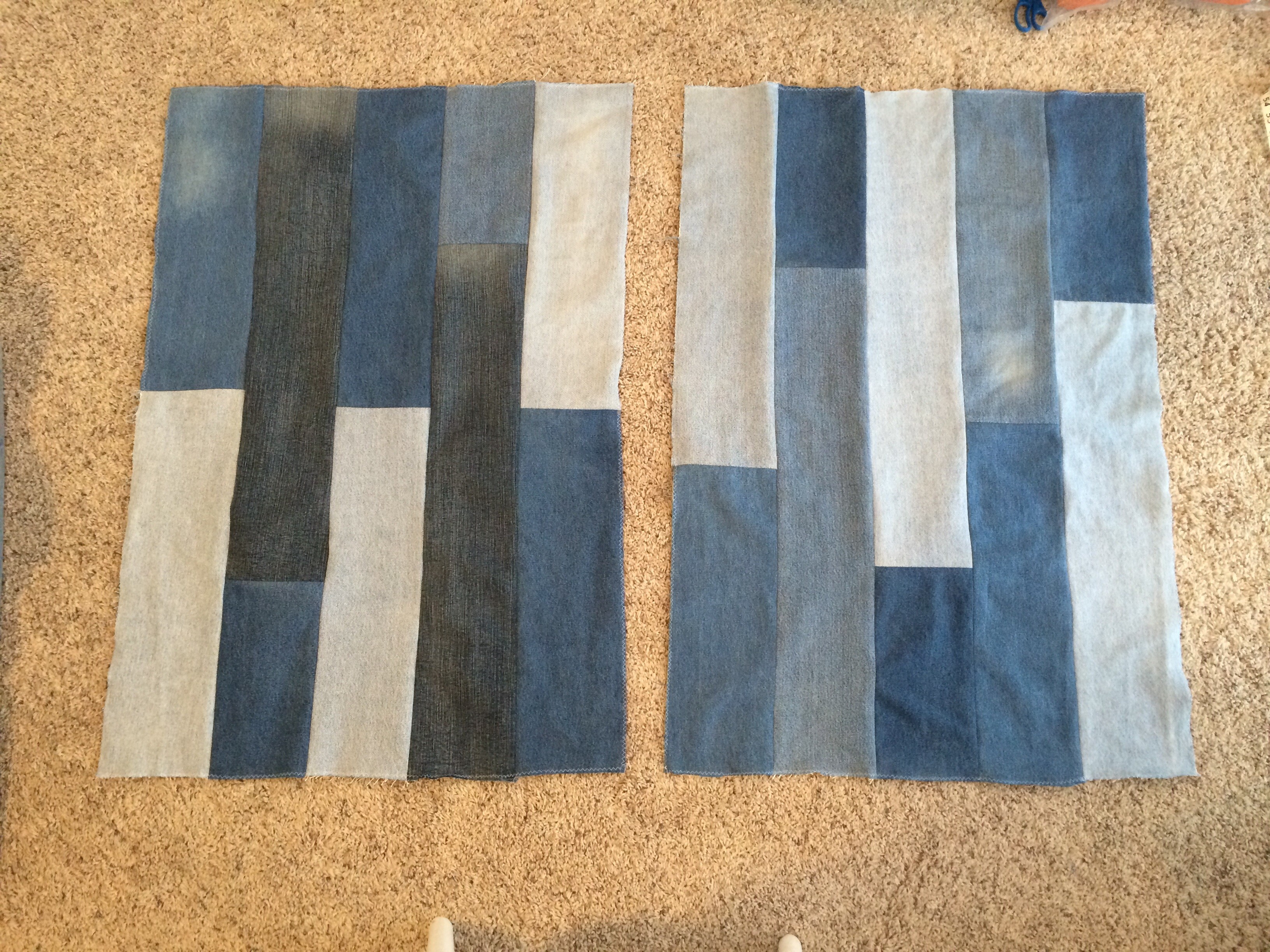
I laid out 5 rows –  which would give me 25 inch width once sewn.  The strips

were sewn together, first end to end, then side to side.
image


I repeated the same for the bottom. So now you have a top and bottom

measuring 37 by 26.  Next up is the sides. I wanted depth to be 3 inches,

enough to put a decent amount of stuffing. I also wanted to add a zipper,

so that it would be easier to remove the stuffing  when it came time to

wash the bed. I pieced 2 more  6 inch wide strips, to achieve a 37 inch

long strip, which would be the side I attached the zipper. I purchased

“zipper by the roll” several years ago, when I was covering cushions

for our out door furniture.

image

The zipper roll I bought was a 25 yard roll, which came with 25

“slides”.  I had more than enough left over to cut a 37 inch piece

for Murphy’s  bed. The  directions for applying the slide were,

straight forward, but getting the slide on the zipper required a little finagling.


image   image

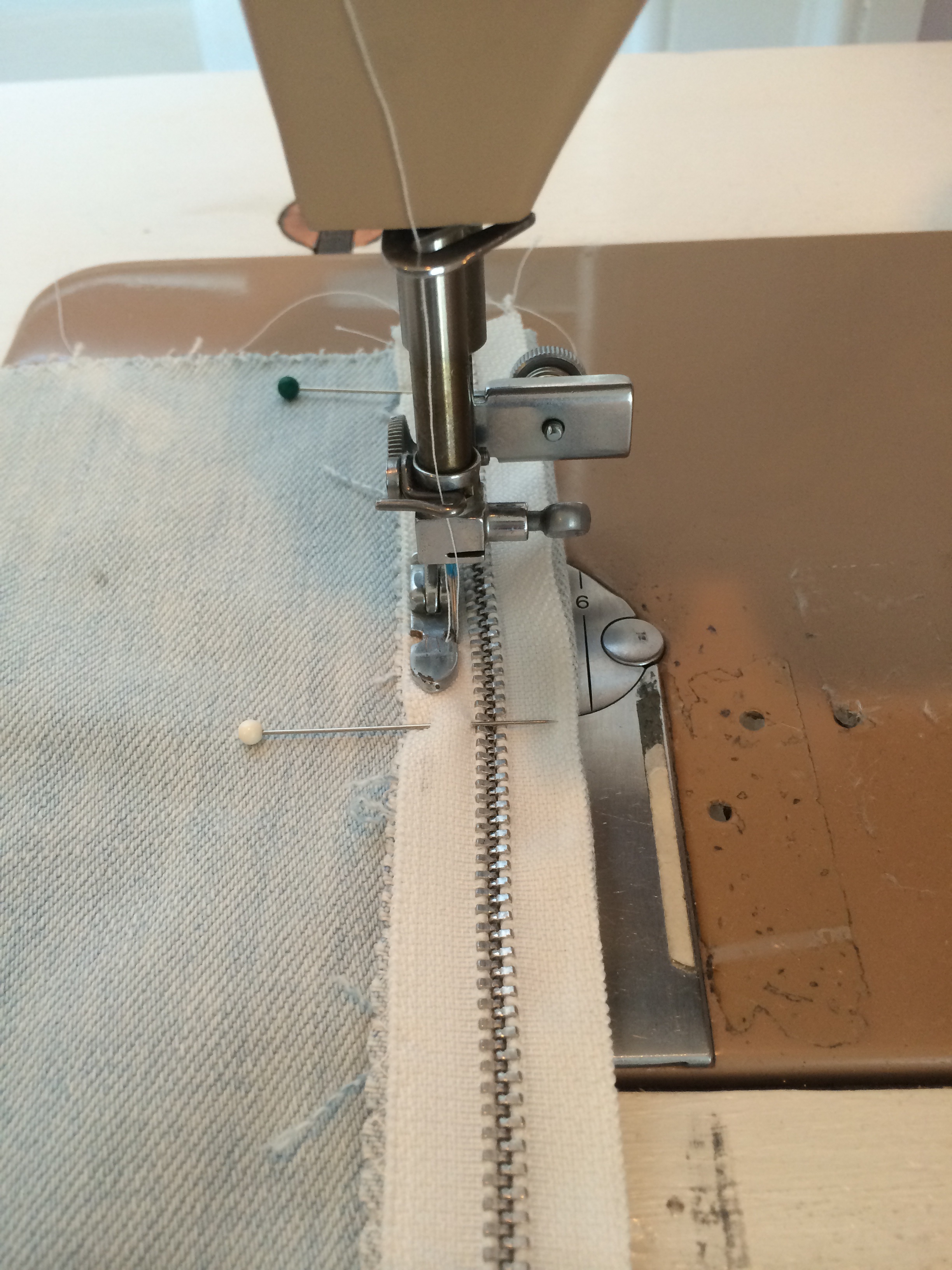
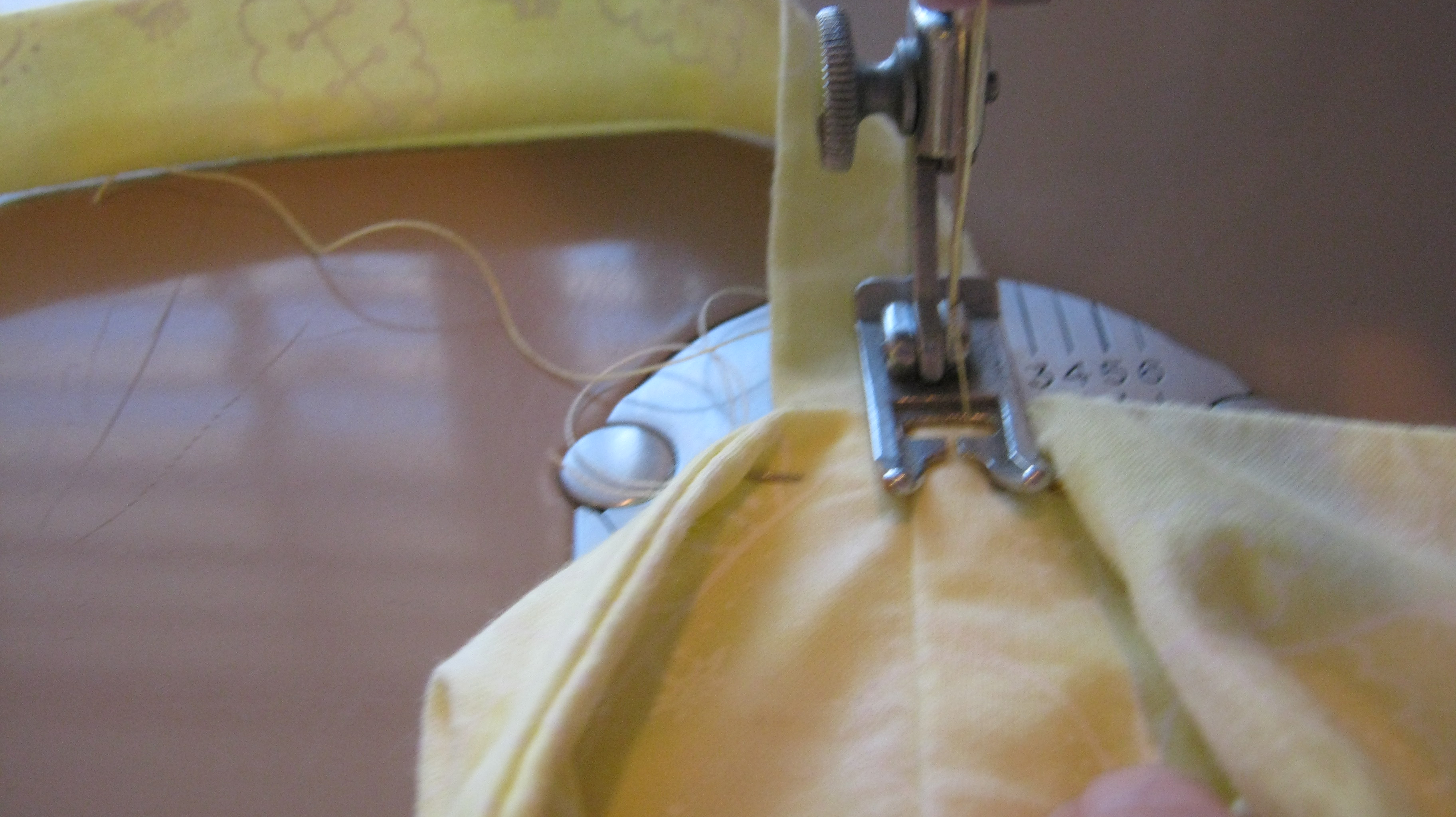
I wanted to sew in a lap zipper, so a folded over 1 inch of material

along the side of the 6 inch wide strip and pinned the zipper face

down on to it. Then sewed in place.
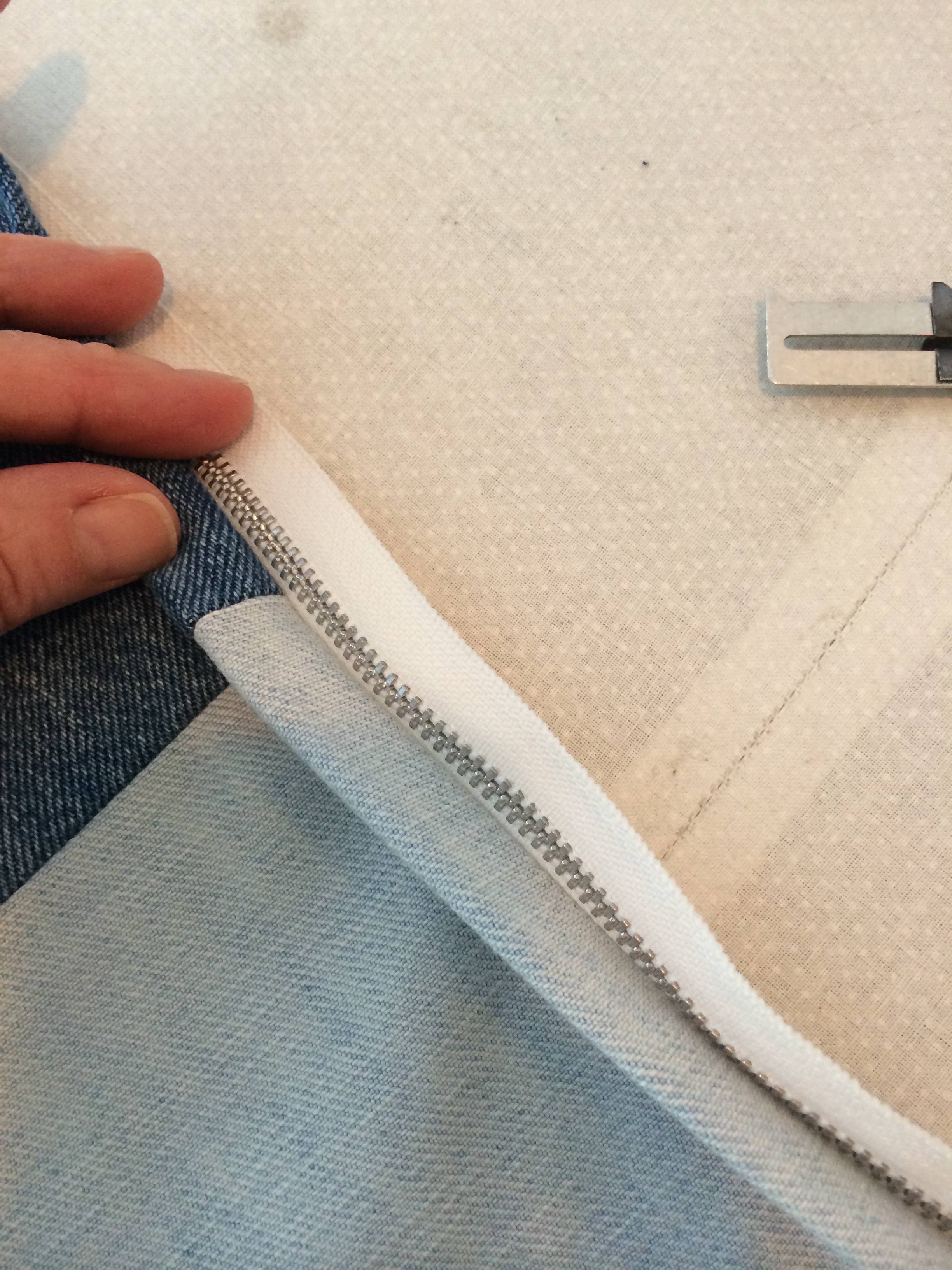
image  image

The width of the strip with the zipper attached was then 5 inches.

This strip was cut into 2 , one 2 inches,  and one 3 inches wide.

With the zipper attached to the  2 inch wide side.

image  image

Next, I took the strip that was now 3 inches and folded down 1

edge by 1/2 inch(equaling a seam width), then pinned it to  the unsewn

half of the zipper,

image image.

and sewn into place, tnow the strip, including zipper is 4 inches wide.

image

Next I cut more pants into4 inch wide strips,  and sewed them end to end to the

strip with the zipper.  My goal length was 129 inches, enough to go around the main

pieces plus a little xtra  just because.  126 inches should be enough, but it never hurts

to cya.
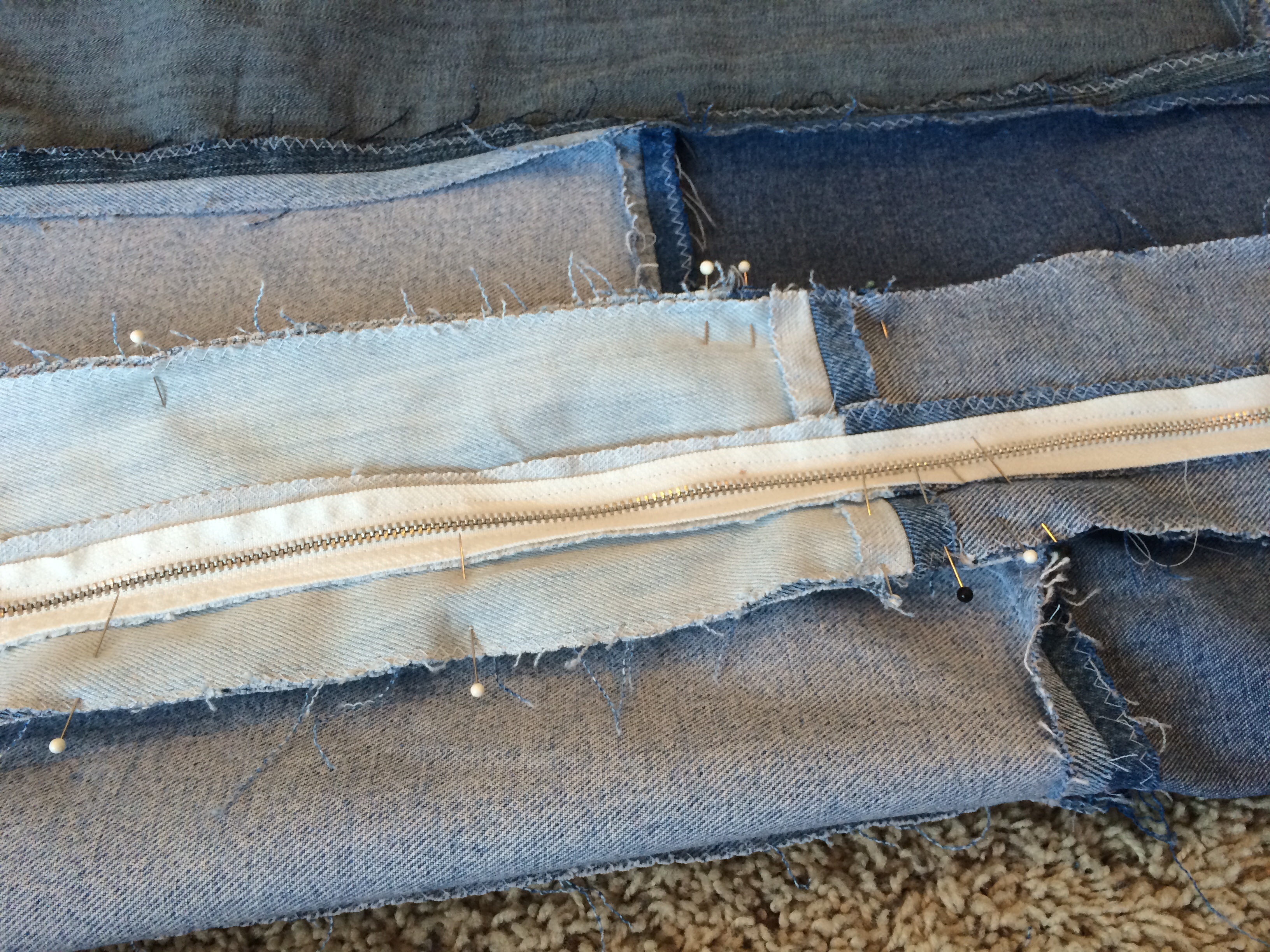
image  image

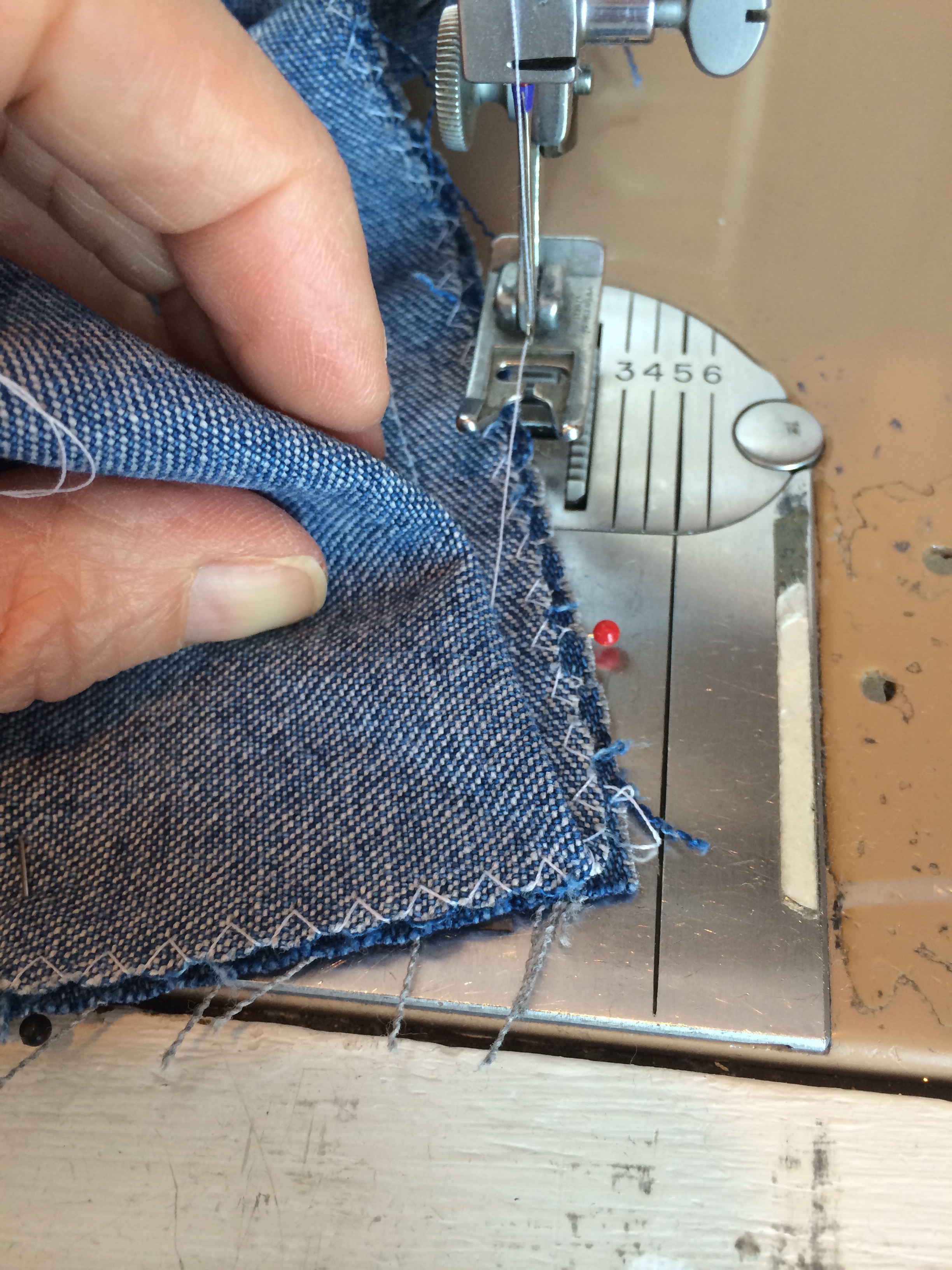
the side  was pinned to the bottom and top of the bed, right sides facing

each other.  I was not concerned about enclosing the bed, because all

I’d have to do is unzip the zipper to turn it inside out.  The corners were

the tricky part, but you can see how I did them in the below pictures:

image  image


image  image

image   image

on the left, the sides are all sewn in , the right the finished bed turned

right side out….but alas it is not quite done… it still needs stuffing.

I decided to make a casing  for the stuffing, because I’m all about making

things easier to clean. The casing would hold the stuffing.  It  was made the

same as the bed itself, only without the strips.  I cut a 37 by 26 rectangle

from an old worn sheet of my daughters:
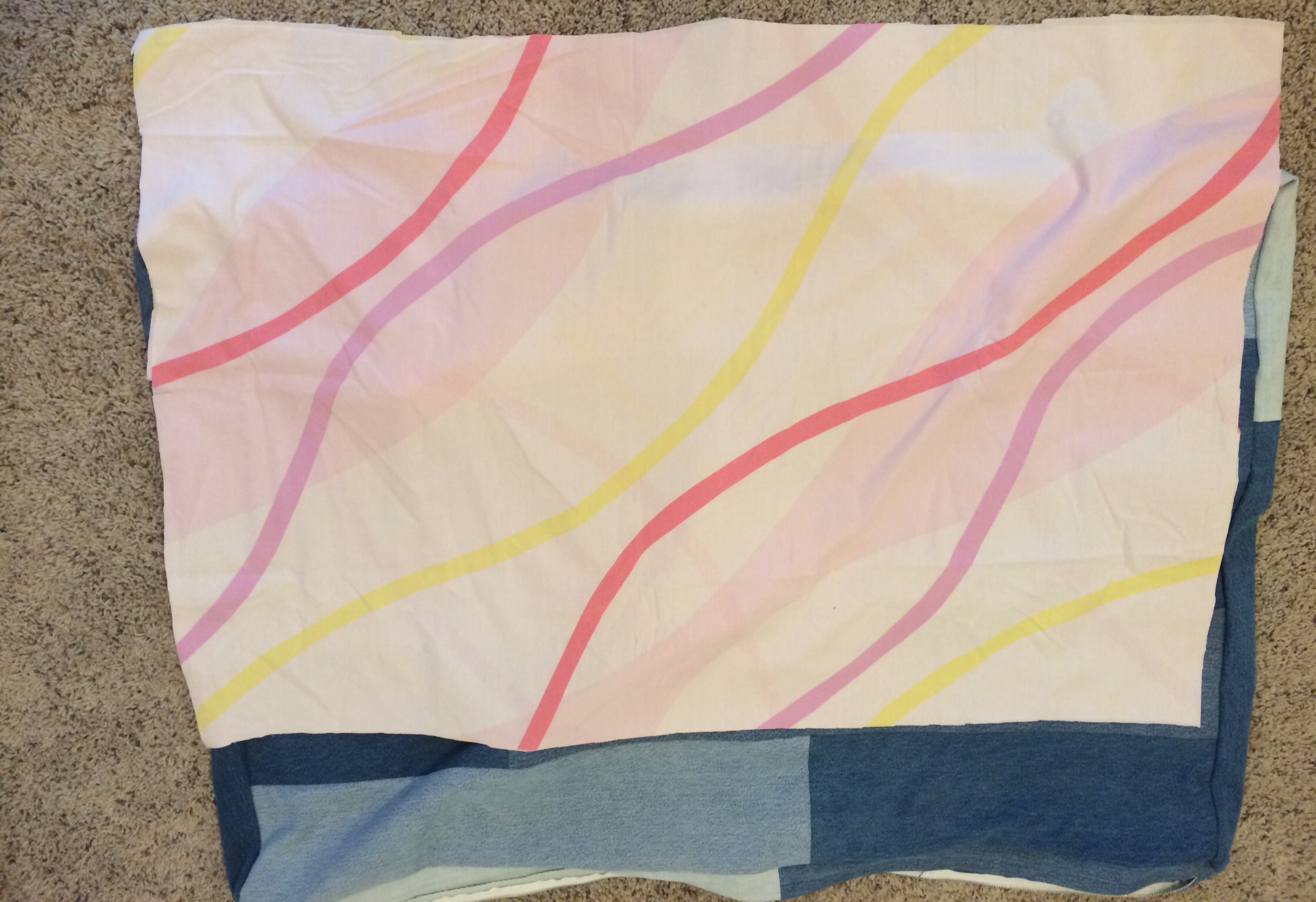
 

image  image

pieced several  strips of the sheet that were 4 inches wide, to achieve 126 inches,

pinned/sewed this to the top and bottom pieces.
 

image   image

I placed about 8 layers of batting inside the casing, then sewed it shut on my machine,

pinning the raw edges inward, first.


image  image

The finished casing fit nicely into the bed.


image image

Murphy loves his new bed!!


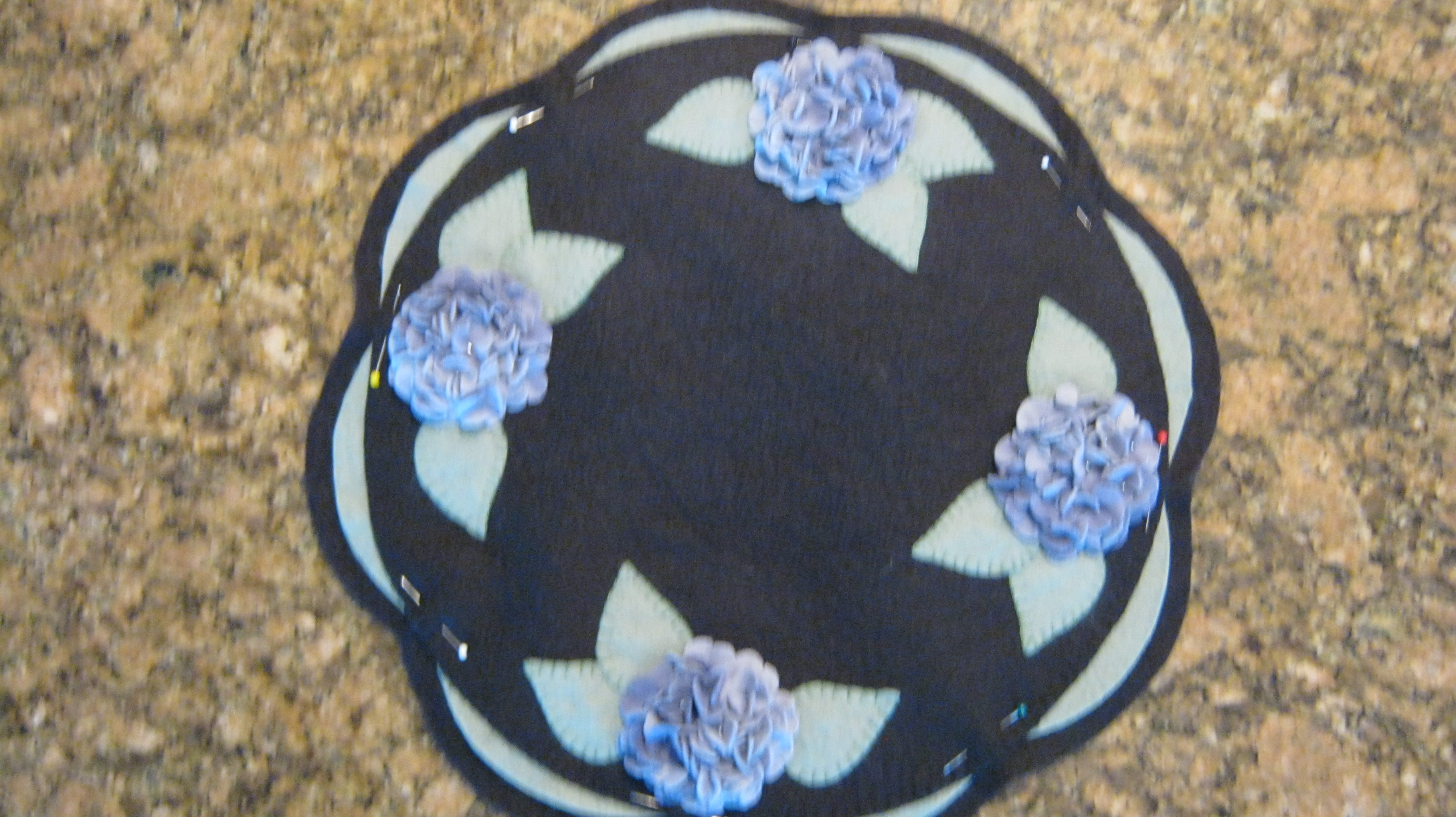
hydrangea penny rug/candle mat

 Hydrangea Penny Rug/Candle Mat

    IMG_0769

IMG_0818

IMG_0819

I have three dear friends who share my passion for  crafting.   We try to get

together on a regular basis to create.  At one of our sessions,  Tanya

introduced us to the art of Penny Rugs.   We made the cutest Easter penny

rug designed  by Barbie Jo Paquin, and I was hooked.  I have made several

of my own designs since.  The Hydrangea Penny is my latest effort.  I am

including the directions in case you want to give it a try.

To make this you will need :

1/2 yard of black wool felt

1/2 yard of green wool felt

1/8 yard, or 1/2 of  a fat quarter of tye dyed blue wool felt, and matching thread

embroidery  floss:  green to match or slightly  contrast the green felt and black

you will also need blue seed beads that match the blue felt

Freezer paper

Poster board- at least 2 pieces

Click here for printable pattern pieces. penny rug hydrangea pattern

Prior to starting, you will want to decide on the texture of your wool felt.  You can leave as you bought it, or you can felt it so that it has a bumpier/textured  look to it.  You can see the difference if you click on the tab at the top of this page labeled ” FELTING WOOL FELT”.  You will also find directions for” felting” as well.

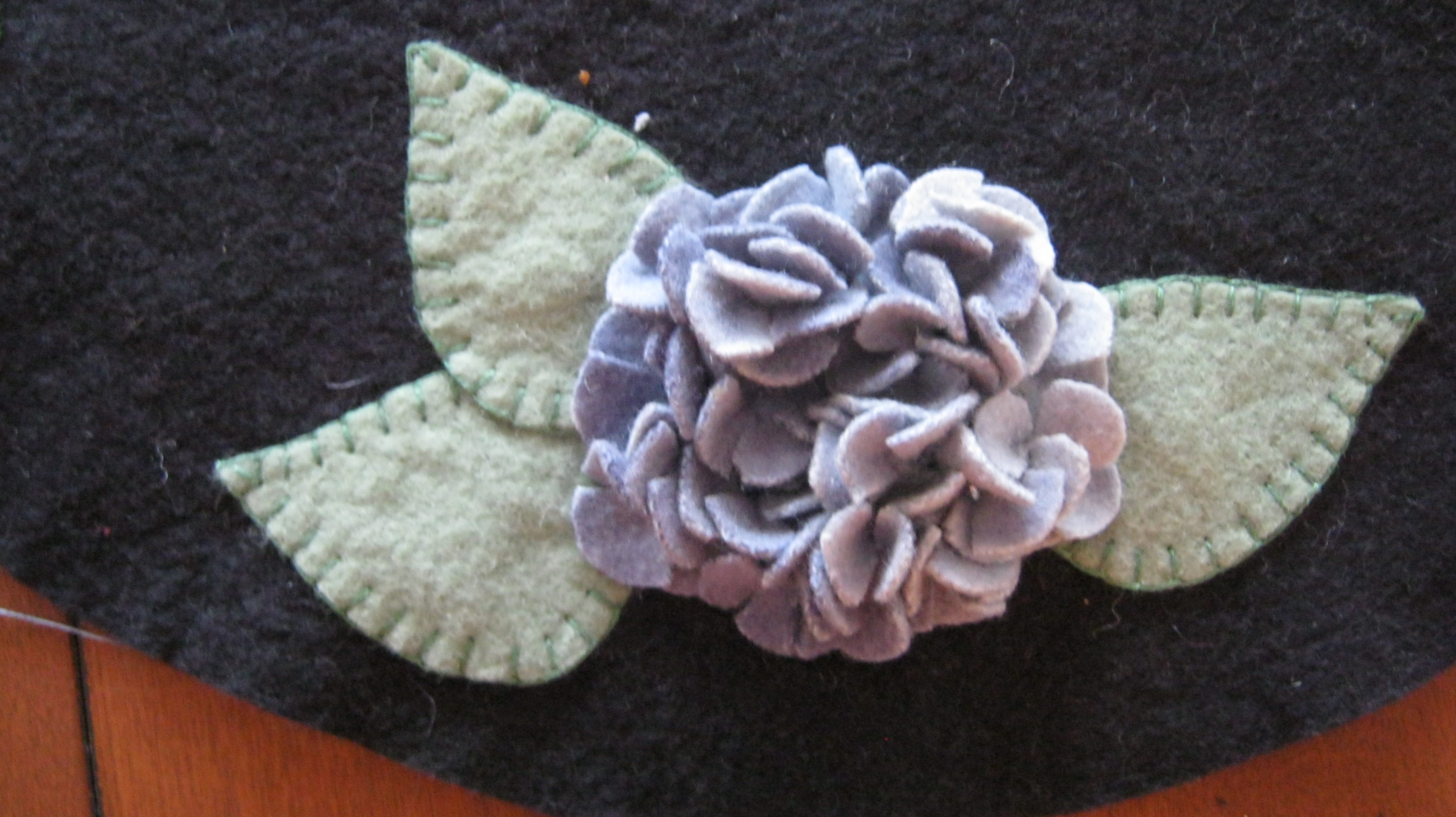
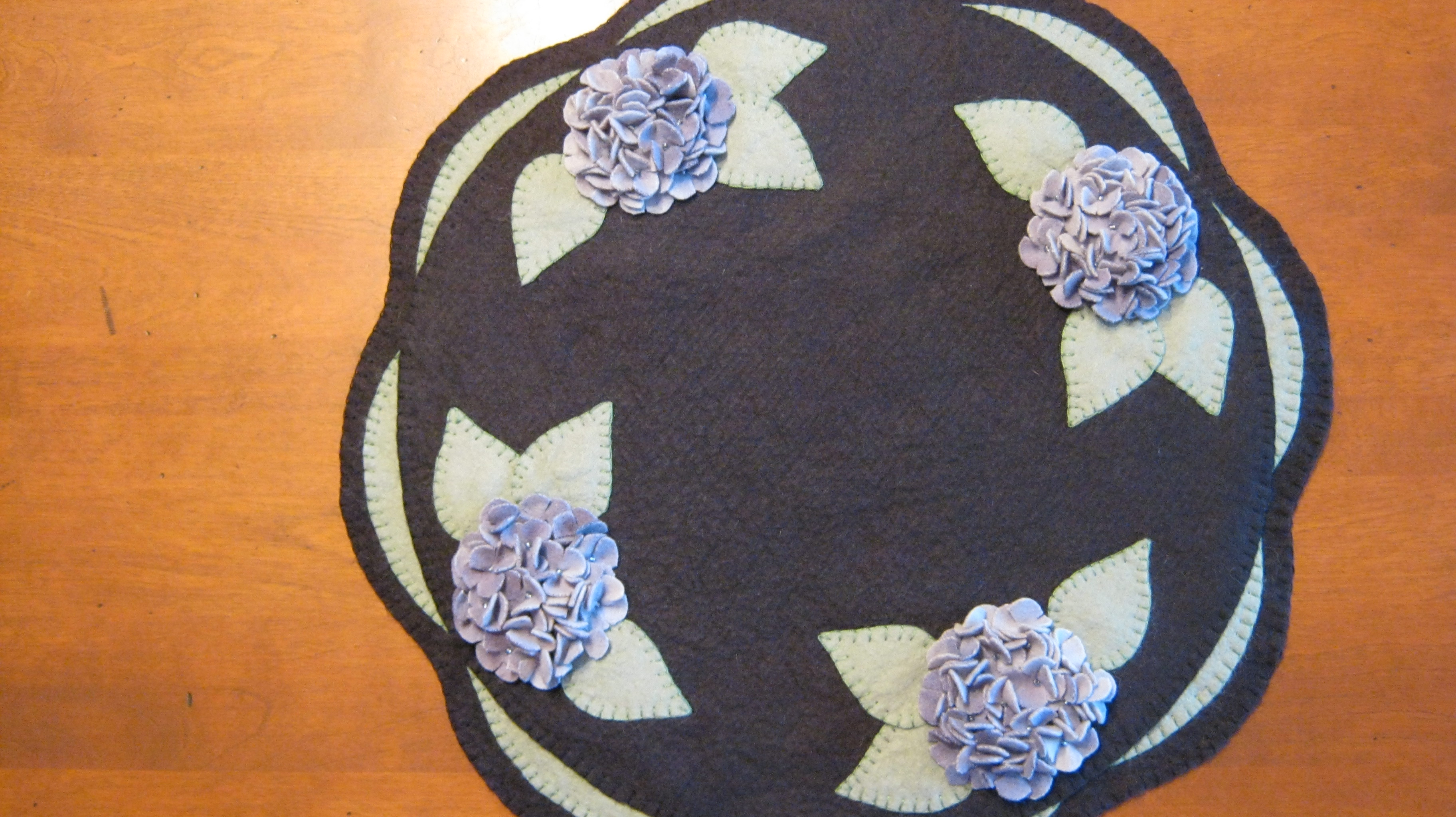
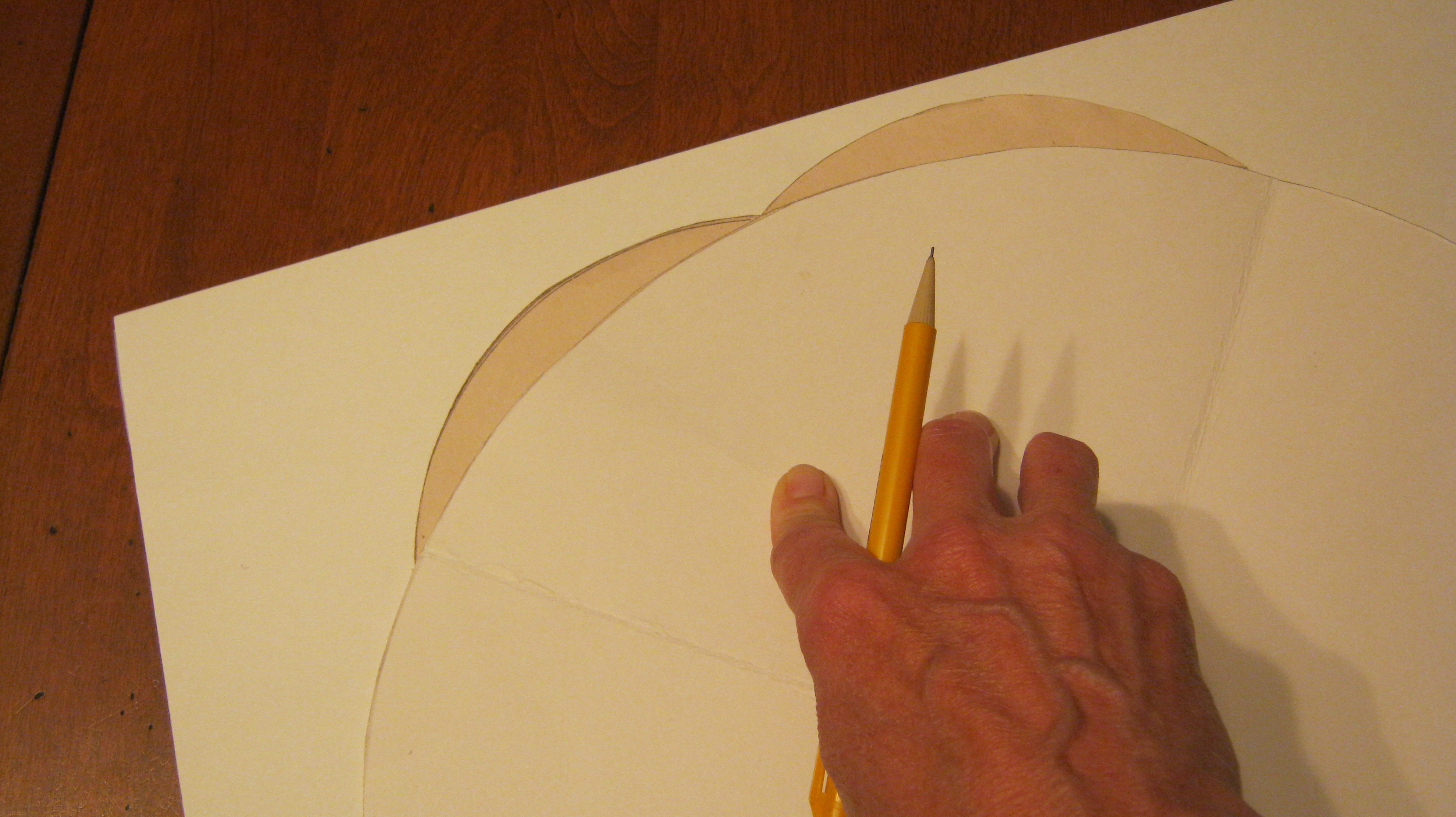
I gave you the pattern for the leaves, flowers, a small circle that will help give the hydrangea depth, and a Template for the scalloped edging around out side of middle and bottom layers of the rug.  You will need  to cut out 12 leaves, 72 flowers, and 4  of the ‘pillow” circles.    You will need to make a circle  pattern with a 14 inch diameter (out of the poster board).  I used tye dyed blue wool felt for the flowers, cutting about 1/2 of them  from the darker section of felt and 1/2 from the lighter section.  This gave the finished  hydrangeas their variegated color.  To cut out the flowers, leaves and small pillow circles start by taking the freezer paper, place it shiney side down on the wool felt and secure by pressing it into  place with an iron.  Trace the pattern pieces  onto the appropriate color of wool felt, and cut out.

IMG_0729.

Freezer paper ironed to wool felt  and

flowers traced on to it.

IMG_0750

Prep for the flowers, by cutting them out, then

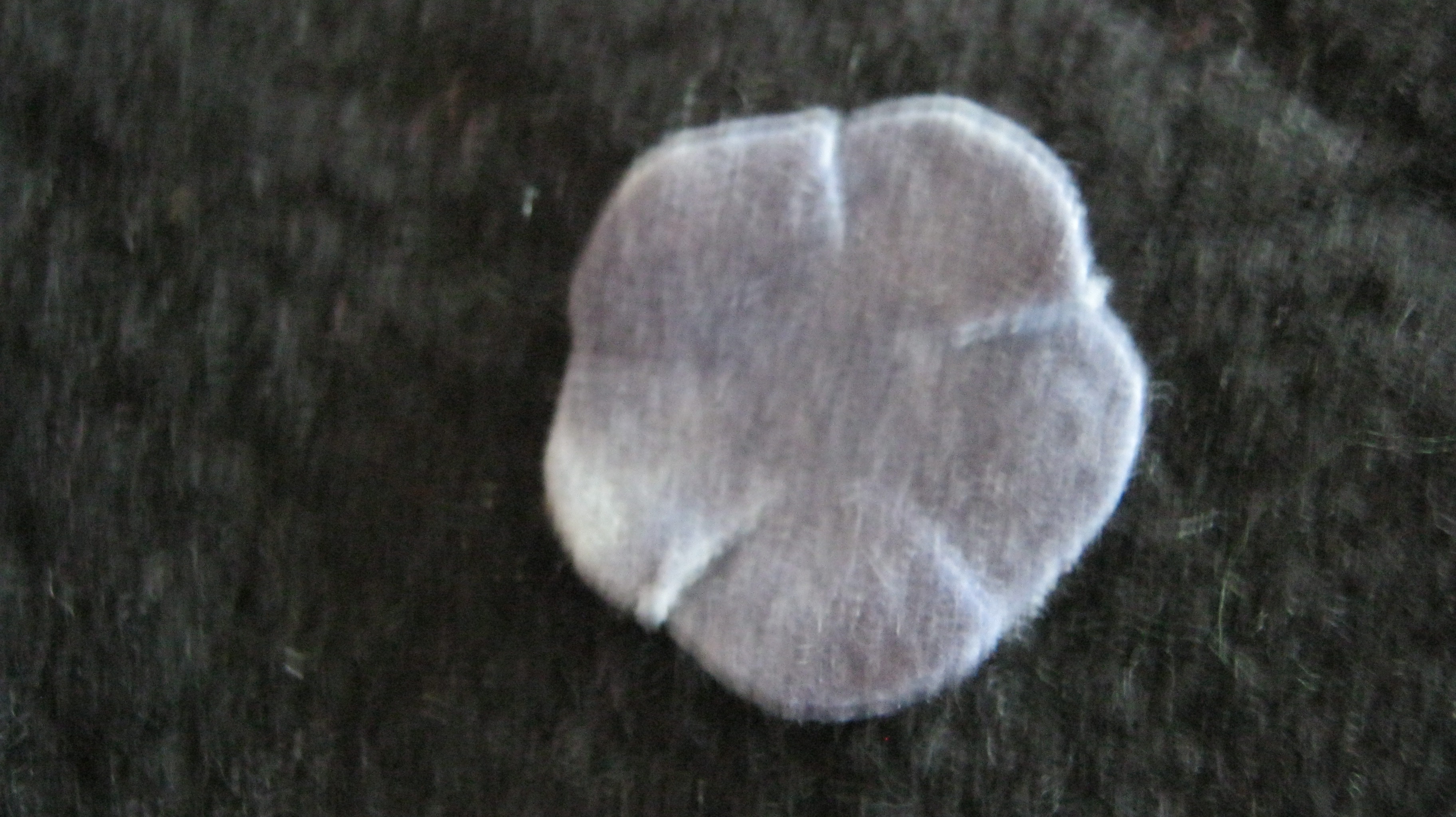
snipping them  to create petals as above

IMG_0731

shape the petals by trimming off the corners.

IMG_0751

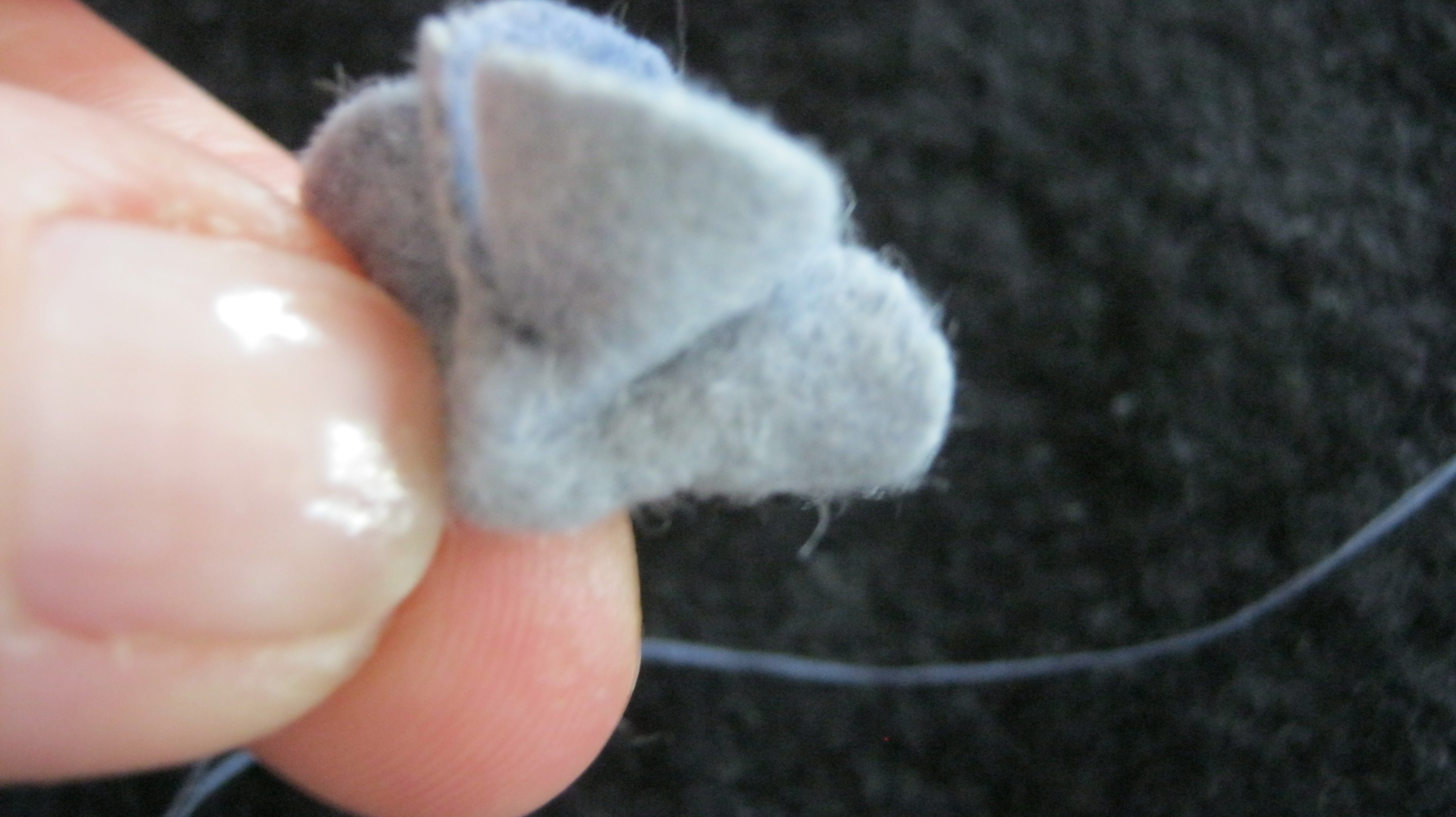
to form flower

IMG_0753

stitch around inside, but don’t knot off.

IMG_0754

then pull thread  tight, cinching bottom  of flower.

IMG_0757

secure by stitching across bottom several times.

IMG_0756!

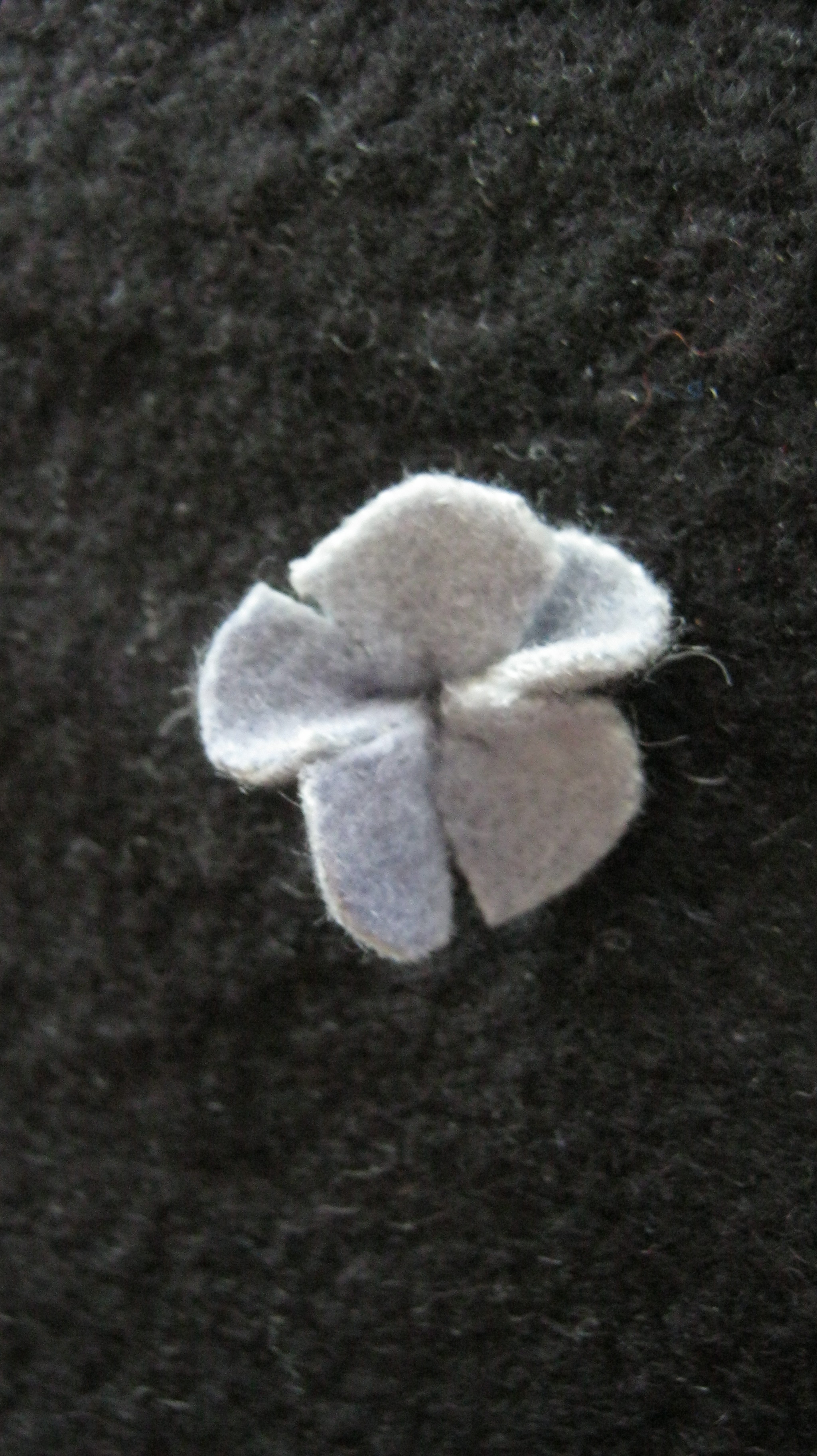
your flowers should look like this.

Repeat 71 more times!

IMG_0761

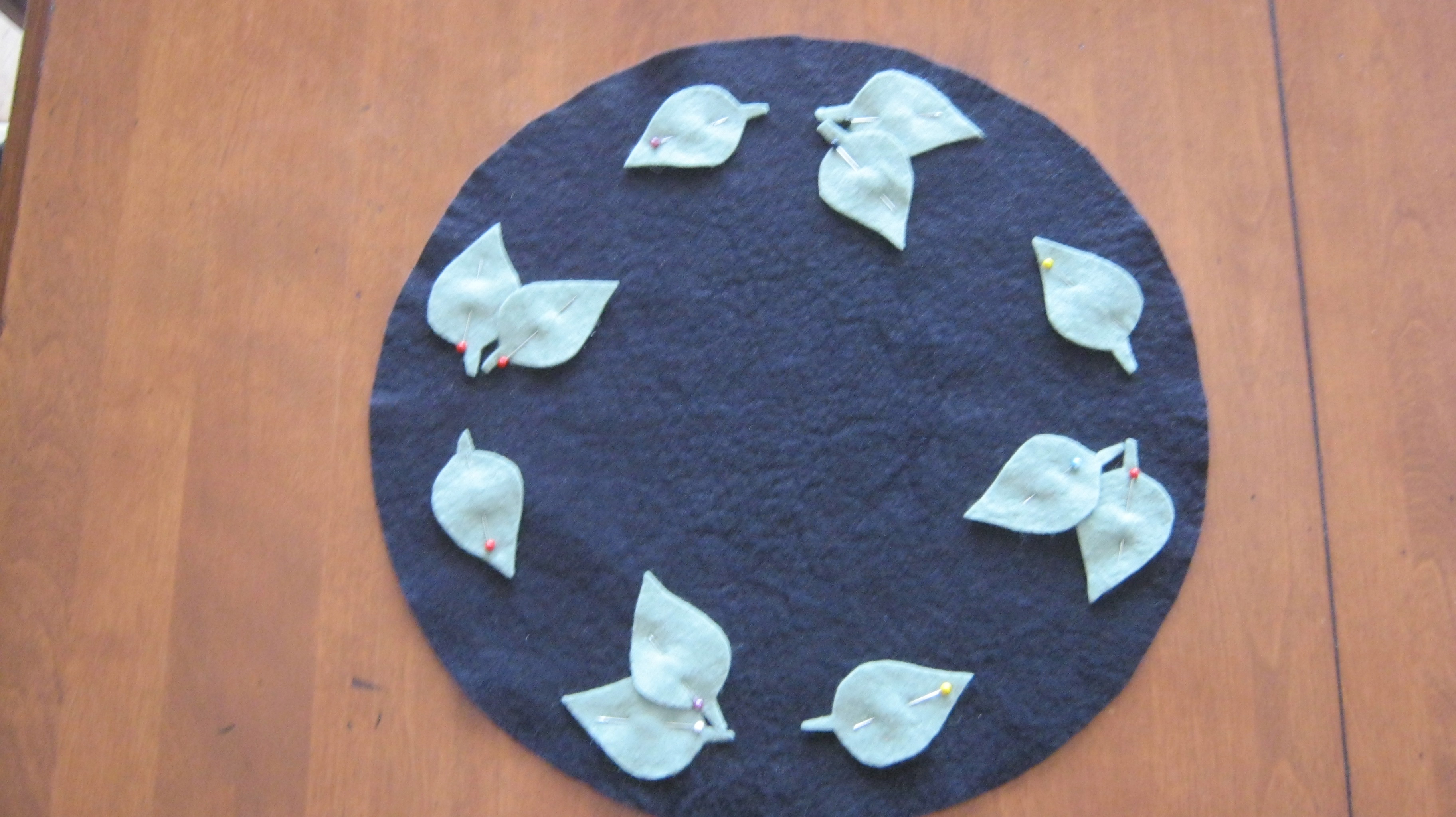
Next lay out the leaves as shown onto the large14

inch circle cut from the black felt..

IMG_0829

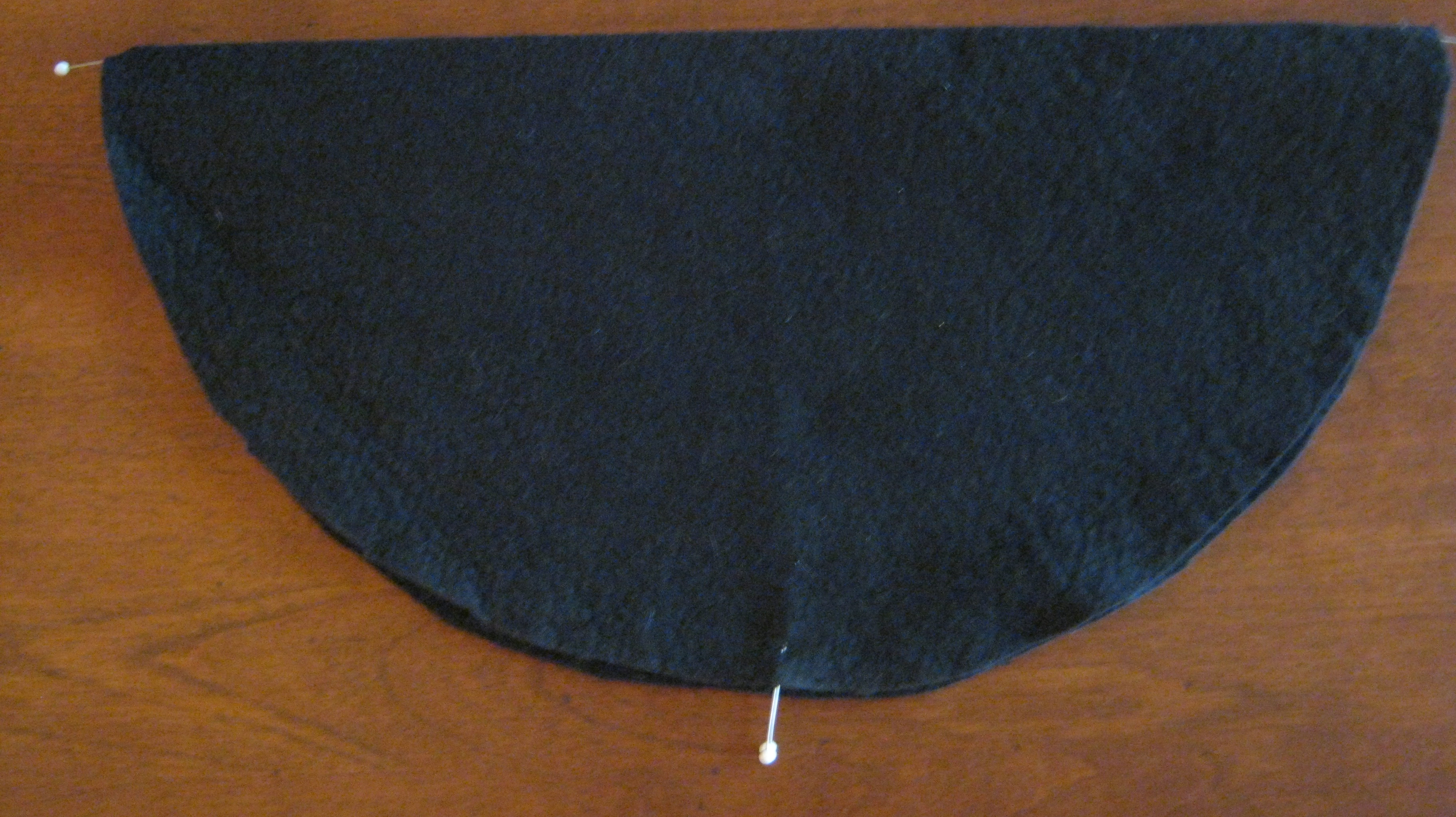
An easy way to determine

placement is to fold the circle in half, pinning each

end of the fold, bring these two pins together and

pin the ends of the new  perpendicular diameter. These

pins  will be the center of the flowers,  arrange the

leaves around this mark.

IMG_0764

blanket stitch  around the leaves using green floss.

IMG_0775

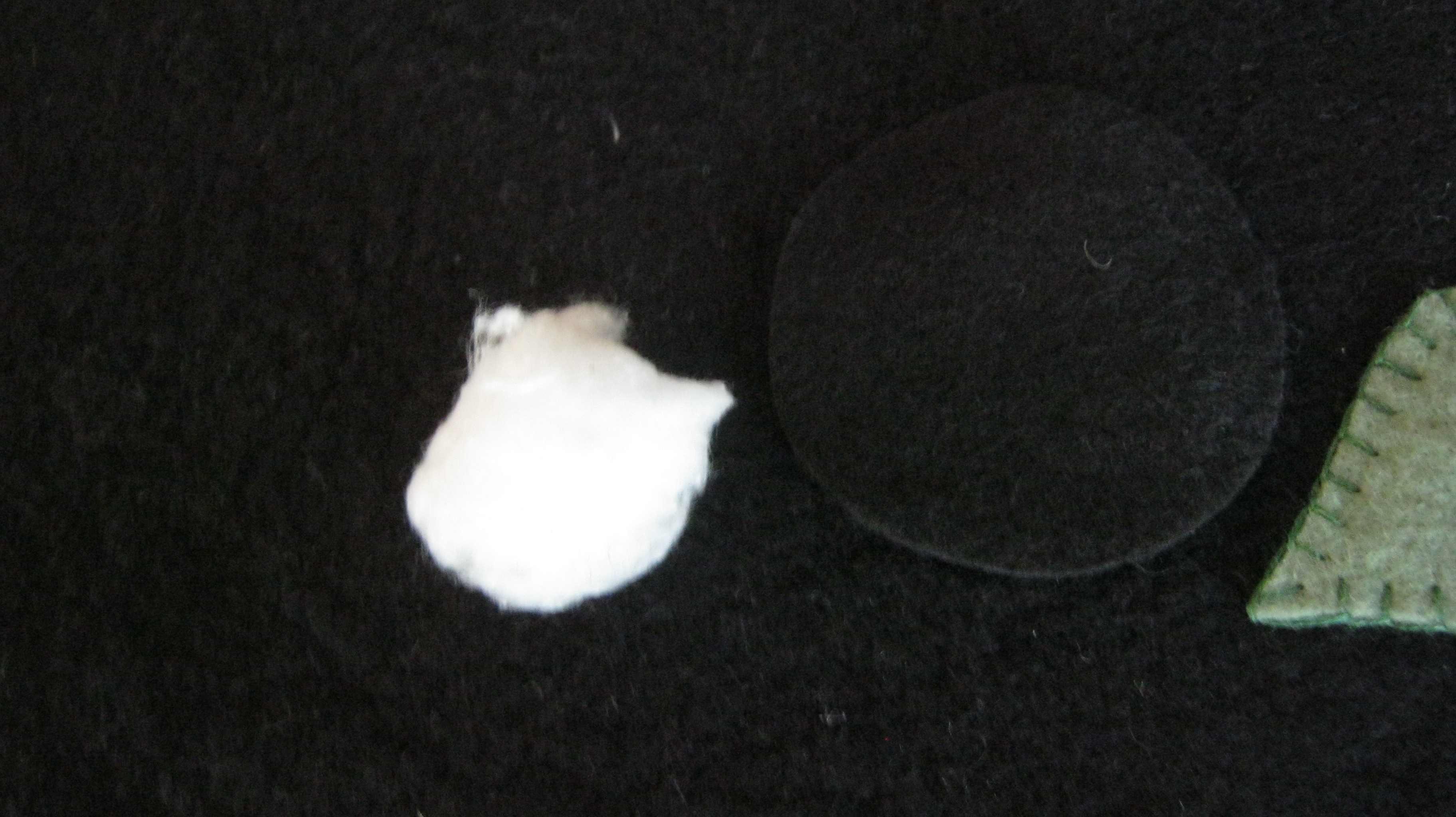
To give the hydrangea depth   take a cotton ball

and cut it in half

IMG_0777

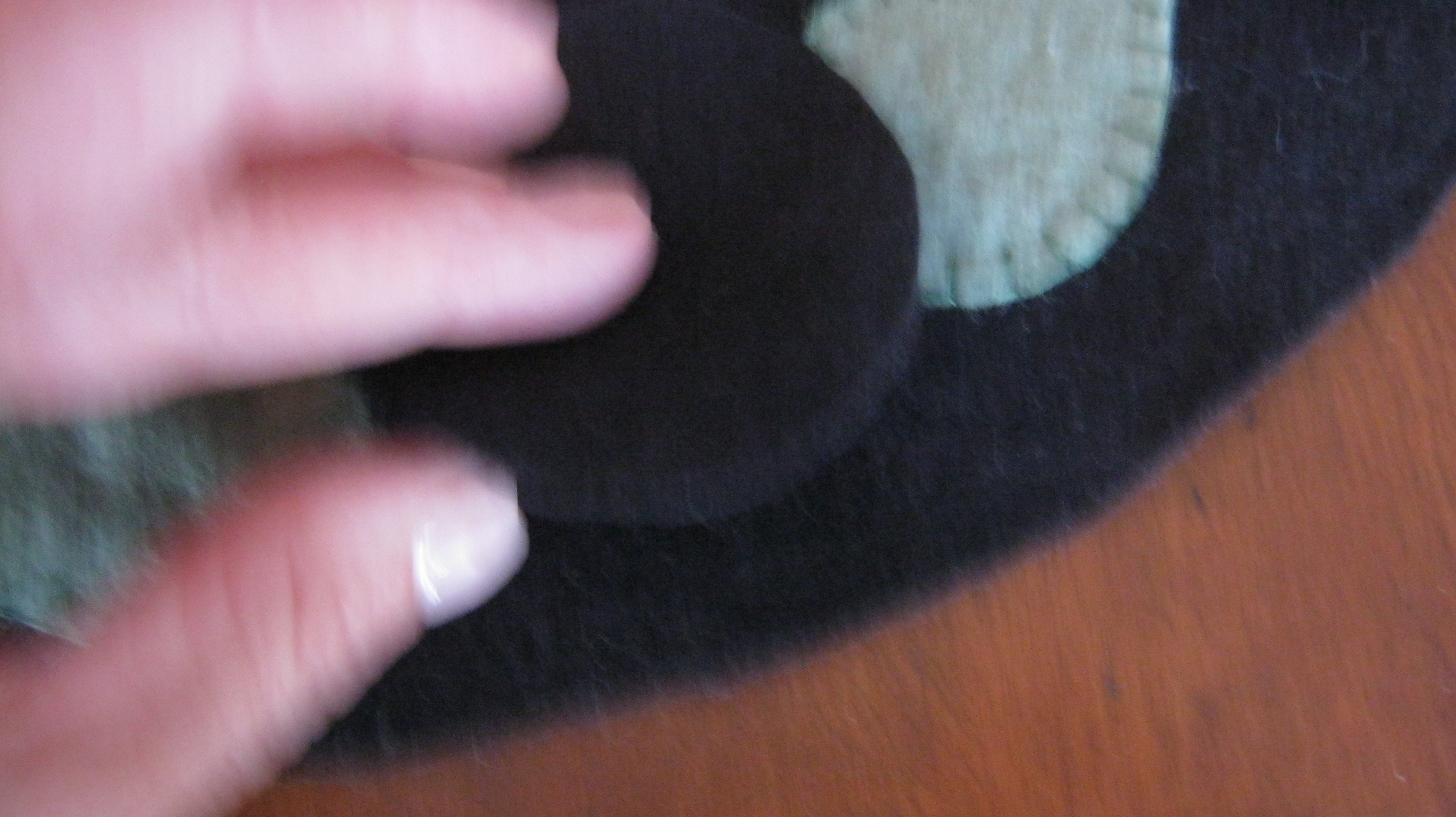
place it in the center of the  leaves and cover with

the small black circle

IMG_0779

IMG_0774

secure by stitching around out side using blanket stitch

and black floss.

This will give height to the hydrangea.

.IMG_0765

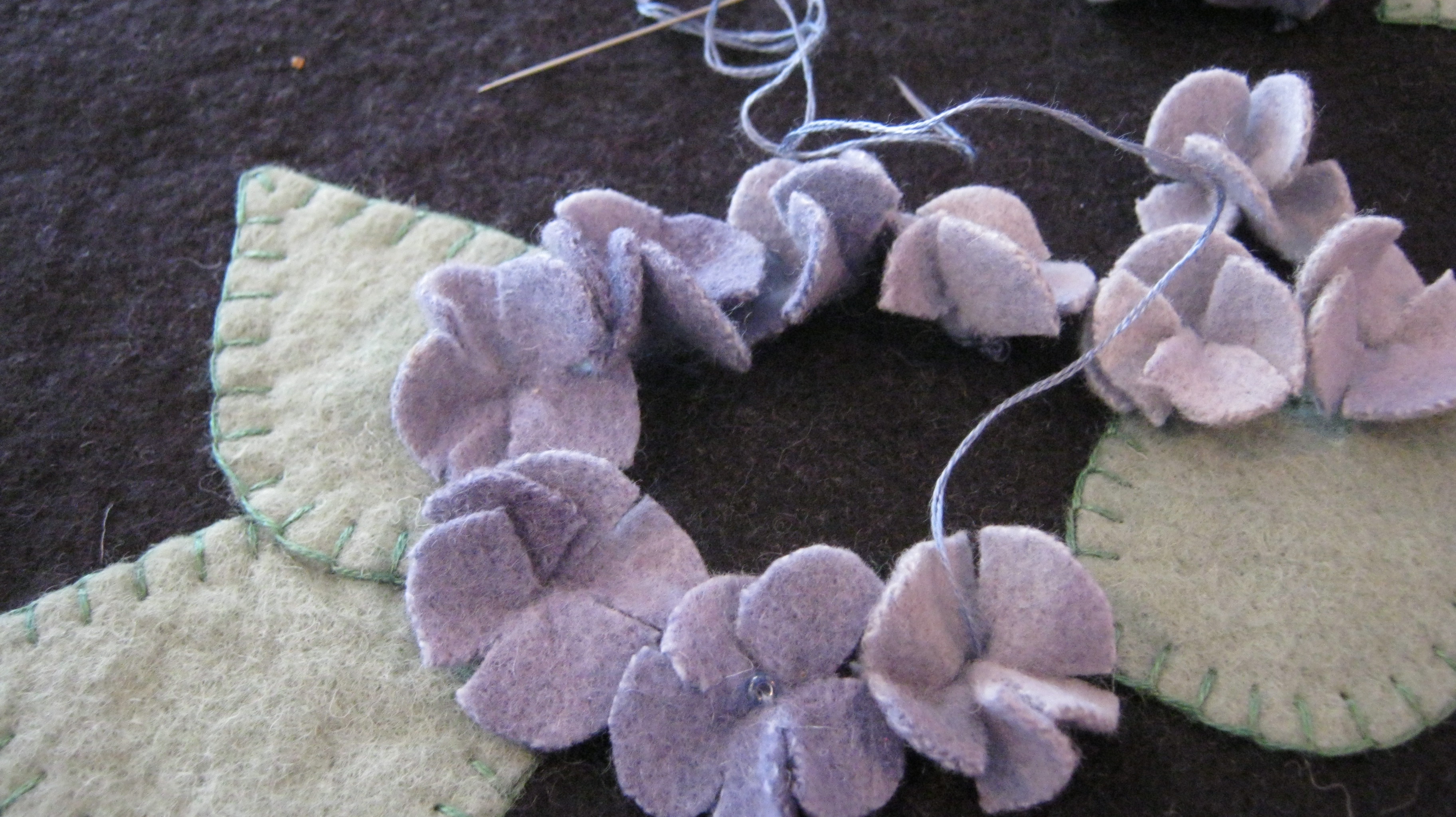
place the flowers around the edge of the black circle you just

applied. I arranged them, with darker flowers on one side

and lighter ones on the other.

IMG_0769

That will give you the variegated look.

It should take about 10 to cover the outside edge.

IMG_0766

IMG_0768

IMG_0767

.

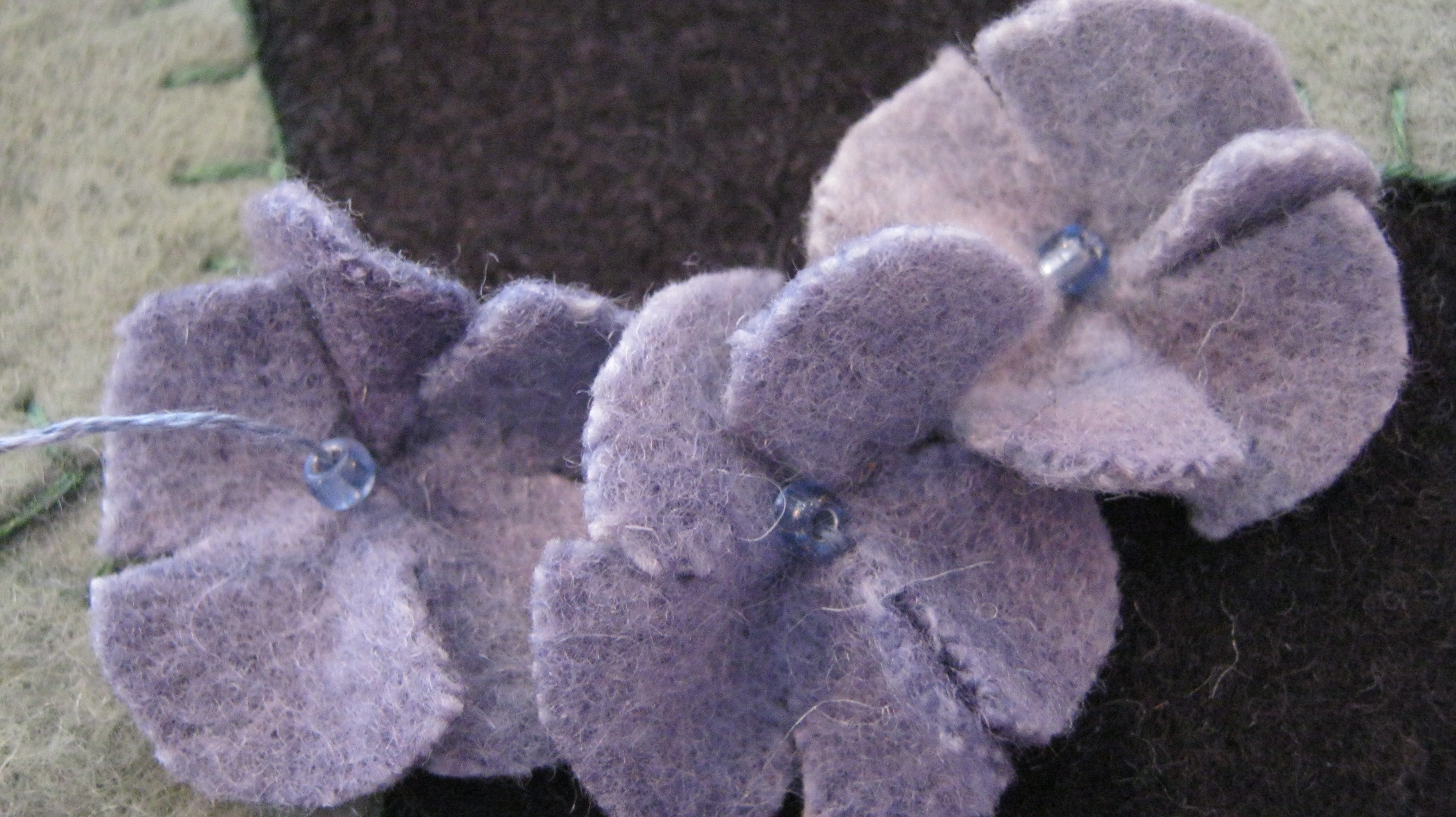
Attach the flowers  with a single stitch  brought up from

the bottom, going through the flower, then through a

bead and back down through the flower.  Once you have

10 attached around the edge of the circle, fill in the middle.

it should take about 7 more.   Repeat this for all four hydrangeas.

IMG_0796

IMG_0797

IMG_0799

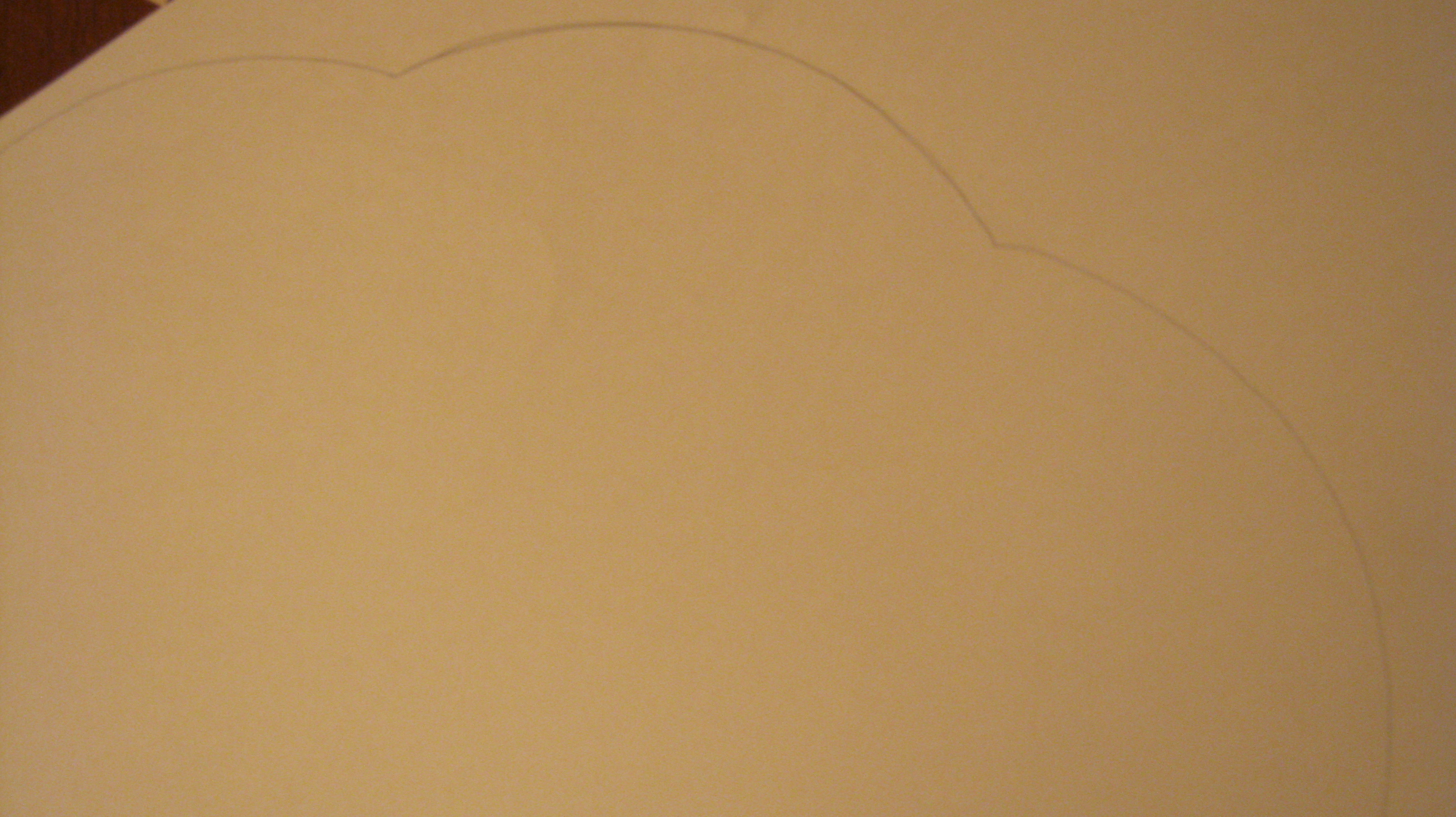
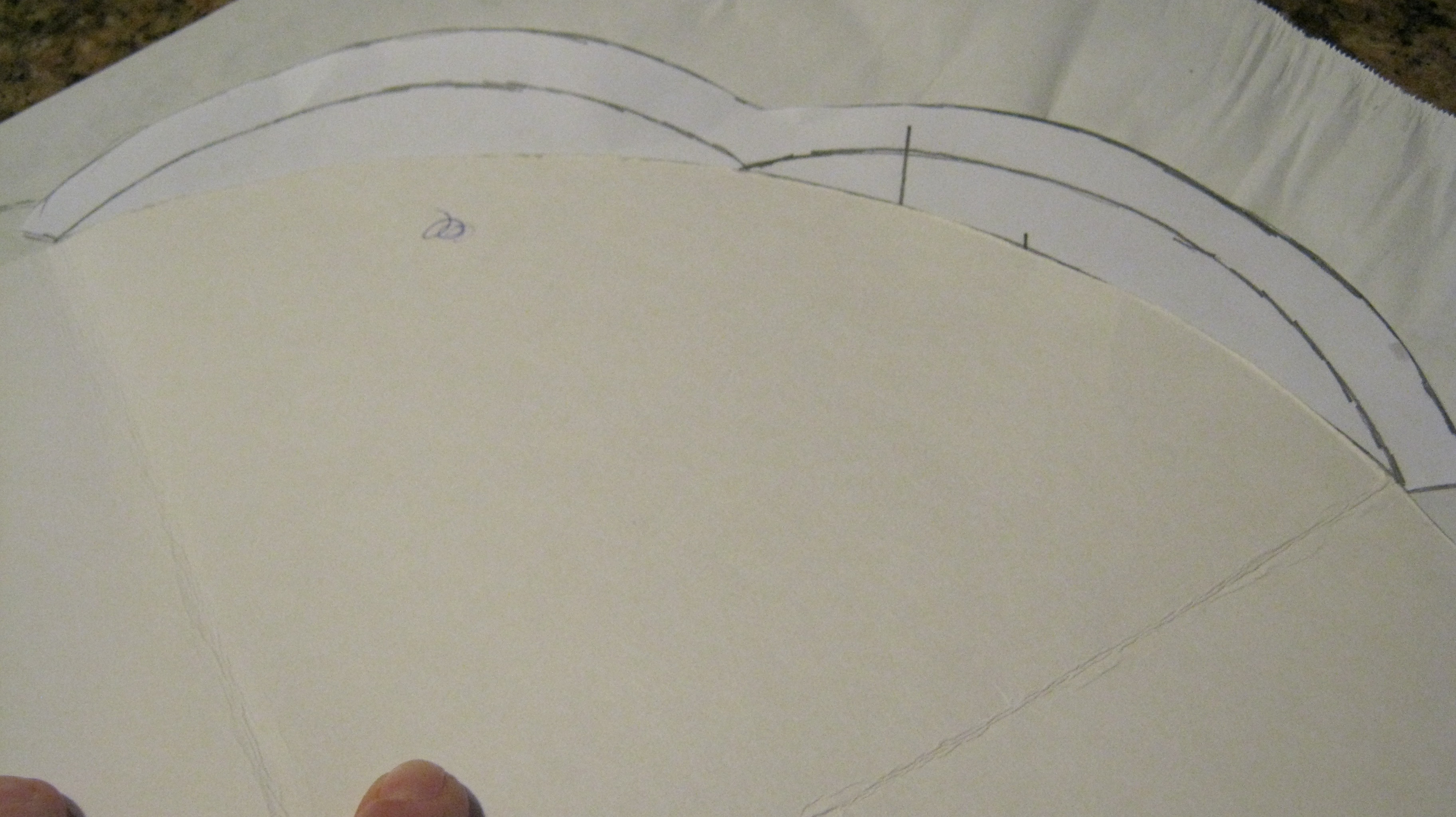
Next use your 14 inch circle pattern and scallop template

to create a  pattern for the green layer  of the penny rug.

IMG_0782

trace pattern onto green felt, cut out, and place under

rug as shown.  Attach using blanket stitch with

black floss.

IMG_0830

IMG_0831

repeat to create pattern for bottom layer of rug,

trace onto black felt and cut out.

IMG_0802

place under green layer as shown, and attach using

IMG_0819

blanket stitch with green floss.  Finish edge with

black floss and blanket stitch.

I hope you enjoyed the tutorial, and give this pattern

a try.  If you do, let me know how you make out. I would

love to hear from you!

My New Favorite Shorts

IMG_0681

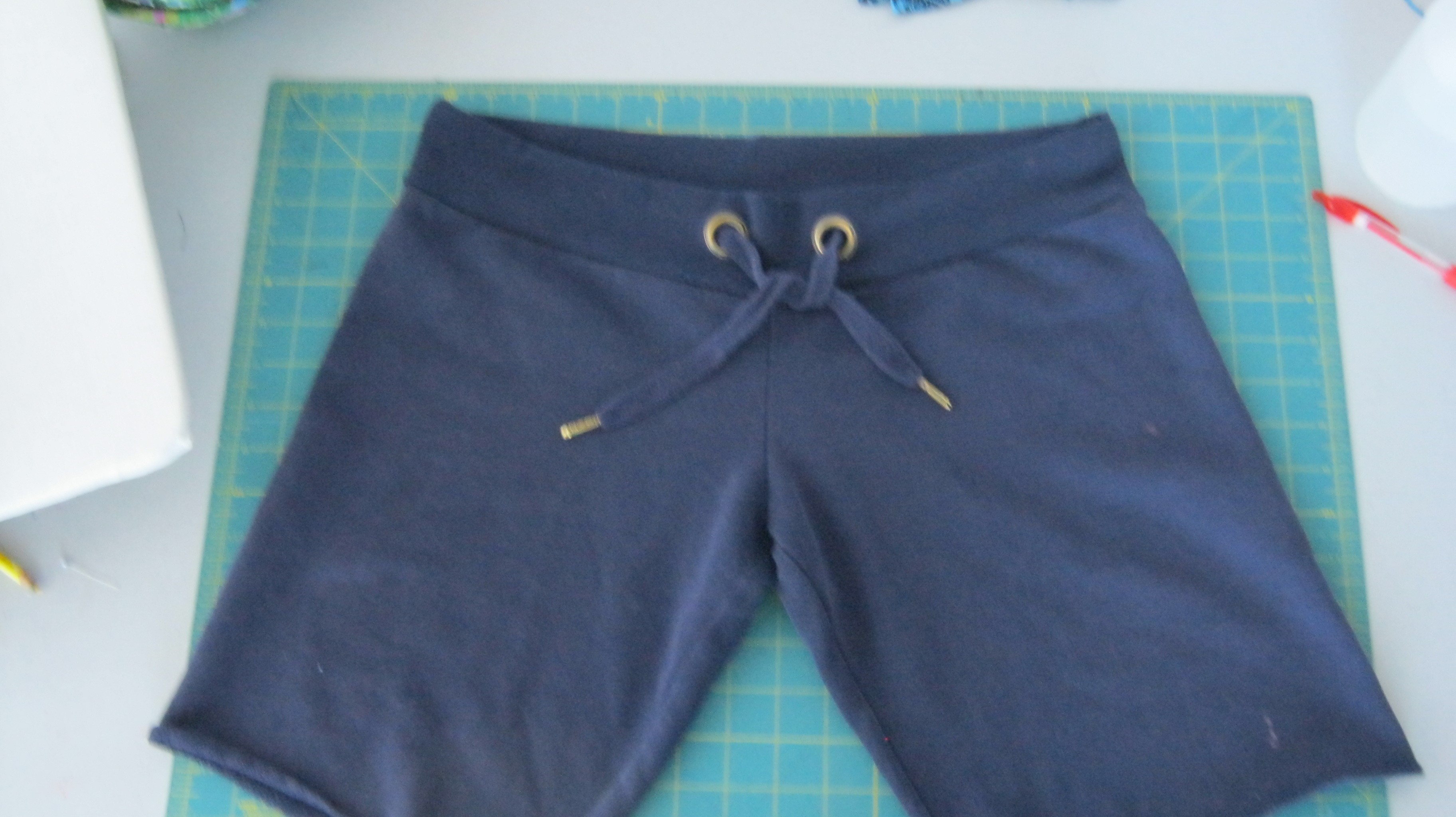
These are my favorite work out shorts.   They are getting

a little shabby, so I figured I would make a new favorite

pair.

IMG_0724 - Copy

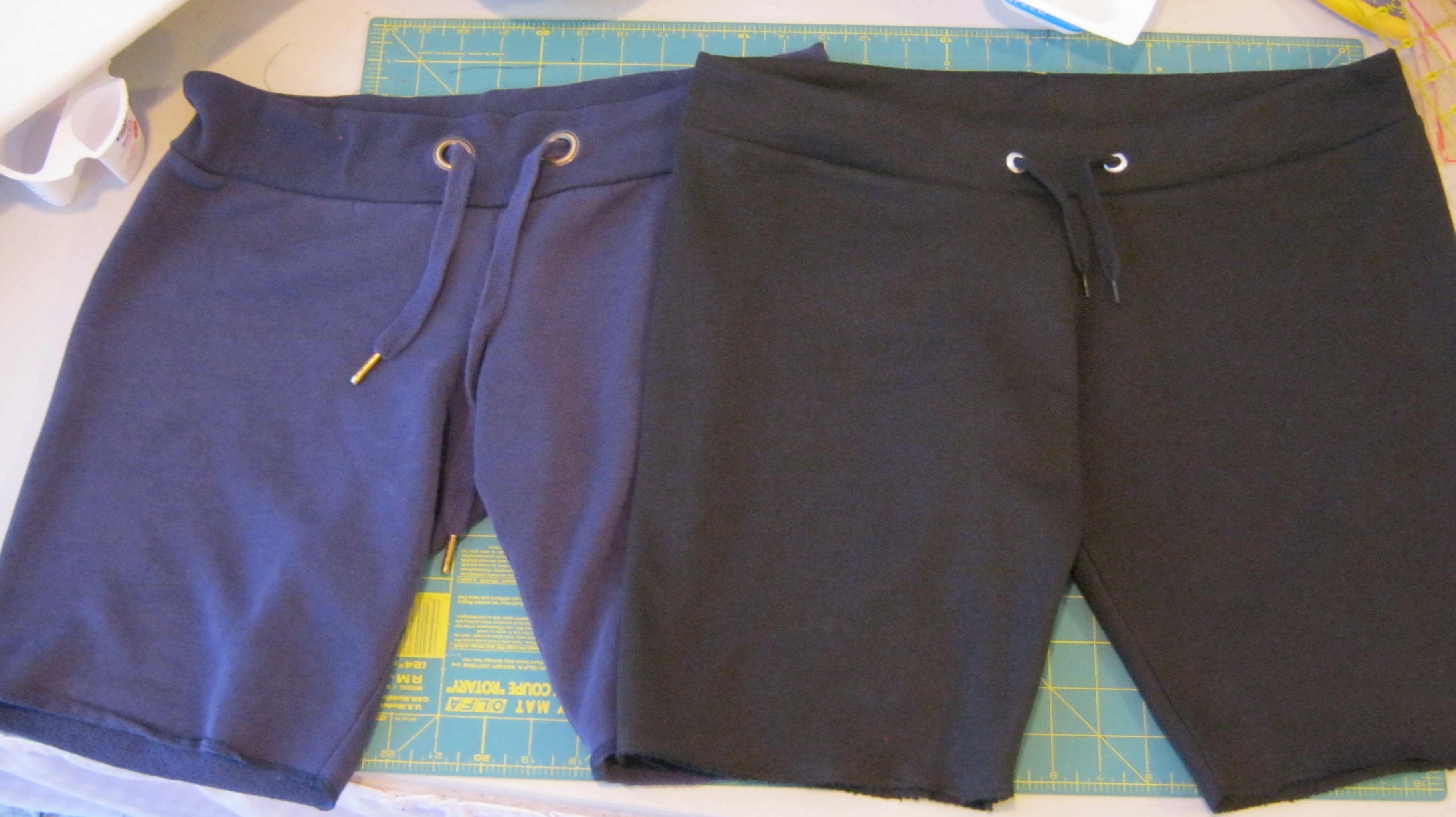
The black pair are it.

IMG_0680

I had this heavy black jersey(sweat shirt

material) that I found on sale at Karen’s Kreations in

Northfield NJ. It would make great shorts, and then some.

IMG_0685

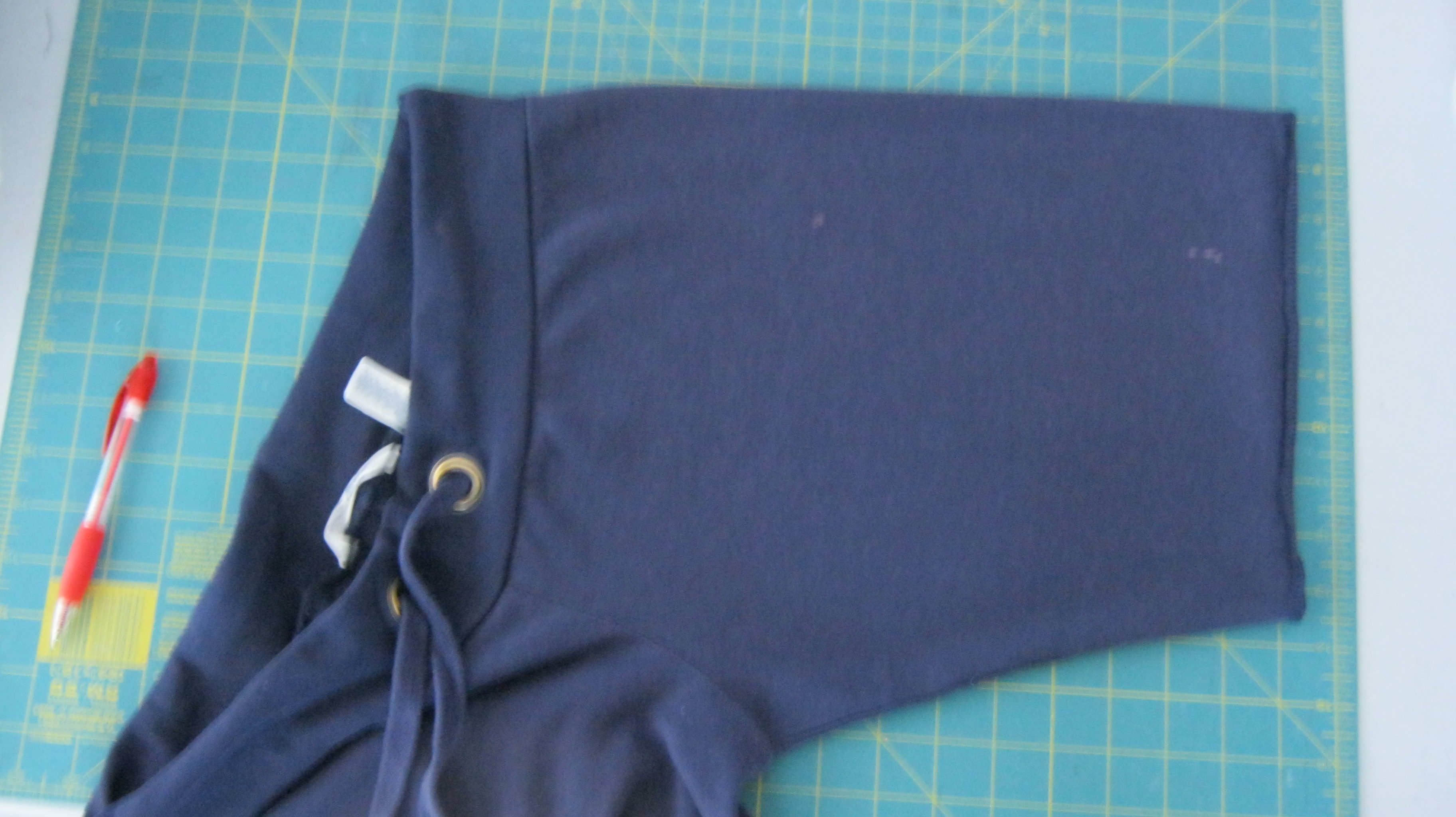
The plan was to open up all the seams

in order to make a pattern.  But  I was feeling

really lazy, and decided to trace a pattern with the shorts

as is.  I layed out the shorts then placed a piece of pattern

paper, that I took from a curtain pattern, on

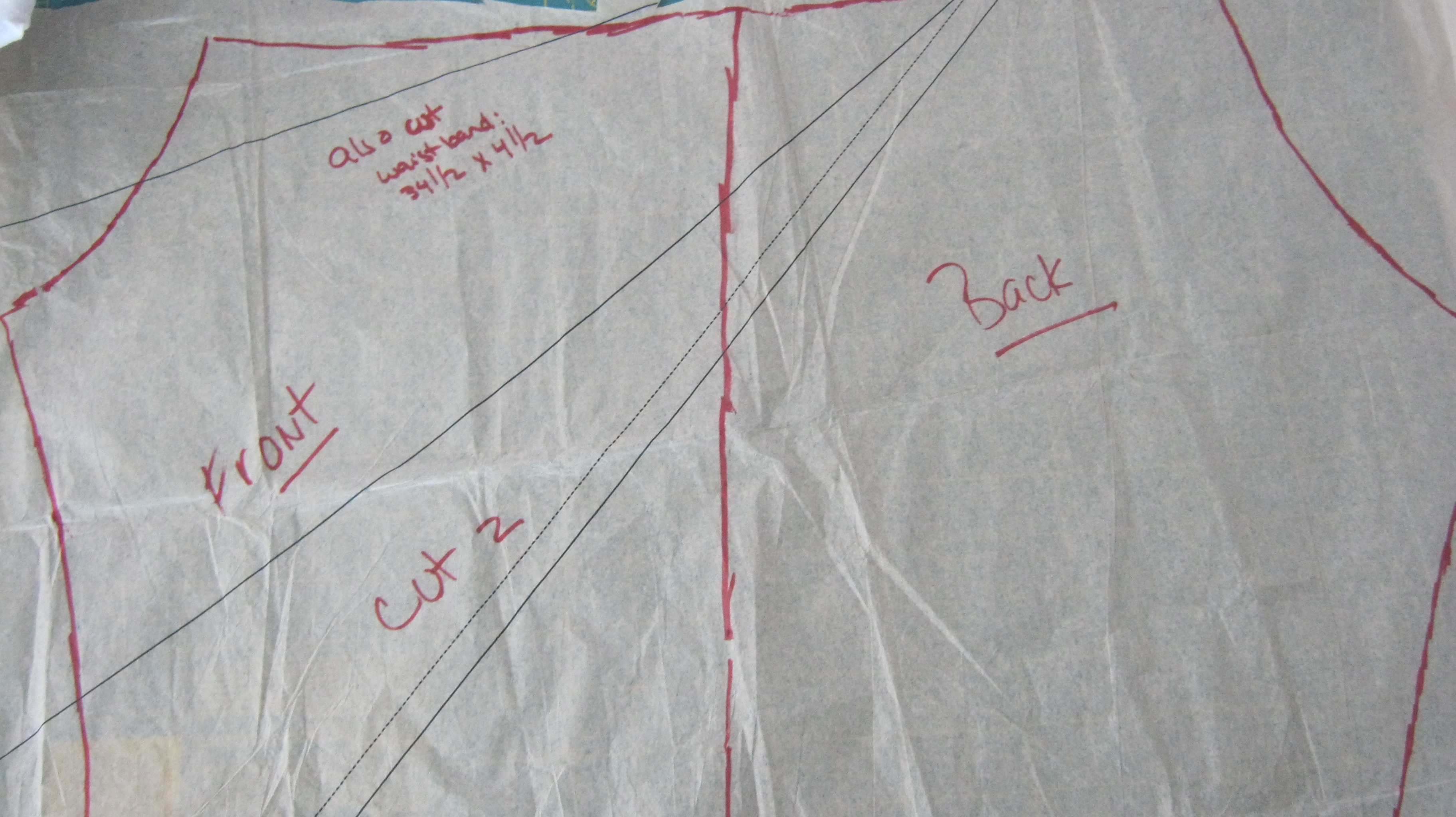
top. I traced the front of the shorts onto the paper,

adding about a 1/4 inch along the top and crotch  for seam

allowance.

IMG_0684

Then I did the same with the back.

IMG_0693

The this is how the pattern looked.

IMG_0687

IMG_0688

IMG_0690

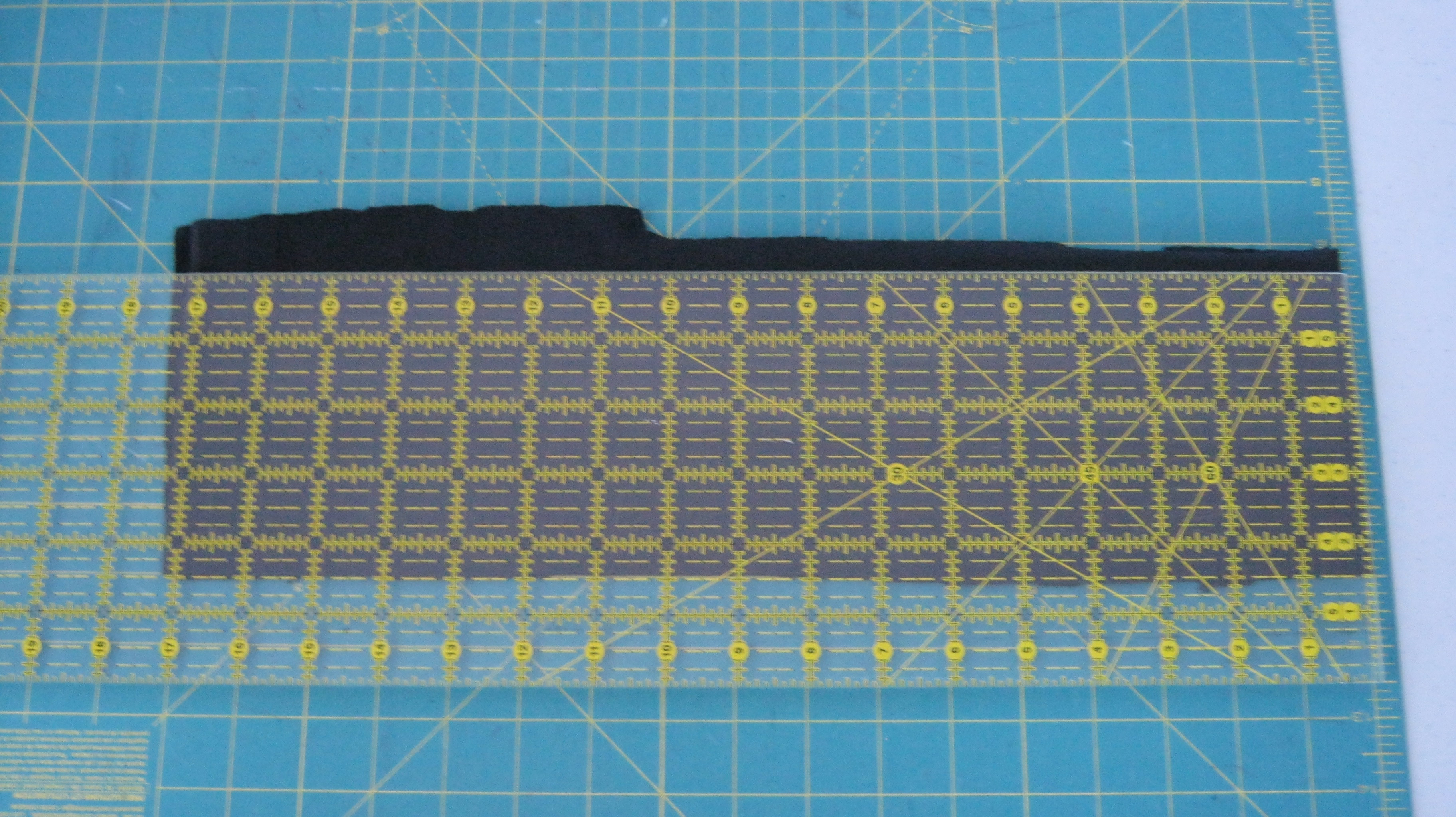
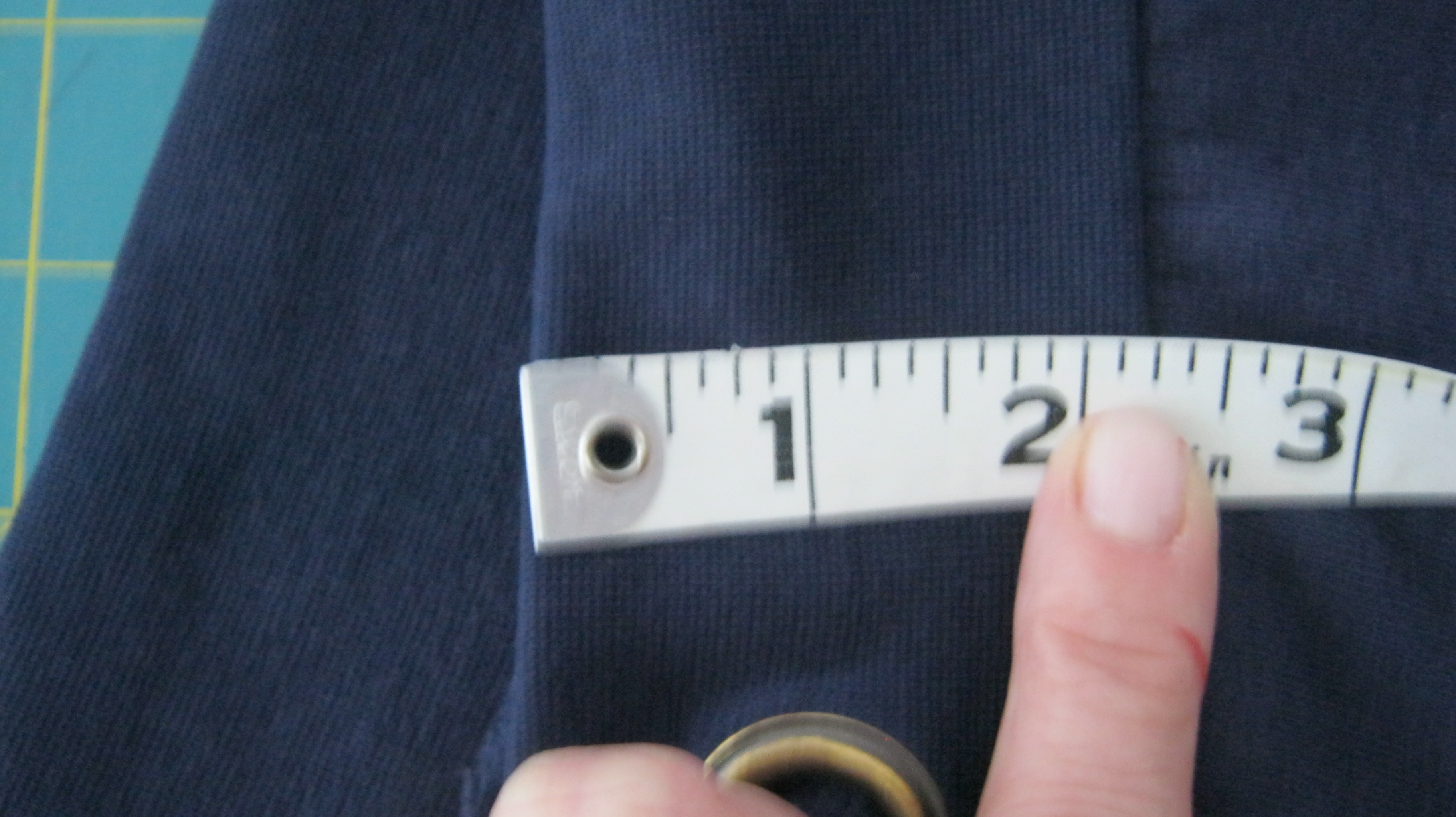
Then I measured the waist band, and figured I needed

to cut a piece of material 34 1/2 by 4 1/2.

IMG_0695

My quilting ruler  made cutting out the waist

band quick and easy.

Now my favorite shorts  has a draw string waist, with

eyelets to form the holes in which the drawstring passes.

I initially thought that I would just sew button

holes, however, I remembered that I picked

up a package of eyelets at a yard sale. (when I yard sale-I

look for sewing accessories.  You never know what you

will find…)

IMG_0697

I had never used eyelets before,

so figured this was a good time to try them out.

IMG_0698[1]

The eyelets come in pairs, with a tool to help set

them.

IMG_0701

there is a deep eyelet and a shallow eyelet in each pair.

IMG_0696

I marked the placements for  the eyelets with a dress

marker, putting them 1 inch from the center, and 1 inch from

the edge of the waist band. (remembering that the

waist band will be folded in half length wise, this put the

holes in the center of the band)

IMG_0700.

The directions call for placing the eyelet through a hole

all I had to make the hole was a paper hole punch.. but

it did the trick.

IMG_0702

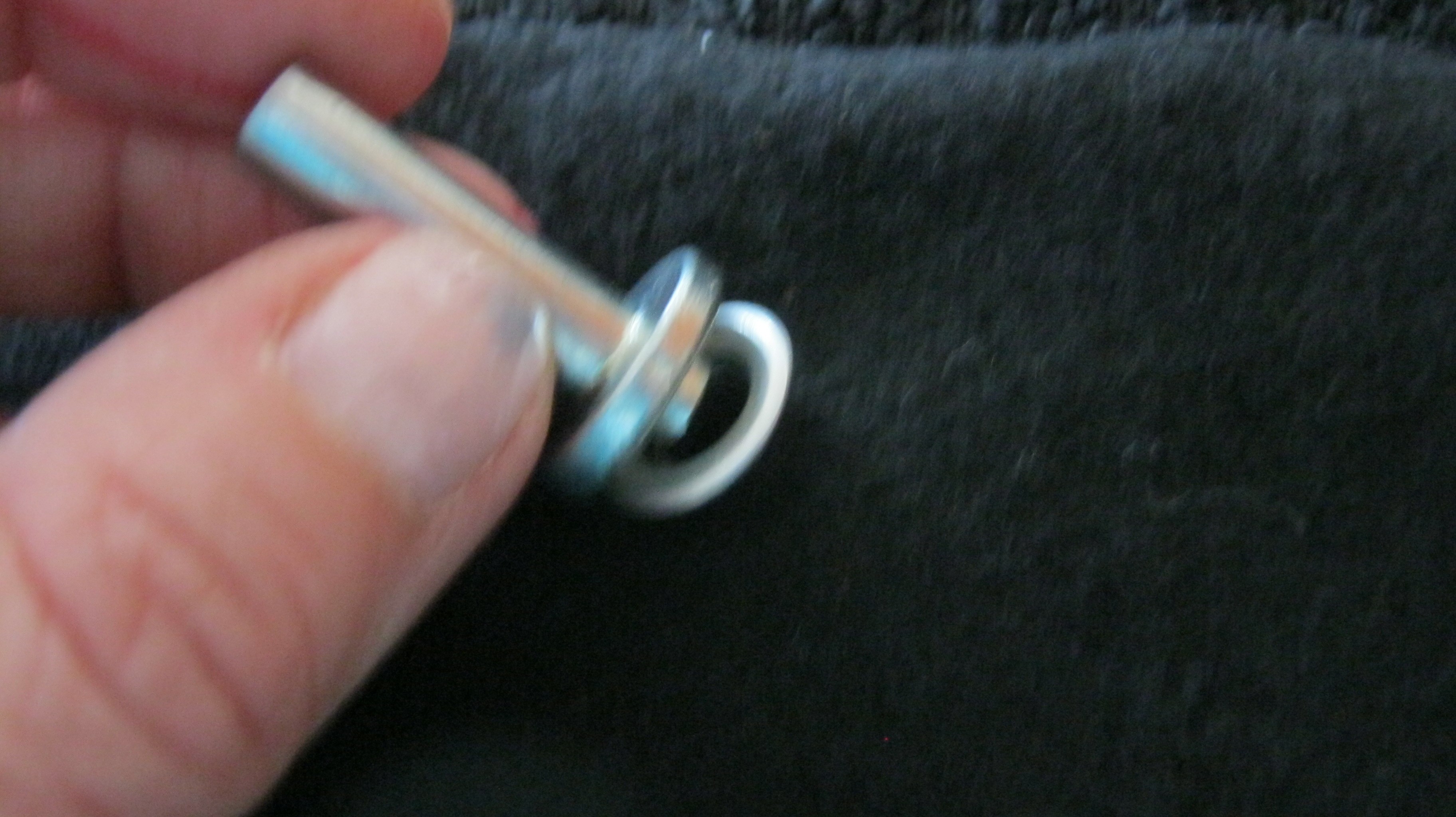
next you push the deep eyelet through the hole from the

right side of the fabric.

IMG_0703

then the shallow eyelet goes on top.

IMG_0704

The tool is set in the middle

IMG_0707

then use a hammer to set the two eyelets together.

My son helped with the hammering…..

IMG_0708

He did a great job!  the back of the eyelet after the 2

sides have been set together.

IMG_0709

The front side, not the prettiest, but not bad for

my first try!

IMG_0710

the next step was to put the shorts together, first sewing the

legs.

IMG_0711

IMG_0712

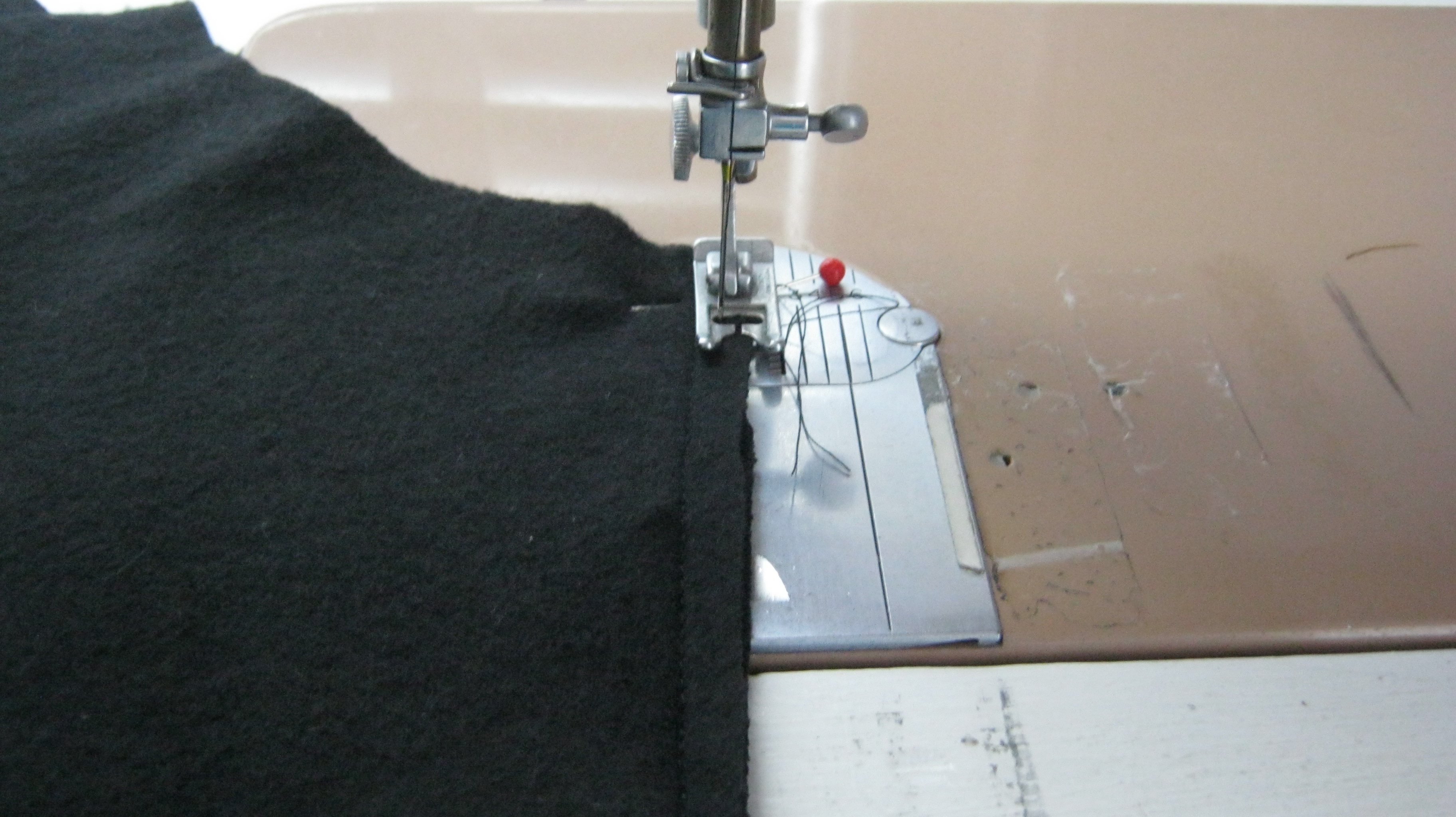
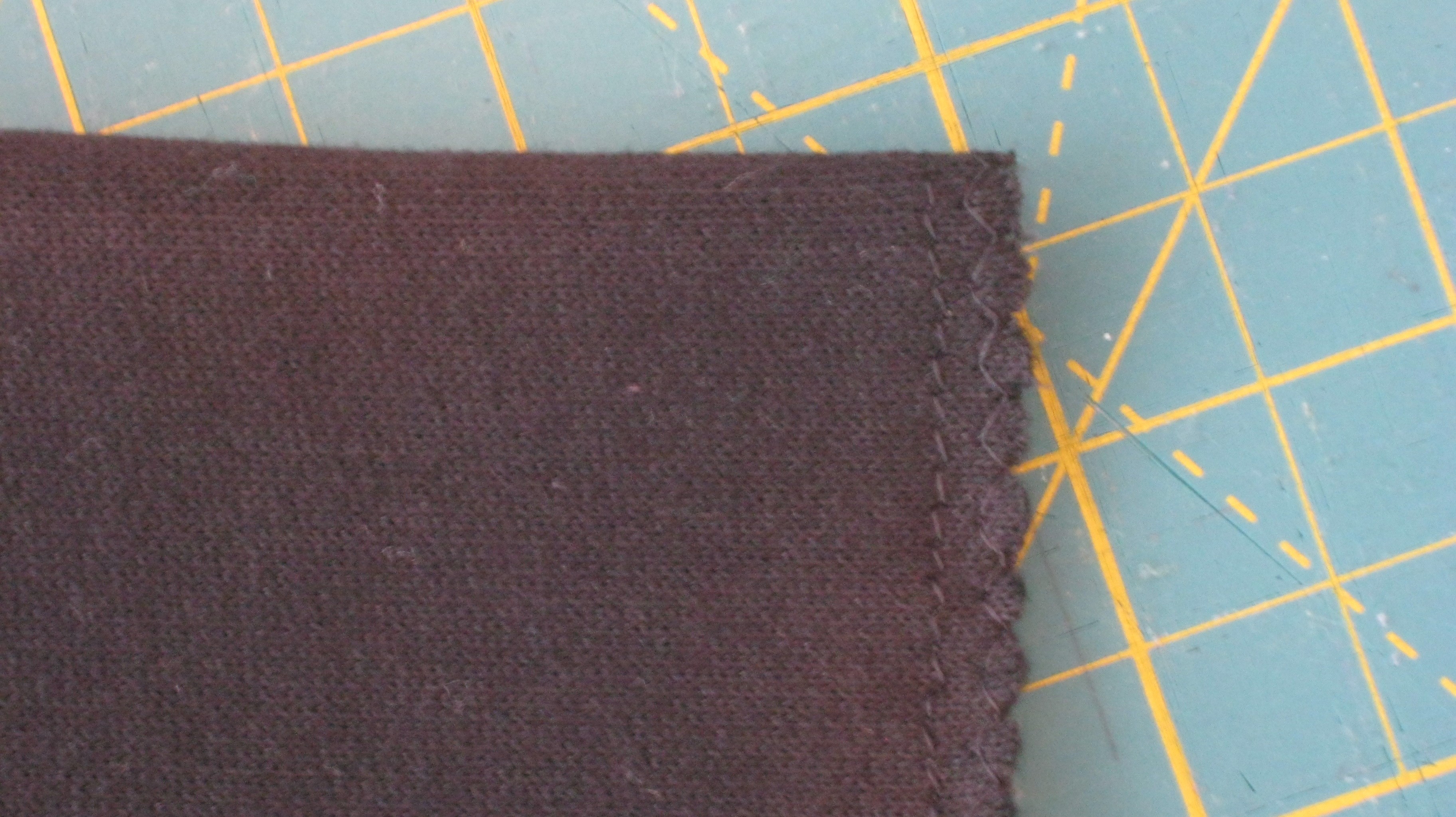
I don’t have a serger, but a zig zag stitch along edge

of the material gave the seams a sergered look.

IMG_0713

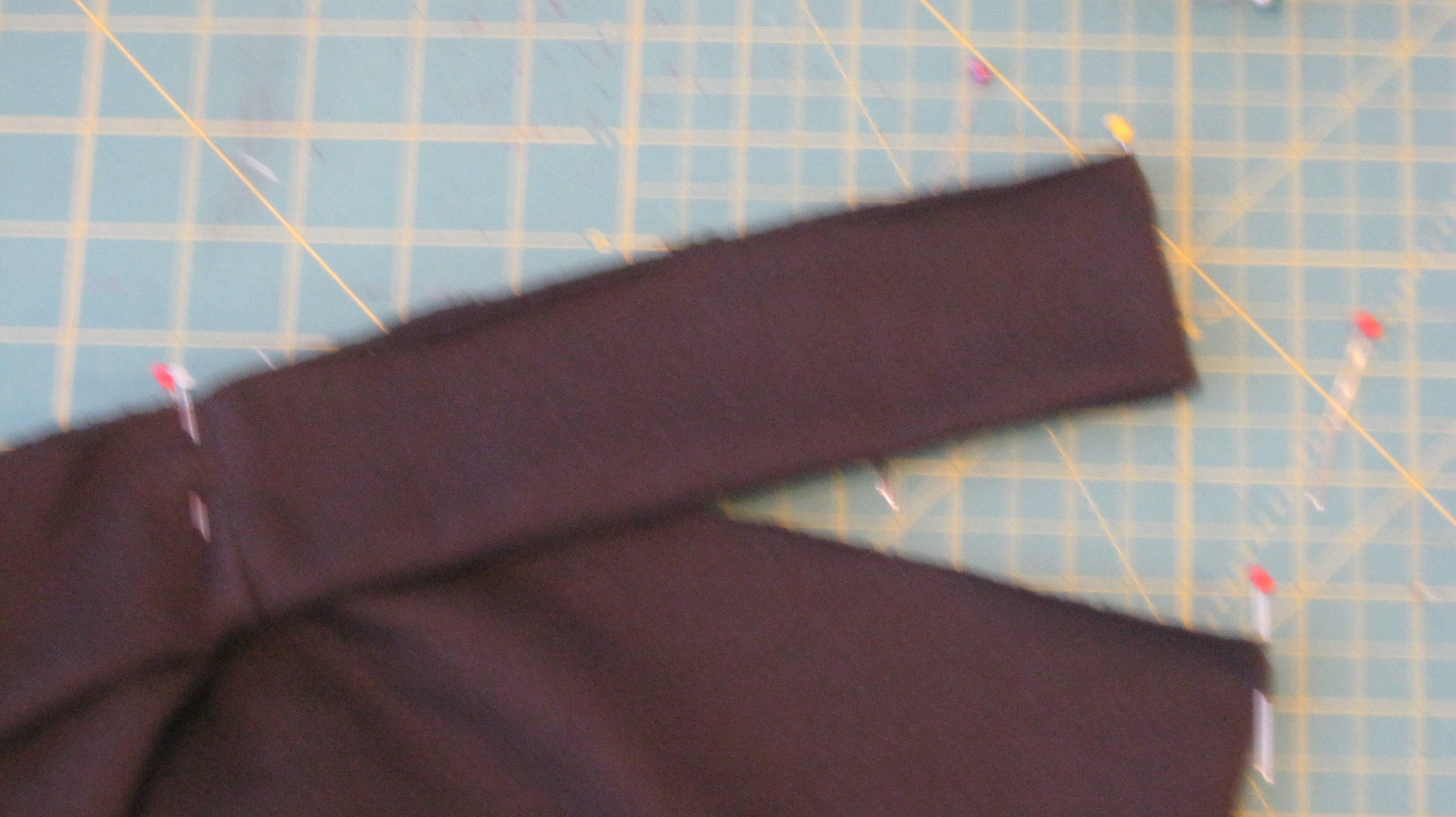
next is to sew the crotch area. I did this by placing one

leg inside the other, with right sides facing,  back

matched up with back, front matched up with front.

IMG_0716

with right sides together, sew the ends of the

waist band together, zigzag the edge of the seam to serge.

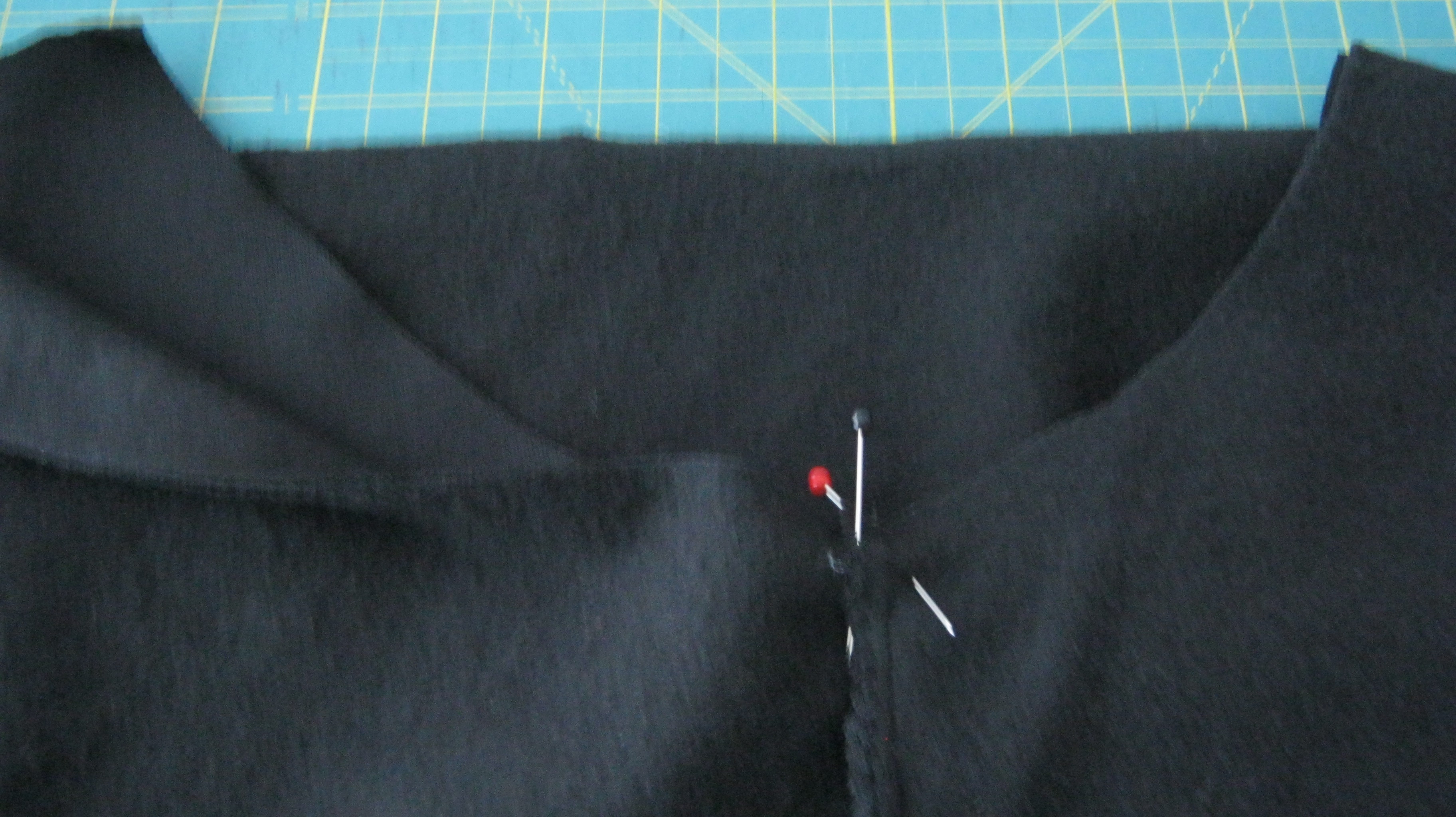
fold the waist band so that wrong sides are folded in.

IMG_0715

find the middle of the front, between the eyelets,

and match this to the center front of the shorts.

IMG_0714

The eyelets should be facing in. Line up the back seam

of the waist band with back seam of the shorts.

IMG_0719

find the center of the sides of both waist band and

shorts…..

.IMG_0720

……and pin them

IMG_0714

sew waist band into place, using 1/4 inch seam, finish

seam with zig zag  stitch.

IMG_0725

I did not want a formal hem, as my original shorts

had a serged edge, that curled a little.

Without turning the bottom of the leg under,

I sewed around the bottom of the leg, about 1/8 of an inch

from the edge.  Then went back and zig zagged the edge.

I like the way the hem of my old shorts curled up on the edge.

I’m hoping that my new shorts will do the same after

I wash them once.

IMG_0724 - Copy

I used a shoe lace as my draw string and fed it

through the eyelets in the waist band.

IMG_0723

my old favorite shorts…

IMG_0722

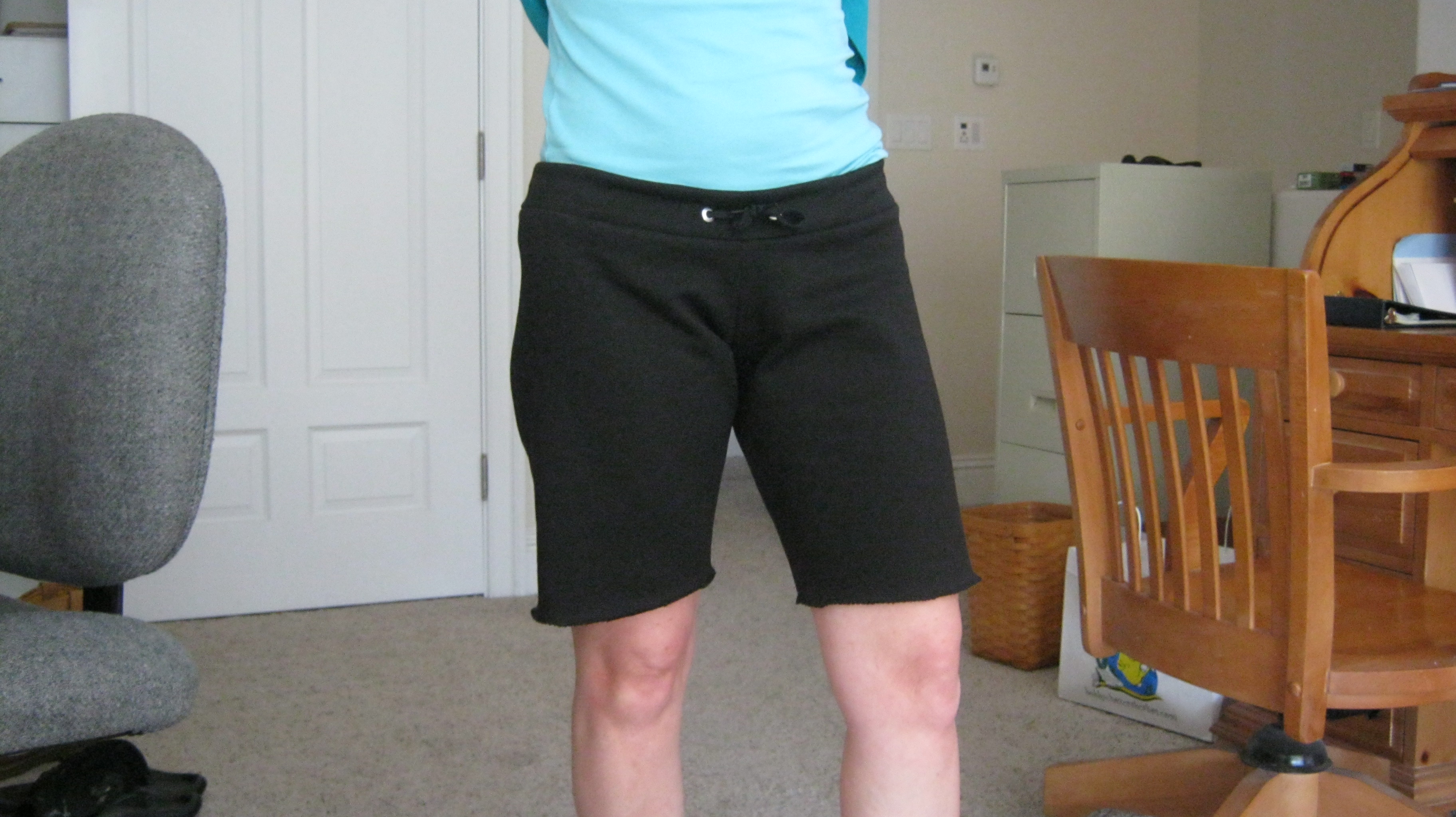
My new  favorite shorts!!
As I am writing this I realized I made one major

goof and one minor one….The major goof is that I did not

preshrink the material before I sewed it…a basic rule one

should follow, especially when sewing cottons!  I hope it does not shrink

too much when I wash it.. or else my daughter will have a

new pair of shorts……  The minor goof.. the waist band should have

been  a little wider, on the next pair I will cut it  5 1/2 inches wide  instead

of 4 1/2.

On a brighter note.. I learned that  eyelets are very easy to use.. much

easier than  a button hole…sewww, I will definitely be using

them more often!!!

Coil Fabric Bowls

  Coil Fabric Bowls

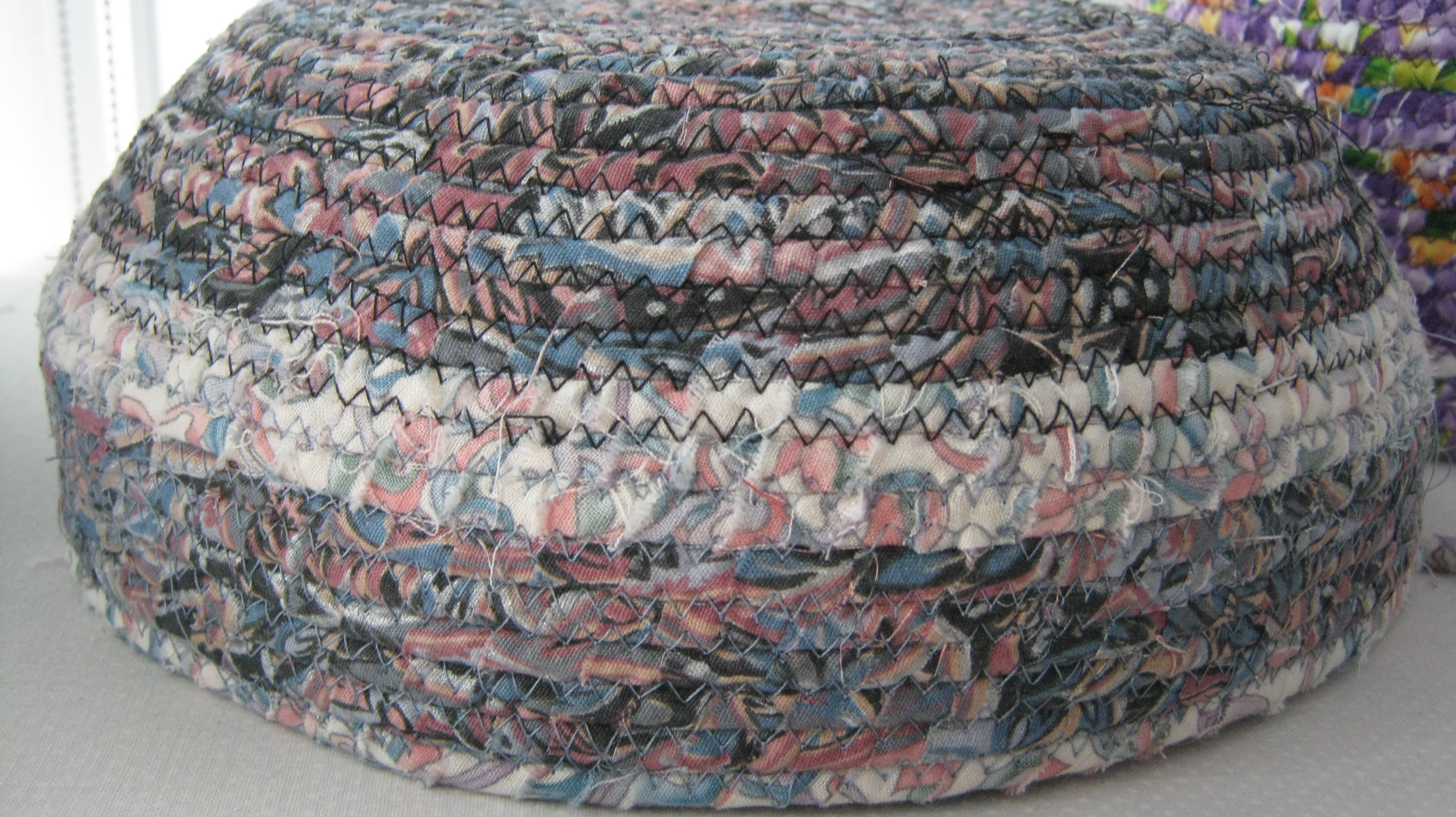
IMG_0607

I discovered Susan Briar’s book on how to make

coil fabric bowls at my not so local  quilt shop.

I loved the look of the bowls.. so bought the book and

gave it a whirl.  Susan’s directions are clear and

thorough. The hardest part was getting the hang of

how to angle the sides.  It  took some practice.. as with

anything I guess.

She has directions for bowls of all sizes, and

includes how to make oval and square  shapes.

You can also make matching lids and

embellishments which are very cute, but

I have not attempted yet.  Besides the bowls,

Susan also includes directions for coiled mats and purses.

IMG_0602       IMG_0603

http://www.amazon.com/Its-Wrap-Sewing-Fabric-Baskets/dp/156477662X

IMG_0677

IMG_0678IMG_0679

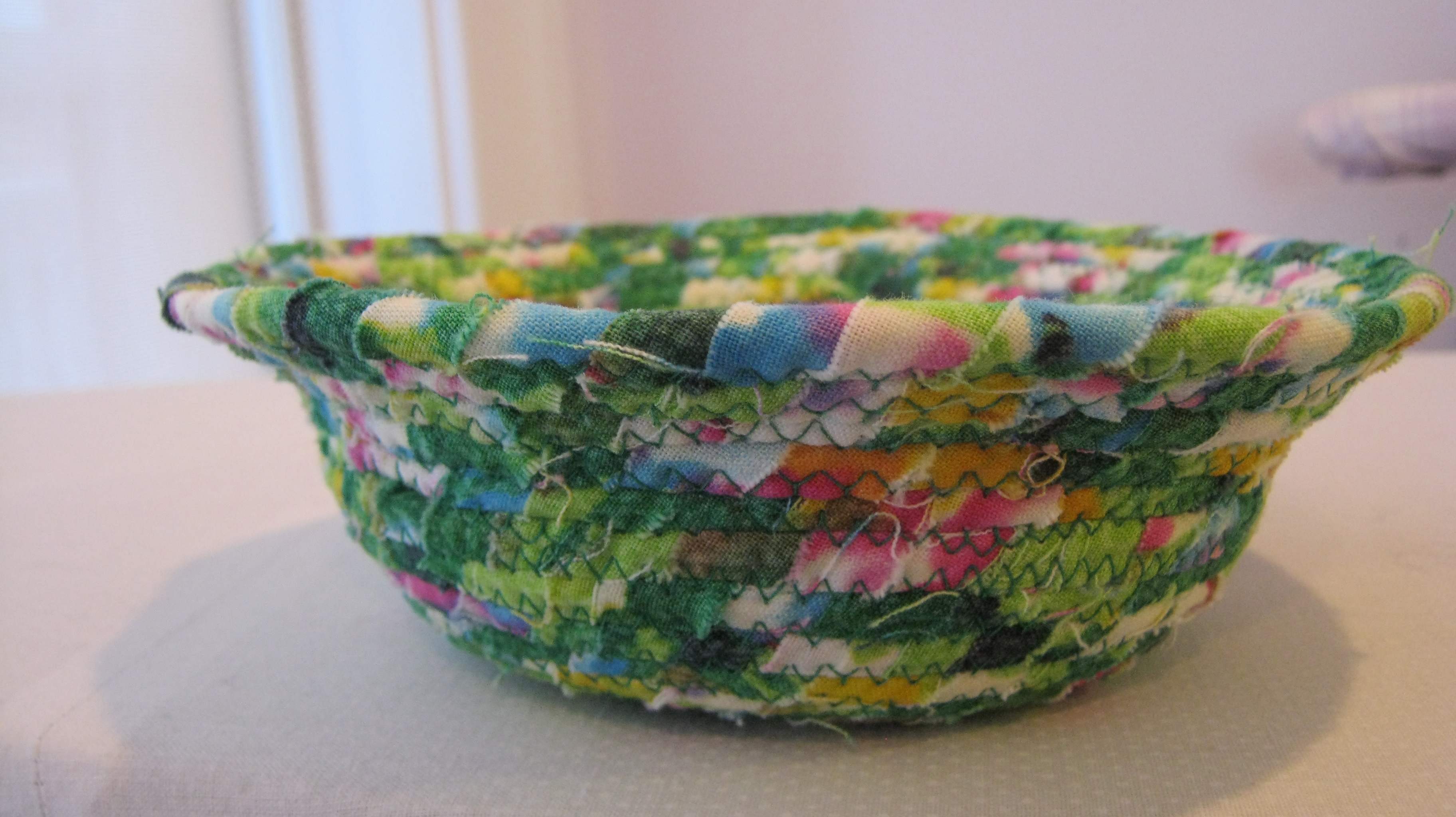
My first attempt was  this small green bowl, with a flared top.

I really was just playing around with getting used to the

shaping techniques.

141

142

My next was to try to add stripes of contrasting color.

Not bad.  My friends thought the bowl was perfect

for hosting a potted plant… I think they are right.

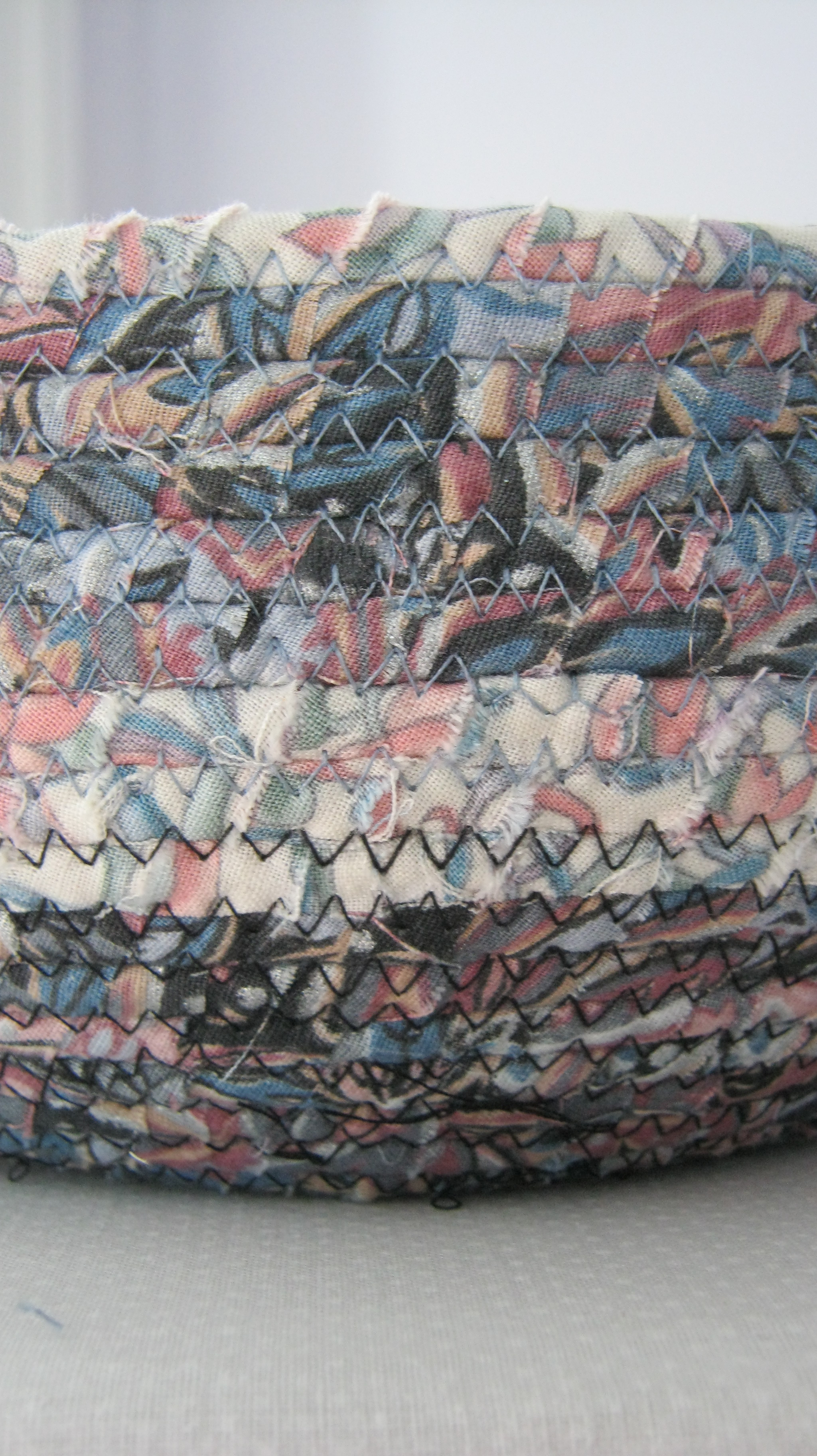
IMG_0616      This bowl taught me the importance of

choosing the right color thread.  I started with black…

IMG_0614

and did not like the look at all.. it made the bowl

too dark, and over powered the fabric.  I switched

to a light blue.. and was much happier with the outcome.

IMG_0615

IMG_0612IMG_0613

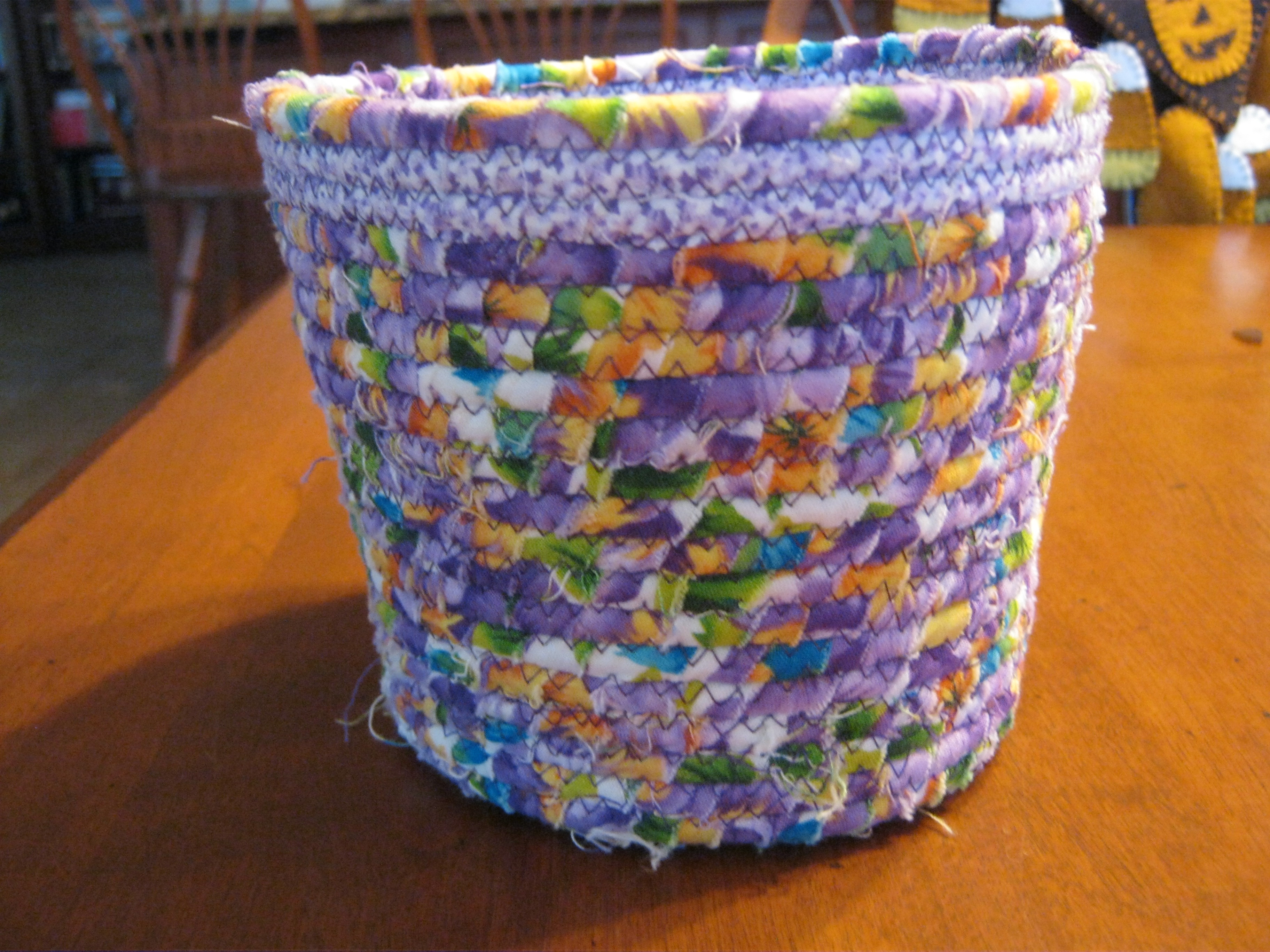
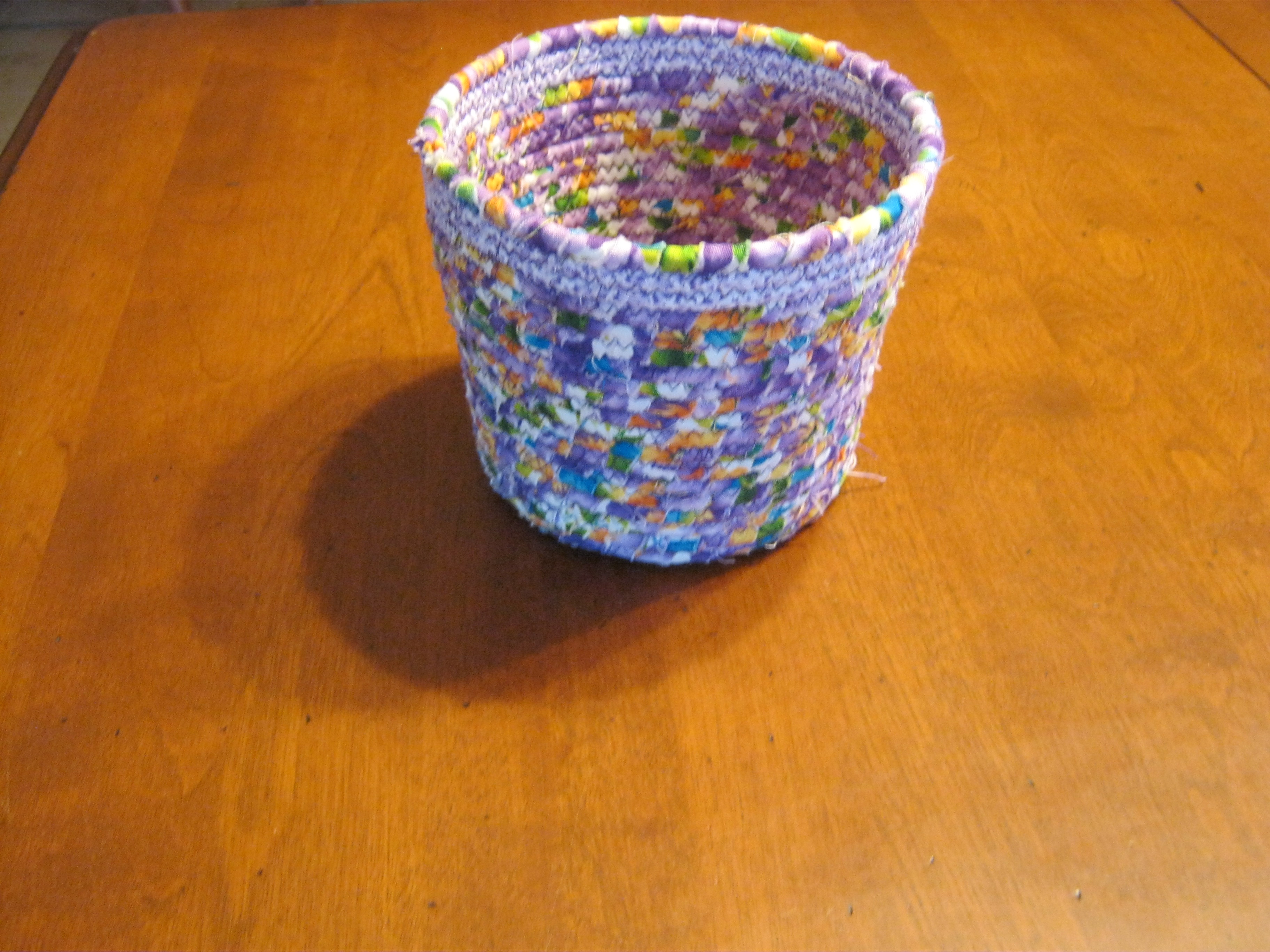
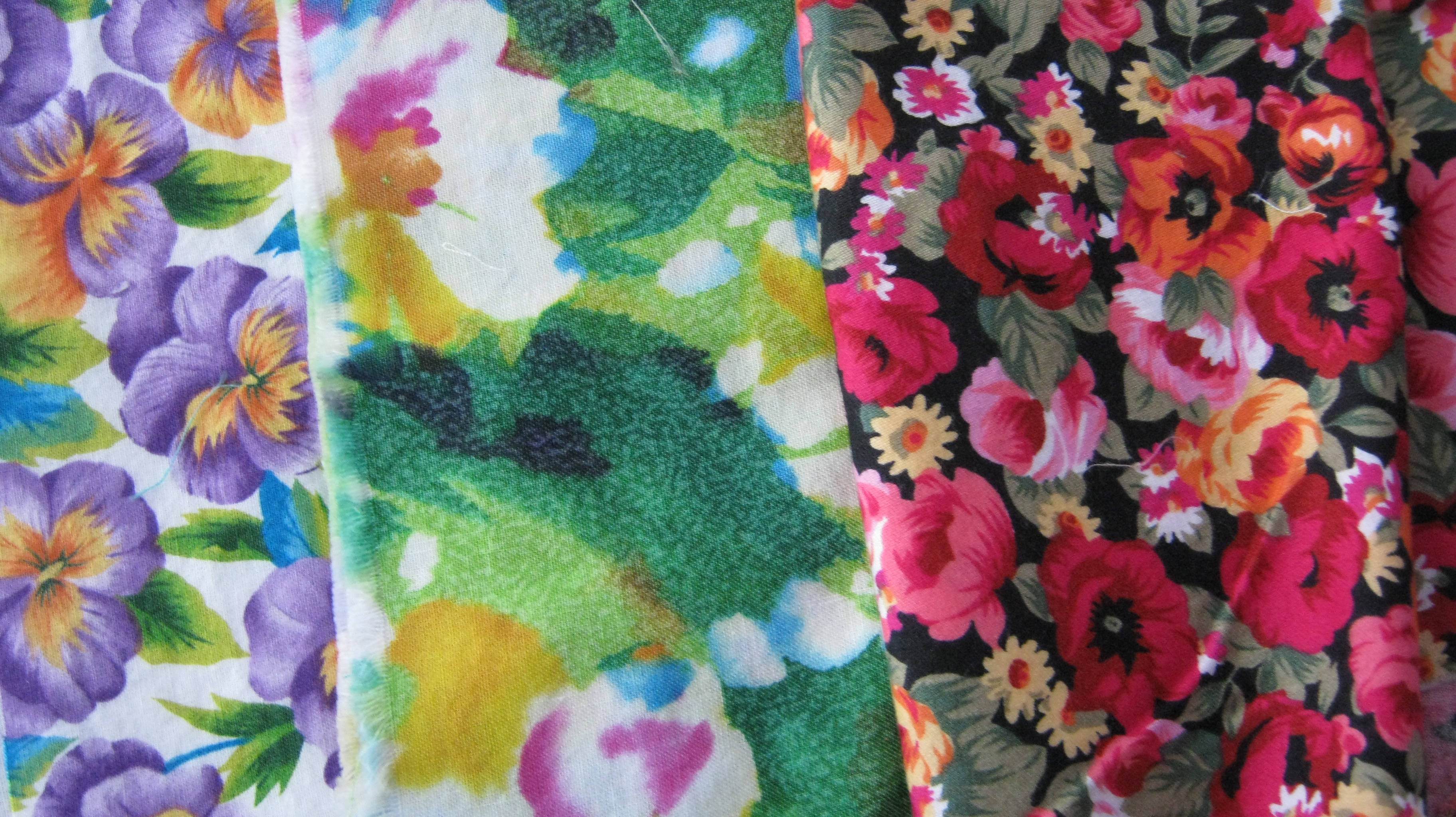
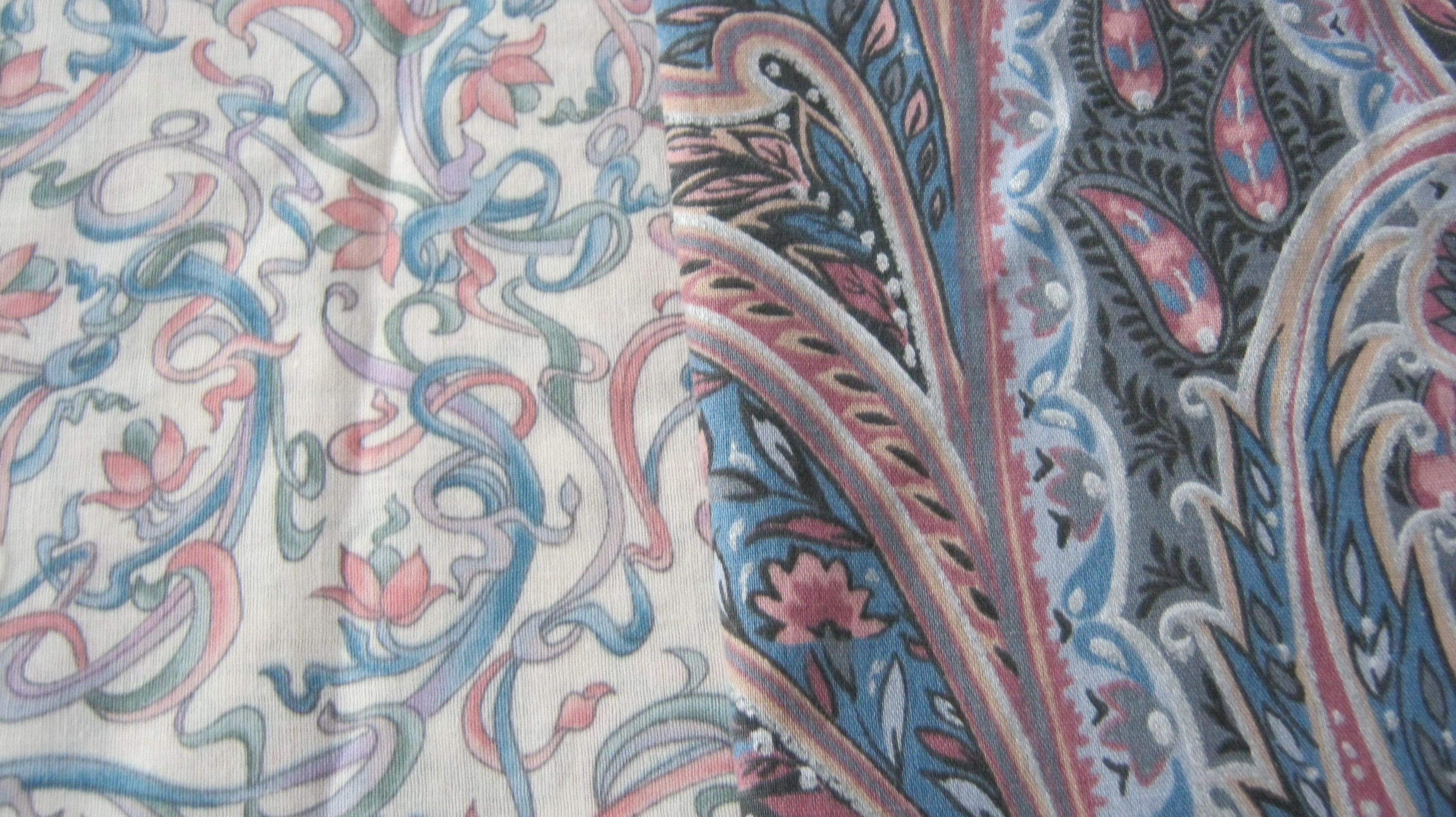
Of the fabrics I chose, I found I like the brighter fabrics, with variegated patterns,

as opposed to the muted tones with more elongated patterns.

IMG_0589IMG_0590IMG_0611IMG_0608

I had a lot of fun creating these lovely bowls.. they made perfect end of the year teachers gifts!

If you are interested in try this project, you can find Susan’s book on Amazon:

http://www.amazon.com/Its-Wrap-Sewing-Fabric-Baskets/dp/156477662X

I phone holder


I Phone bag/case ..big enough for the otter box too!

IMG_0601

My daughter’s

IMG_0559

her friends’s

IMG_0557

We recently  manned up, (or parented up I should say),  and bought our kids I phones.   We opted for the  otter box  case for my daughter,  and a less protective case for my son.  Which as I look back now made no sense.  My daughter had the original phone that she received when she was 11.  she is now 16.  My son on the other hand  has been through 3, maybe 4 phones in the same amount of time.

But it was  what it was, and as a consequence, my daughter realized she can no longer stuff her phone in the pocket of her jeans. The  otter box is just too big.  So she asked if I could make her a bag that she could tuck her phone in at school.    I pulled out some patterns that I had, and found an old  Butterick pattern for an Ipod case.  My daughter liked the style, and with a few modifications we were able  to  create a bag that suited her and fit her I phone/otter box.   Her friend at school liked it so much that she asked my daughter if I could make her one too. The tutorial is on  the one I made for her friend.

IMG_0474       IMG_0475

As you can see, the original pattern was for the old I pods, with a window to see the

scroll controller and screen…so old school!  We did not want/need the

window, so we skipped that part of the directions.  She did want the strap to be

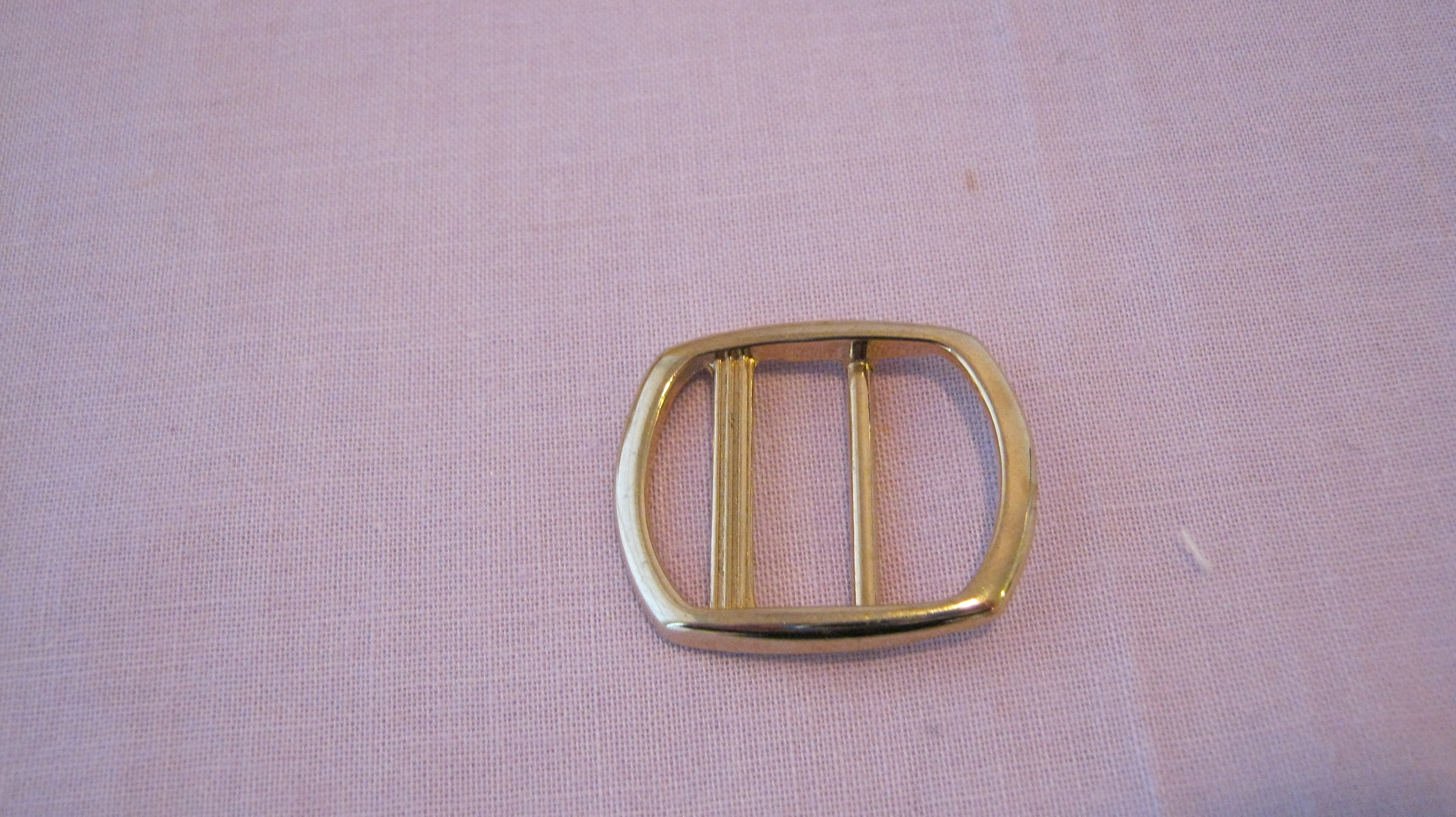
adjustable, so I incorporated this using a double ring slider.

To make the bag, you need about a 1/4 yard of fabric, fusible interfacing,  1.5  inch

Velcro, a small O ring ( I used 1/2 inch), and a double ring slider to accommodate

a 3/4 inch wide strap.

IMG_0530

IMG_0540

The only small rings I could find were the type you  use for key chains.

It works fine, but a real O ring would probably be better.    I found a

double ring slider at my local fabric store.  It has 2 center bars,

but  only needs to have 1.   I did find a web site that sells the necessary

hardware, …but I had already finished the bag!  At least it will be a good

resource for future projects….  and for you.

http://www.buckleguy.com.

First.. Increase the pattern to accommodate the phone:

IMG_0477

IMG_0478

IMG_0479

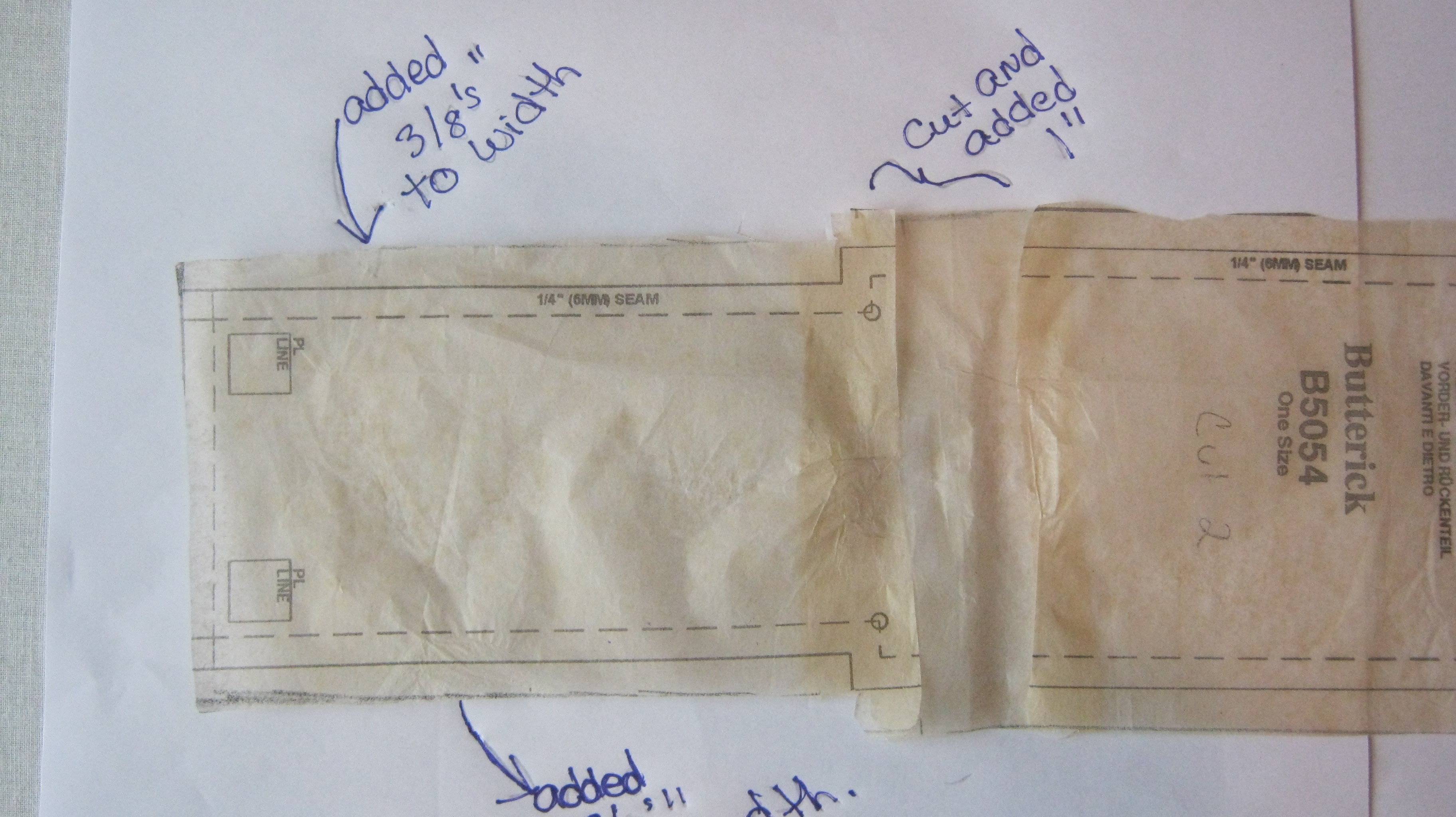
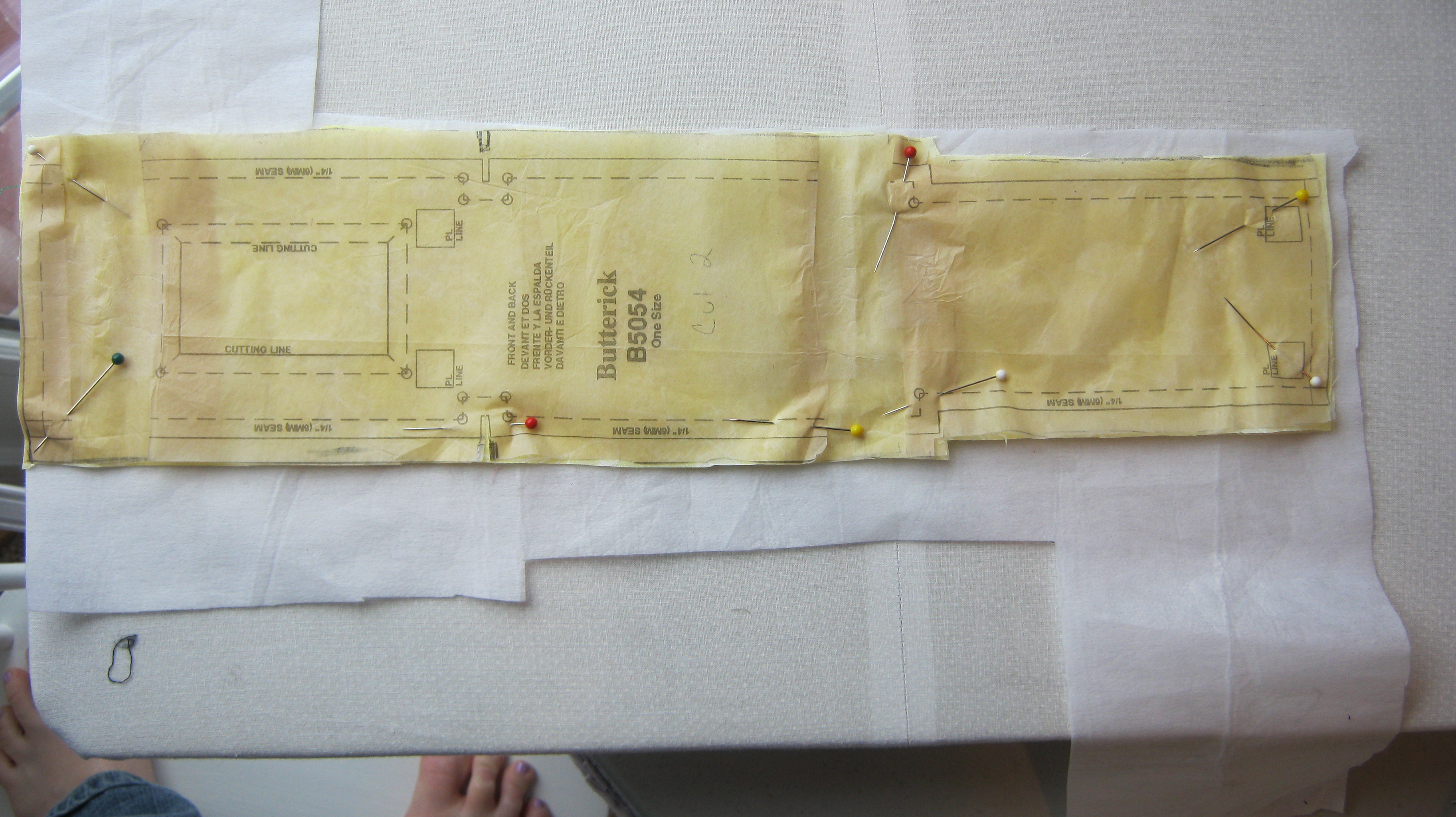
I added 3/8s  of and inch to both sides, 1 inch to

end near the flap, and 1 and 1/4 inches to other end.

(Hint:  patterns generally have blank portions with

nothing printed on them.. I save the bigger pieces

just adjusting patterns)

IMG_0480

cut  2  of material and 1 interfacing

IMG_0483

IMG_0484 

Iron interfacing onto wrong side of one  fabric piece.

IMG_0486

with right sides together sew entire flap end including “shoulder”

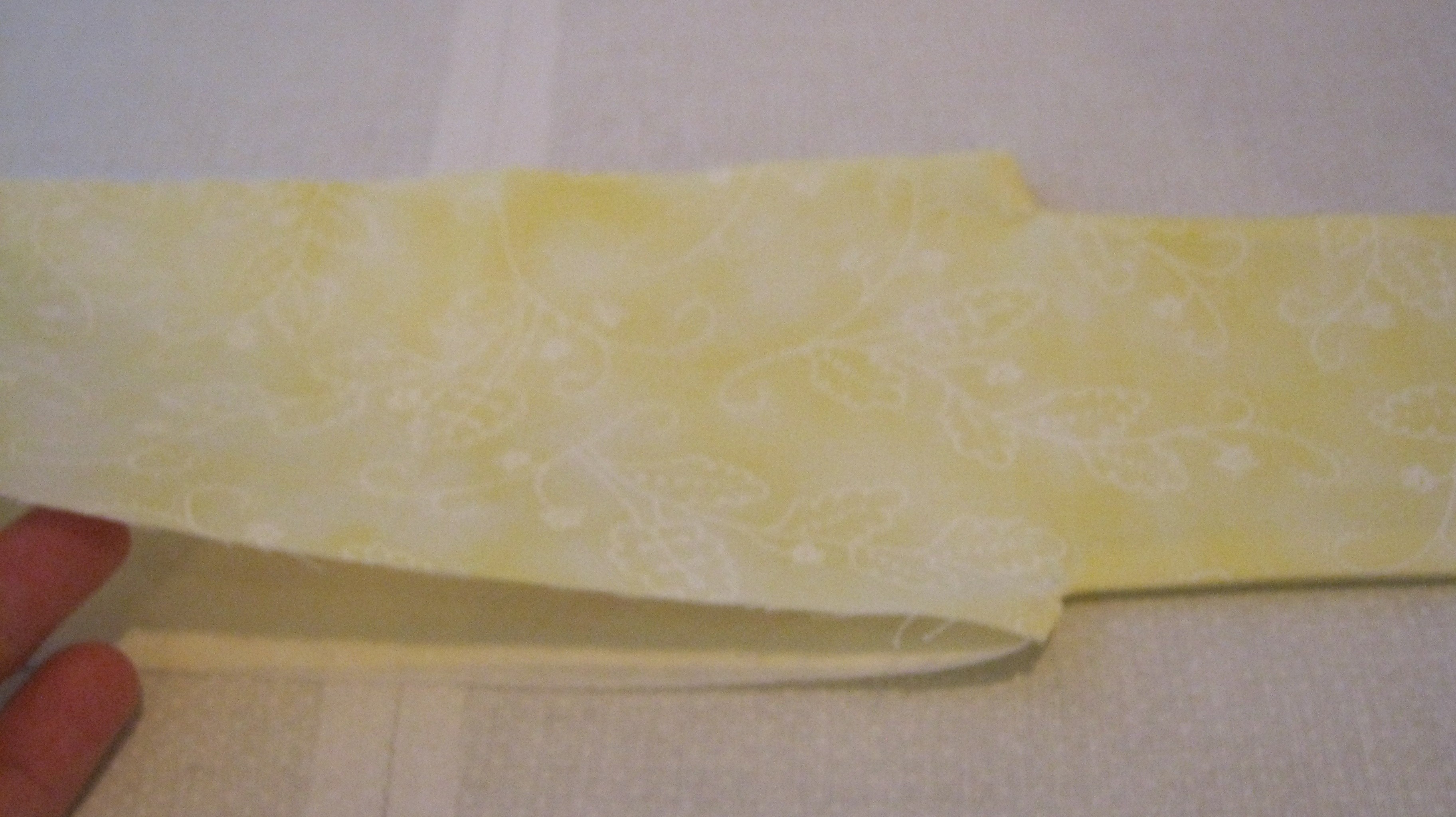
of main section, sew the opposite end, leaving sides open.

IMG_0487

Turn right sides out and press.

IMG_0489

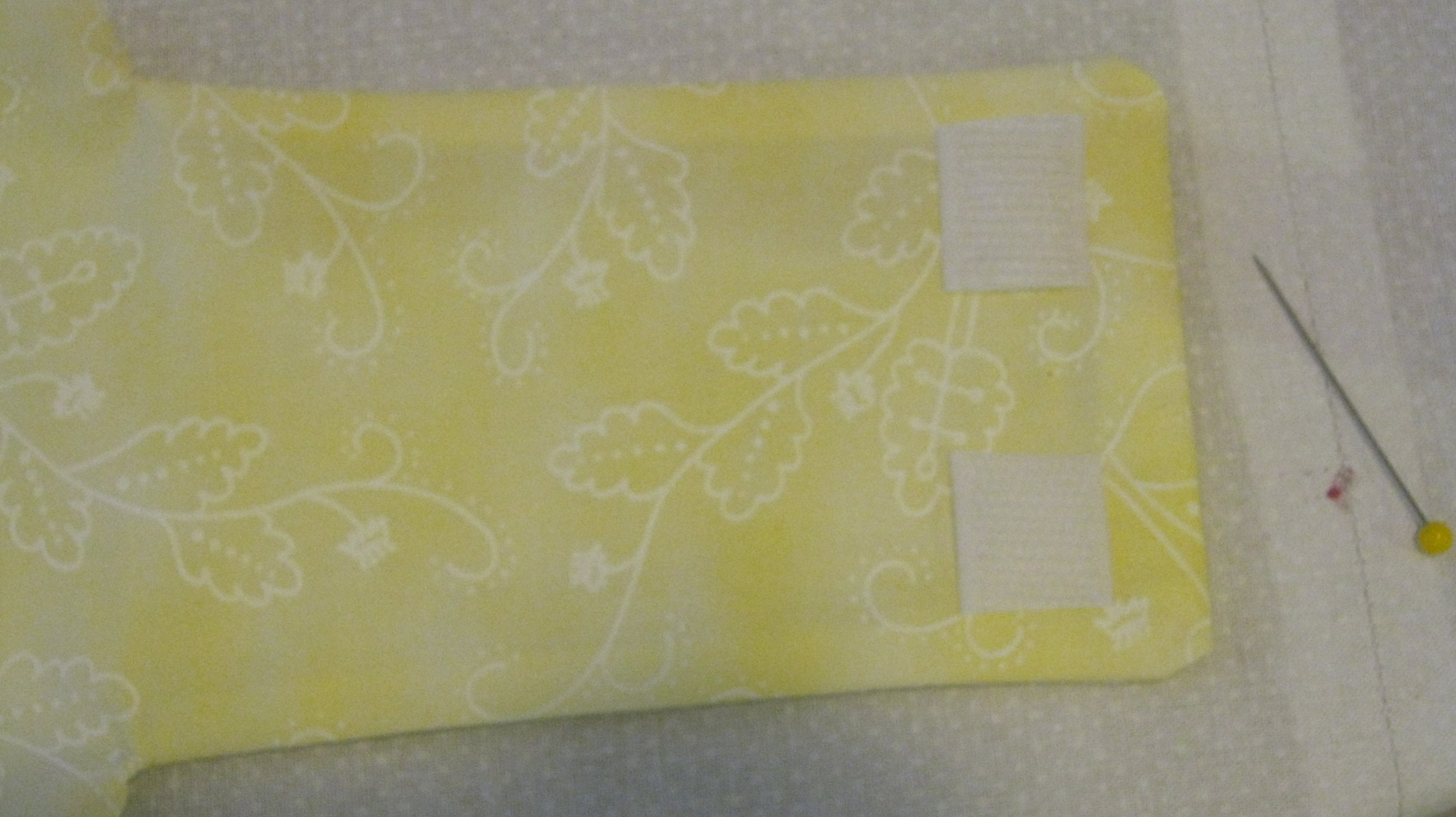
orient the bag so that the side that is fused to interfacing

is facing down.   Hand sew  loop Velcro to the flap end, as

shown, onto side not fused to interfacing.  Set aside.

IMG_0485

Make the strap by cutting 2 inch strips of fabric- you will

need about 60 to 62 inches in length

IMG_0491

to piece the strips, place right side down and fold

corner up to form a 45 degree angle, press.

IMG_0492

take a second strip and fold end to opposite corner as

above, and press.

IMG_0493

line the folds up, placing right sides together.

IMG_0494

IMG_0495  

sew along fold line

IMG_0496

trim to about 1/4 inch from seam.

IMG_0497

IMG_0498

Press open.  Join all strips in this manor until you have

one long strip at least 60 inches long.

IMG_0512

fold this strip right sides together and sew.  Turn right sides out.

IMG_0591

a quick way to do this is to attach a pin to inside of one end,

(so sorry- forgot to take pics of this, therefore showing you

with scrap material)

IMG_0597

Push the pin through

IMG_0599

until it comes out the other side. Flatten and Press.

IMG_0524

place the bag so that the Velcro  is facing down.

Form the bag by bringing the end up until it meets the

base of the flap.

IMG_0526

Sew just one side, leaving other side

open as adding the strap will be easier.

IMG_0528

Measure the length of the seam just sewn, and add

an inch.  Cut this much off of the strap, and zig zag stitch

all four ends to secure raw edges.

IMG_0533

slip the strap through the O ring, folding the end down

and sew.  You may need to use your zipper foot, in order

to get closer to the ring.

IMG_0534

take this piece and pin it to the inside of the bag

centered over the side seam.

IMG_0541

Turn piece over and sew  1/4 inch away from both sides

of the center seam, (as you can see, I first tried sewing

this from the other side.. but did not get a nice even

seam.. so I took it out and tried again on the out side

of the bag.)

IMG_0544

Attach the main strap to the double ring slider.

Remember, mine has 2 center bars, but you can use a single center

bar as well.  This I had to hand sew. Because of the nature

of the double ring, I could not lay it so that it would fit under the foot of my machine.

I used my adjustable bra strap as a guide for figuring out how to set up the strap.

IMG_0545

First I fed the end through the O ring.

 IMG_0546

then feed it back through the slider ring, under

outside ring, then over to inner bars, and under out

side ring

IMG_0548

.IMG_0550

Sew the last side and attach free end of strap as shown,

pinning over the seam.

IMG_0549  

IMG_0551

Turn it over and sew it 1/4 inch away from either

side of the center seam.

IMG_0552 IMG_0553

This gets a little tricky because you end up having to sew

inside the bag.

IMG_0554

The last step is to reinforce the strap by sewing across

the top of the bag at the seam line.  This is done at

both ends of the strap.

Fold the flap into place and mark where the hook Velcro should

be attached and hand sew into place.

IMG_0556 IMG_0600 IMG_0601

piecing binding

Piecing binding  was confusing to me, so I came up with a way to have perfect strips every time.

IMG_0491

Take your strip right side down,  and fold  one corner in as shown


IMG_0492

do the same with the second strip, only fold to opposite direction


IMG_0493

line them up so that folds match


IMG_0494

The pieces will end up perpendicular to each other as shown.

IMG_0495

Sew along fold


IMG_0496

Trim seam

IMG_0497

Press open seam

IMG_0498

Finished strip.

I hope you found this helpful!

sewing caddy

My sewing caddy

My sewing caddy

When I sew, I like to keep everything at my fingertips.  I have a storage drawers next to my machine, but it means opening and closing when ever I need something.  Of course that quickly gets old , and my scissors and seam ripper usually get left out, and then lost among layers of material, notions and directions.  I am constantly doing the “scissor pat”.  You know what I am talking about. Patting the various stacks of material and what ever is lying around in order to find the scissors hiding beneath.  I also like to keep track of the needles I am using.  if using a ball point needle, I’m neurotic about it getting back into the same packaging and not mixed up with  a universal or sharp needles.  Maybe a little OCD right?  Anyway, the needle  packaging usually ends up next to my machine as well, hidden along with my scissors .   What I need is a sewing caddy.  Something to hold my most used sewing tools,  with a pocket just to hold the needles.

So I made one.  Mine is to hang off of my thread organizer, as it is close and very accessible.. so I  actually use it!

My caddy in all it's useful glory!

My caddy in all it’s useful glory!

A Materials List:

11 by 12 each of a main color and a contrasting color

11 x 12  batting

2-  5 by 2 of main color  for loops

2 ½ by 11 of main color for binding top of pocket

37 ½ by 2 ½ of main color for binding rest of caddy

3 ½ by 7 of contrasting color for needle pocket

We will start with making the small pocket on the  front of  the caddy.   Take the 3 1/2 by 7 piece of contrasting material and fold in  half  with right sides together. You will have a 3 ½ inch square..  Sew around outside, using ¼ inch seam allowance leaving small opening on one side to turn inside out. Snip corners then turn inside out.. press folding open area to the inside,  and set aside.

Next we will practice making binding by making  the loops  for hanging the finished caddy.  Take the 2 x 5 inch pieces of main color, and fold them in half length wise right sides facing out and press.   Open this up, and fold sides in length wise, so the edges touch  the middle fold line, as shown

IMG_0440          IMG_0442

sides  of binding folded into center        folded in 1/2 again and pressed

Press, then fold these edges in and press again for finished binding/loops

Now for the main event.   Place the 11 x 12 piece of contrasting   fabric face down on table placing the batting down on top of that and finally the main color  11 x12 face up on top.  Quilt as desired. I drew  angled lines by using  a quilter’s ruler and  marking pencil on the main color before layering the fabric.    Starting in the upper left corner, making a diagonal to the bottom right corner. I  made parallel lines one inch away on either side of the initial line, continuing until  entire square is covered.  When you are pinning this, pin perpendicular to your lines drawn, this will keep the pins out of your way when you are sewing.

parallel lines with perpendicular pins

Next take the 11 x  2  1/5 piece of contrasting color and turn it into binding as you did with the loops.  Take your quilted piece and place it so that the main color is facing up; lay the binding right side facing down, along one of the 11 inch long  sides, and pin as shown . Attach binding by sewing along first fold ( ½ inch seam allowance). O pen and press, then bring rest of binding around to other side of quilted piece,  covering previous seam as shown and pin, turn the piece over and stitch in the ditch to secure the back of the binding in place

sew along first fold Attach binding face down to main color on side that is 11 inches wide.

IMG_0407 IMG_0408

Open and press binding

IMG_0410 IMG_0411

fold binding in, covering previous seam, and pin in place

IMG_0412

Turn piece over and stitch in the ditch to secure binding.

Now we attach the 3 inch pocket . With main color facing up,

place the pocket   1 ½ inches from the left side, and 1/ ½ inches

from the top including the binding. Sew the pocket in place

using a 1/8 inch seam allowance

IMG_0418IMG_0415

It’s the home stretch…time to fold the fabric to make main pocket of the caddy,

fold it so that the main color is on the outside and contrasting color on the

inside of pocket. Fold it so that you have a 5  inch deep pocket and pin into place.

IMG_0417

We are going to attach the binding as above, using the 37 by 2 1/2 piece of main

fabric.  But now we have to consider ends and corners. Fold one end of the

binding down ½ inch then pin to right side of binding to caddy as shown.

IMG_0420

End of binding folded in 1/2 inch

IMG_0420

sew along folded edge stopping 1/2 inch before you reach corner.

IMG_0422IMG_0423

bring binding up so it is now laying perpendicular to first sewn side,

then bring down along second side to be sewn.  Sew this seam by starting

at the corner, and continuing until you are 1/2 inch from next corner.

Repeat the next corner as above.  Finish off by folding under last 1/2 inch.

IMG_0426

Fold the bottom edge in 1/2 inch.

IMG_0427

now you are ready to turn the binding to the other side.

IMG_0428 IMG_0429 - Copy

Gently lift the binding and flip it to the opposite side.  You can see the corners form a nice mitered look.

IMG_0430 IMG_0431

starting at one edge, fold the binding in as you did with the contrast  binding attached earlier, and pin

IMG_0433 IMG_0432

fold the  the corners as shown below, pinning as you go.

IMG_0434

IMG_0437  IMG_0438

finish the binding as you started, by folding under 1/2 inch.

I attached the loops in each top corner, by tucking them into

the binding as shown below.  Then hand stitched all into place.

IMG_0449  IMG_0450

IMG_0452  IMG_0459

IMG_0458

The last step is to form the individual pockets. ‘ I used

the needle pocket as a guide, sewing along it’s sides to

form the first 2 pockets.  The first pocket was narrow,

but good for holding a sewing gauge or marking pencil.

IMG_0460

marking for first 2 pockets, by following line of needle

pocket.

IMG_0461

For the last two pockets, I divided the space that was

left in half, marked it, and sewed along that line.

When this was finished, I  realized I needed a shorter

pocket for my seam ripper and thread snippers.  So I

sewed a horizontal seam across the third pocket about

an inch and a half from the bottom.  This worked

perfectly.

My sewing caddyMy caddy in all it's useful glory!

Finished!

The Little Pink T Shirt

I needed  some new spring shirts for work.   Since I have way to much jersey knit (that I bought when a local fabric shop was going out of business), I figure this is a good way to use some of it.    Because knits are stretchy, they can be frustrating to work with.    So I played around with some tips I found on Pinterest, as well as a few ideas of my own. Below are 2 links that I found very helpful. Please visit them to learn an easy way to complete a neckline, as well as using double needles.

http://www.threadsmagazine.com/item/3839/video-a-neckline-binding-for-knits
http://www.makeit-loveit.com/2012/08/using-the-double-needle-without-the-2nd-spool-holder.html

123

The ” T” I chose is a simple yet girly shirt pattern from McCalls… well because I already had it… and cut out the pattern as per directions. I followed it almost to a “t”.. okay pun intended.  When I got to the neck line I followed the directions I learned from Threads Magazine (see link).  The mistake I made was to  sew up the sides of the shirt before I tackled the neckline.  Because that is what the pattern called for. I can see where it would have been much easier to add the neck binding first, then sew up the sides of the shirt,  as Threads Magazine suggested.  I should add here, that I sewed all the seams using the double needle technique from “makeit-loveit.com(see link).  The pattern calls for you to sew along    5/8 inch seam allowance, then sew again, 1/4 inch closer to edge of fabric.  Using the double needle saved time, helped control the stretchy fabric,  and made a nice  finished seam.

didn't have 2 spools of thread, so loaded a second bobbin, it worked great

didn’t have 2 spools of thread, so loaded a second bobbin, like I saw on “make it love it”, which  worked great

backed the needles with dark material so you can see them better

backed the needles with dark material so you can see them better, I threaded the machine normally, just had 2 threads running through it, instead of 1.

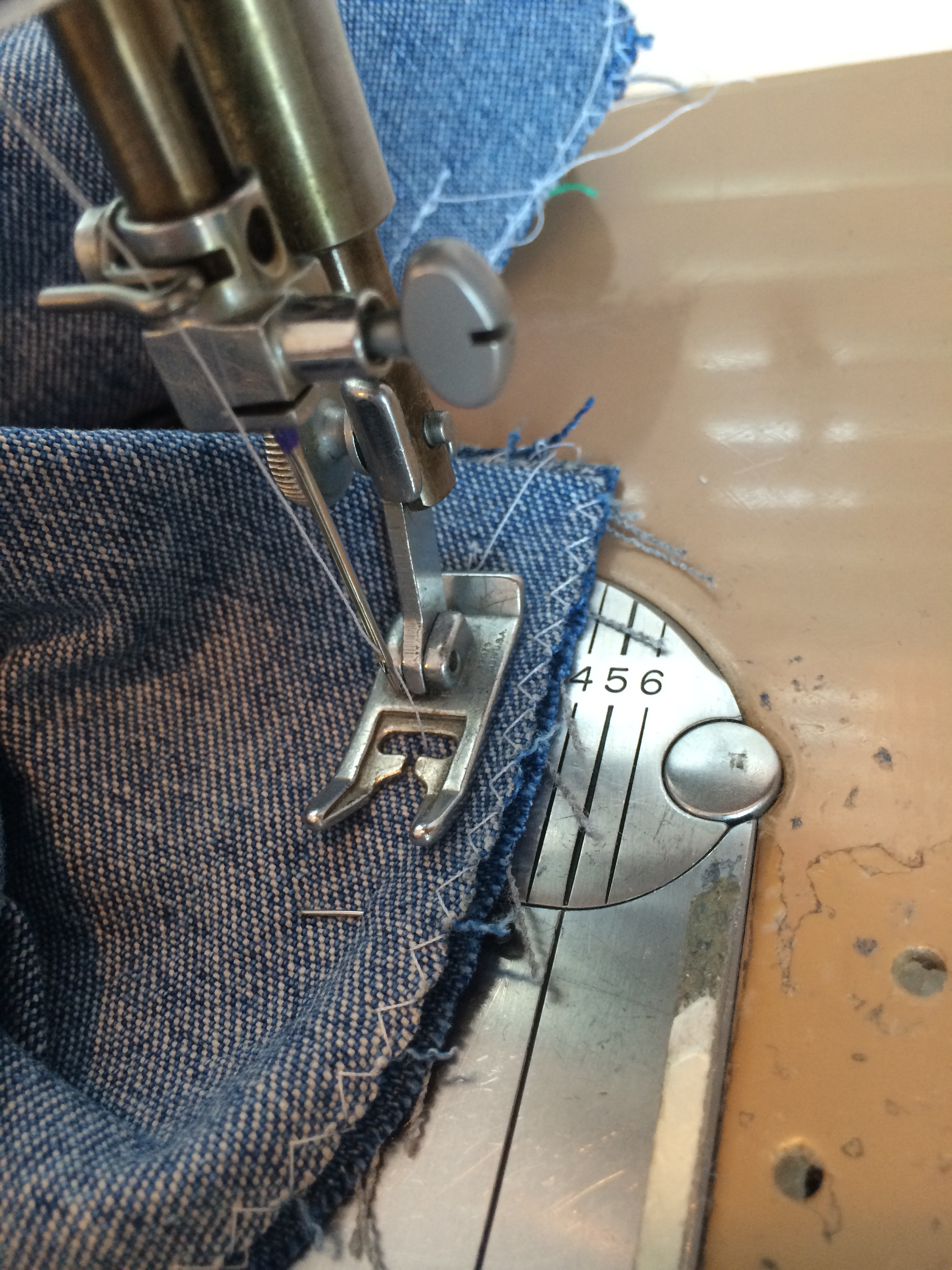
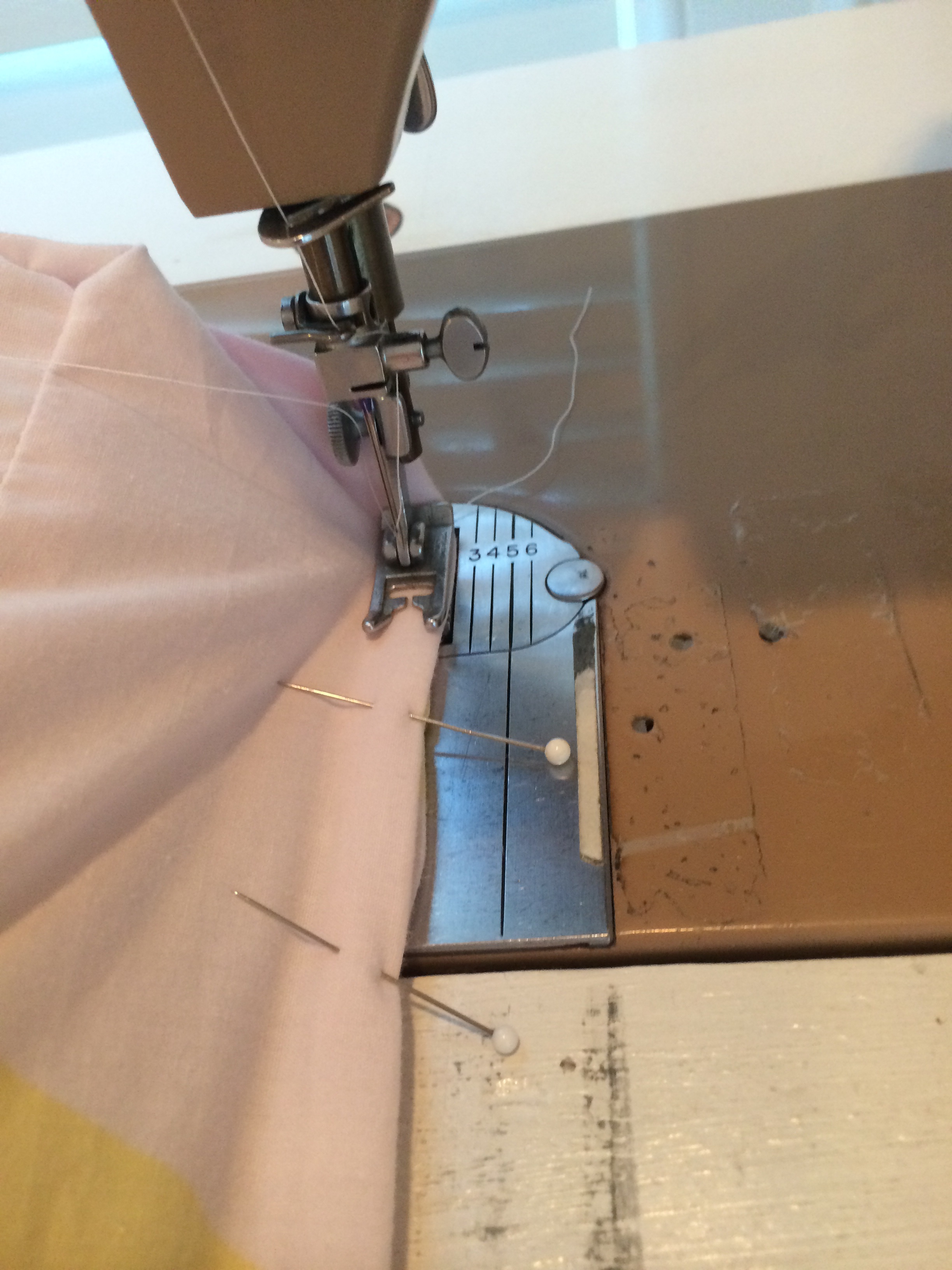
Just remember, if you are using a double needle, adjust  which line guide you are using on the  throat plate.  Mine is labeled 3 through 6, meaning 3/8s through 6/8s with an extra long line at 5/8s as this is the most commons seam width.  I used my gauge to measure 5/8s out from the outside needle and found that it fell right on the 4/8s line.  So that is what I used as my stitch guide.  I then trimmed the seam as per the directions adding zig zag stitching along the raw edge for a serged look.

I measured 5/8s inch from outer needle, which took the edge of the material to 4/8s on my stitch guide.

I measured 5/8s inch from outer needle, which took the edge of the material to 4/8s on my stitch guide.

The next step is the sleeves.  The pattern calls for you to sew the sides first, and then hem.  I find it a lot easier to hem first then sew the sides.   I found that using very lite fusible webbing helps stabilize the knit material as I sew.  That in combination with the double needle technique  made a nice hem. I used roll of 1/2 inch webbing,  halved because it was still too wide.

1/2 inch wide roll fusible interfacing

1/2 inch wide roll fusible interfacing

cut in half and placed along stitching line..notice I pre-pressed the hem.. a very important step!

cut in half and placed along stitching line. you cant tell from the picture, but I pre-pressed the hem.. a very important step!

132

parchment paper is a great trick for keeping your iron clean

parchment paper is a great trick for keeping your iron clean

The other tip is that I sewed the hem of the sleeve with the folded edge facing down… If I didn’t do this my nice double stitch would be on the inside of my sleeve, and  there would only be “hash marks on the outside.   Again I used my gauge to measure where the edge of the hem abuts a stitch guide.  Below, you can see it was at 3/8s.

sewn with the folded side under

sewn with the folded side under

shows the double stich on outside, hash marks on outside

shows the double stich on outside, hash marks on inside

I followed the pattern to complete the sleeve, but did not like how the

material gathered at the shoulder.

I did not like how the pattern called for gathering the shoulder seam

I did not like how the gathered shoulder seam looked..  So I took that seam out, and did a little adjusting.  I pinned the sleeve as per the pattern directions, until I came to the notches.  then I  pinned the arm hole portion lower down on the shoulder-eliminating about 1 1/2 inches of the sleeve at the peak of the shoulder, and the need for gathering.
here you can see the sleeve on the right is still poofy, the one on the left is the one I fixed... much better, right?!?

here you can see the sleeve on the right is still poofy, the one on the left is the one I fixed… much better, right?!?

my finished T... Yay!

I did the same with the  other shoulder  and was  much happier with the sleeves.     But then I was not  too keen on how the neck line was looking.  I decided to “stitch in the ditch” around the neck seam in hopes that it would lay flatter.   I think this did the trick…

"stitching in the ditch"

“stitching in the ditch”

Because Voila!! my finished shirt!!

IMG_0395[1]

my finished T… Yay!